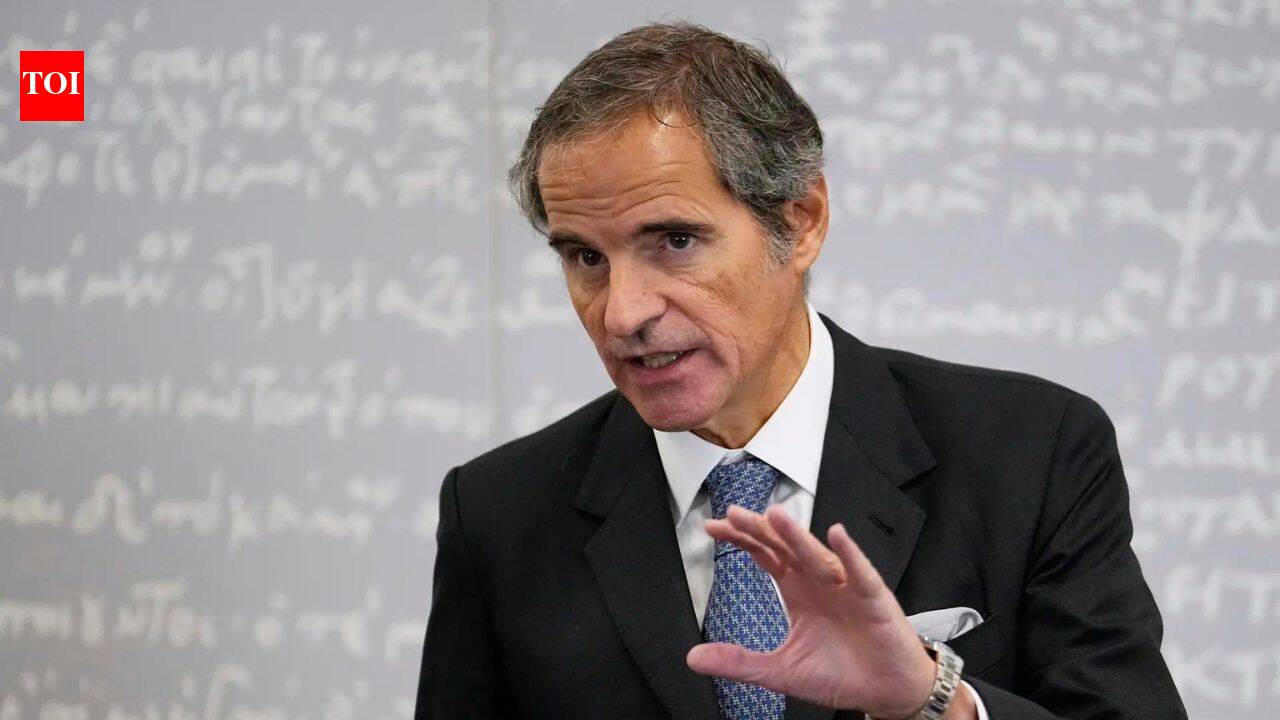

Rafael Grossi’s remarks came amid continuing uncertainty over access to Iranian nuclear facilities.
Rafael Grossi, the chief of the UN nuclear watchdog, on Wednesday said that inspections of Iranian nuclear facilities would eventually resume under the framework of the emerging US-Iran agreement, although Tehran quickly pushed back, insisting that no such access had yet been approved.Speaking during a visit to Japan, the International Atomic Energy Agency (IAEA) chief said the preliminary deal signed by Washington and Tehran after the recent Middle East conflict explicitly envisaged a role for the agency in overseeing Iran’s nuclear activities.Grossi said the agreement “explicitly” states “nuclear activities that are going to be carried out with regards to nuclear material facilities will be supervised by the IAEA”.”Obviously, to do that, we will have to inspect,” Grossi said.While declining to provide a specific timeline, he said discussions were under way with Iranian authorities regarding the modalities of future inspections.”Whether this happens today, after tomorrow, or in one week, or in 10 days, it’s important but not essential. This is going to happen.”His remarks came amid continuing uncertainty over access to Iranian nuclear facilities, particularly sites targeted during US and Israeli strikes last year. Iranian officials were quick to rebut Grossi’s remark as deputy foreign minister Kazem Gharibabadi said no agreement had been reached on inspections of the facilities attacked during the conflict and stressed that any future access would depend on a comprehensive settlement between Tehran and Washington.In a post on X, Gharibabadi wrote, “No meeting was held with Grossi in Switzerland, despite his request. Nor is there any plan for access to the facilities that were attacked or to nuclear material.”He added that inspections would only be considered as part of a broader agreement involving reciprocal commitments from the United States and its partners.”These issues will be reviewed and decided only within the framework of a final agreement and as a result of practical action by the other side to end all sanctions and other measures.”Gharibabadi also criticised what he described as attempts to pressure Iran through public statements.”You cannot advance the stir up and take over’ policy with media hype.”The disagreement highlights continuing differences over the implementation of the US-Iran understanding, despite both sides presenting the agreement as a pathway towards reducing tensions.US President Donald Trump said on Tuesday that Iran had “fully and completely agreed” to allow international inspectors to return. Iran, however, has repeatedly denied that any such commitment has been finalised, particularly regarding facilities damaged during last year’s military strikes.The status of Iran’s stockpile of highly enriched uranium has remained a key concern since the conflict. Tehran continues to deny seeking nuclear weapons while maintaining that it has the right to pursue a civilian nuclear programme.Although Iran suspended cooperation with the IAEA under legislation passed after the 2025 conflict, the two sides later agreed on a new framework that allowed limited engagement to resume. IAEA officials have since visited several Iranian facilities, though access to sites struck during the war remains restricted.