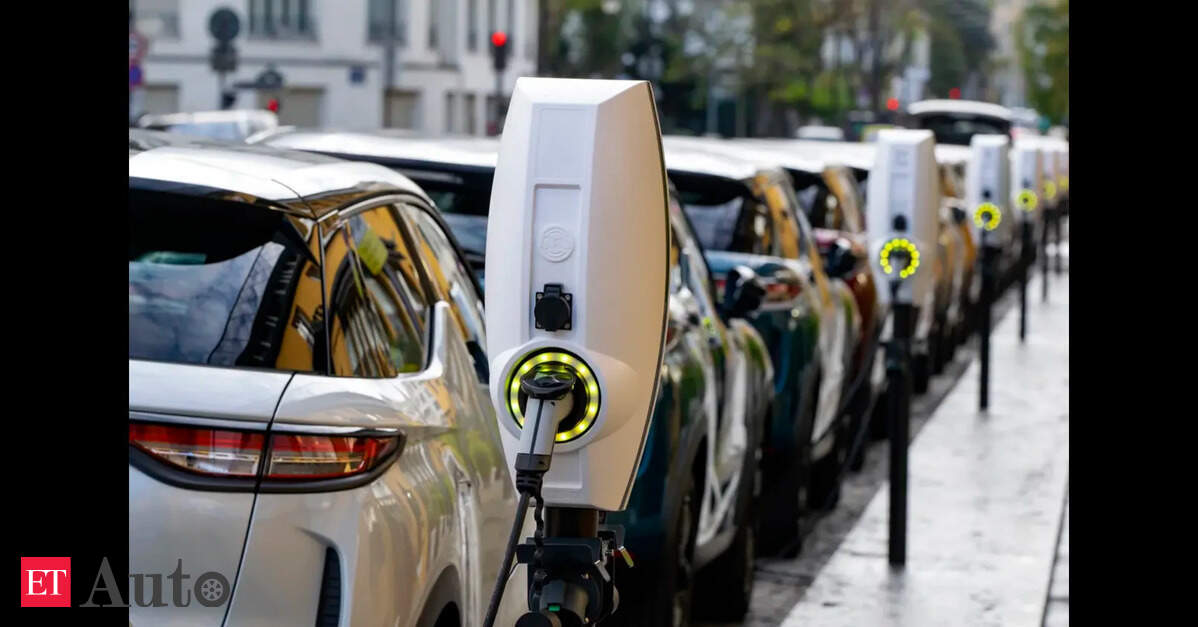

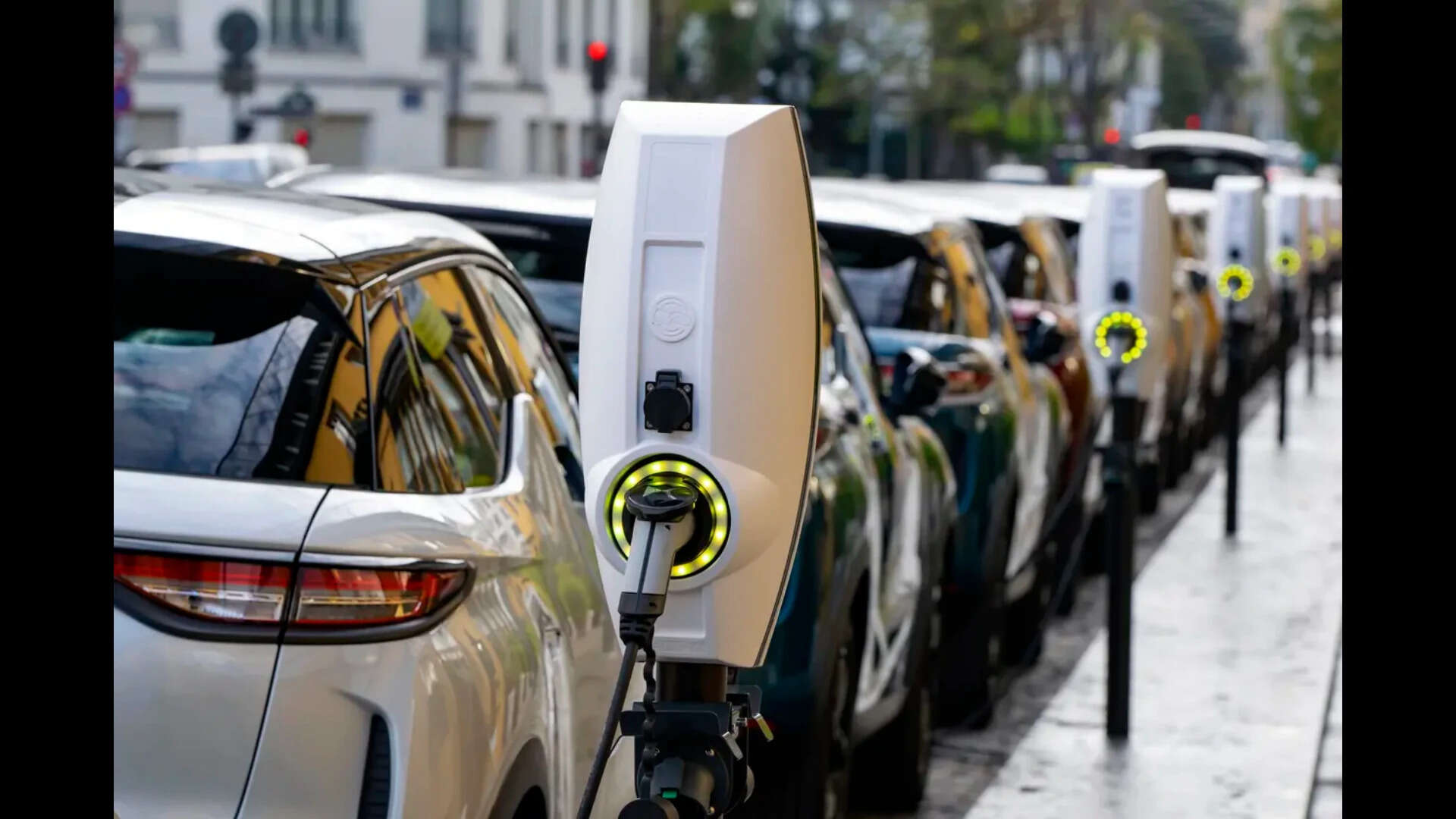
Electric cars are racing out of dealerships at such a rate that manufacturers can’t keep up, extending wait times of popular models to as much as three months.
Companies from Maruti to Mercedes-Benz are scrambling to meet the soaring demand sparked by a surge in fuel prices due to the Iran war, marking a turnaround in fortunes for the Indian EV industry, with buyers having previously been concerned over the adequacy of charging networks and higher prices compared with internal combustion engine (ICE) cars. Luxury car makers Mercedes-Benz and BMW have sought an increase in EV allocations from headquarters with the initial planned quota for India exhausted.
“Demand for BEVs (battery electric vehicles) has shot up 40 per cent since March,” said Santosh Iyer, managing director at Mercedes-Benz India. “The CLA BEV’s demand has exceeded our expectations. We are waiting for the next allocations to commence future bookings of the CLA, which has a waiting period of two-three months now.” Iyer was referring to the CLA electric sedan launched in April. Dealers have stopped taking orders for the model owing to the backlog. BMW Group India is drawing on EV inventory originally planned for the second half of 2026 to meet stronger-than-expected demand in the first half, said Hardeep Singh Brar, president. “We have to request our HQ for more allocation for the entire year,” he said. The share of electrics in total sales at BMW India climbed to about 33 per cent in May, from 26 per cent at the end of March, and 21 per cent at the end of December. EV delivery periods at the company are currently at about three months.
At the country’s largest carmaker Maruti Suzuki, which faced a slow start in the EV segment, bookings for the new e-Vitara SUV have doubled in the last one month. The vehicle has a waiting time of 6-8 weeks, per the company’s dealers.
“The West Asia conflict could be a tipping point (for customer shift to EVs,” said Partho Banerjee, senior executive officer, marketing and sales at Maruti Suzuki. “We cannot ramp-up production overnight. Our fourth line in Hansalpur (Gujarat) will come onstream in July, after which we will get some additional capacity.”
Other brands are experiencing a similar scenario. Waiting periods at Mahindra & Mahindra have stretched to six to eight weeks for the XEV 9e electric SUV, depending on the variant, and four weeks each for the BE 6 and XEV 9e models, according to dealers. Customers have to wait for about six weeks to get their hands on Tata Motors’ Punch and Tiago EVs.
At JSW MG Motor, the Windsor and ZS EV models-earlier available off the shelf-currently have a waiting period of nearly a month.
“There is a natural footfall and demand for EVs now growing organically,” a JSW MG dealer said, adding that the market has shifted from a manufacturer-push to a demand-pull dynamic.
Shailesh Chandra, managing director at Tata Motors Passenger Vehicles and Tata Passenger Electric Mobility, said the company’s EV bookings are currently at 30-33 per cent of total car demand, double of actual deliveries of just 15-16 per cent.
“This gap clearly indicates that EV adoption is currently limited more by supply constraints-particularly on the supplier ecosystem-than by demand itself,” said Chandra.