
Last Updated:
After US President Donald Trump slapped the first tariff of 25% in early August, PM Narendra Modi asked citizens at least four times to buy Swadeshi


PM Modi’s ‘Swadeshi’ is about economic self-reliance, cultural pride and nationalist sentiment.

Not very long ago, the word ‘Swadeshi’ used to be dismissed casually. Not just politically, with leader of Opposition Rahul Gandhi calling ‘Make in India’ ‘Assemble in India’, but there was also a general sense of disbelief that substitutes could be made in India and scaled up and those already available should be tried. But things have changed since US President Donald Trump targeted India with the highest tariff in the world, along with Brazil, at 50%. There seems to be a chorus to make PM Narendra Modi’s two pet projects — ‘Make in India’ and ‘Vocal for Local’ — into one attractive package called ‘Swadeshi’.
Recommended Stories
The government, its ideological mentor, Rashtriya Swayamsevak Sangh (RSS), their affiliate organisations, influential Yoga bodies with millions of followers, and universities have come together to underline the message.
Modi machinery at work
After Trump slapped the first tariff of 25% in early August, PM Modi has asked citizens at least four times to buy Swadeshi. That is nearly once every week — early August in Varanasi, mid-August during his Independence Day speech, on August 25 in Ahmedabad and on August 31 during his monthly radio programme Mann Ki Baat.
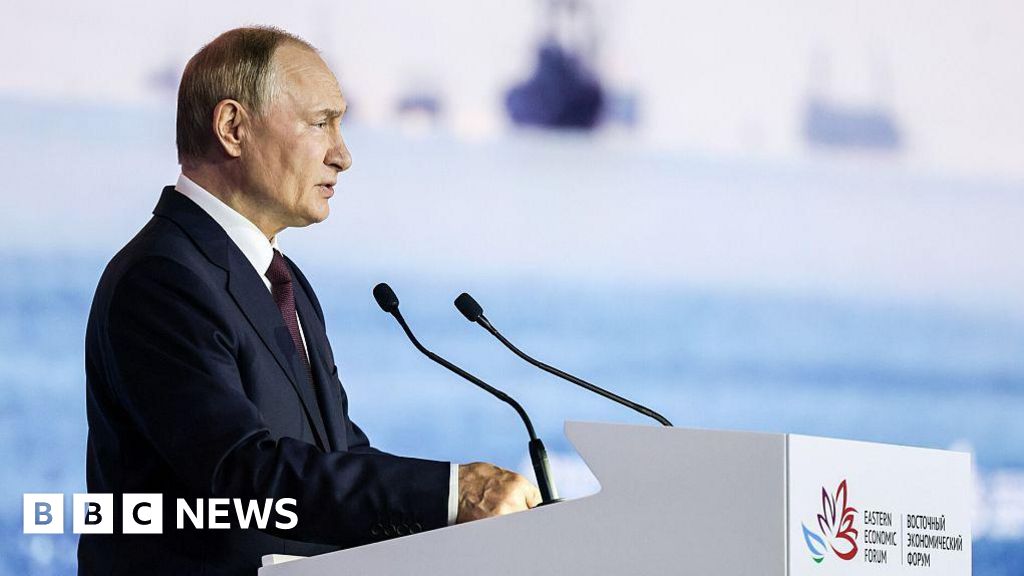
In the radio stream, which was aired when he was in China shaking hands with President Xi Jinping and Russia’s Vladimir Putin, he urged Indians, “This time, the whole country is celebrating the pomp and fervor of ‘Ganesh Utsav’. The radiance of many festivals will spread in the coming days. You should never forget about Swadeshi during these festivals. Gifts should be those made in India, attire should be woven in India, decor should be made from materials made in India, luminary items from India-made frills and many more; everything should be Swadeshi.”
Unlike the previous efforts, the government’s push was immediate. The commerce ministry is reportedly offering export assistance to affected industries, including chemicals, gems and jewellery. The ministry is helping search for new markets for them to shield them from the 50% US tariff shock.
Textiles/clothing, gems and jewellery, shrimp, leather and footwear, animal products, chemicals, and electrical and mechanical machinery are some of the key sectors which have been most affected by the heightened import duties from the Trump administration.
The last time India gave a strong push to ‘Swadeshi’ was during the COVID-19 pandemic. The Prime Minister had asked his administration to seize the pandemic as an “opportunity”. With Trump’s 50% tariff five years later, Union Minister of State for Defence Sanjay Seth said something similar. The minister appealed to the micro, small and medium enterprises (MSMEs) in the Kolhan region in Jharkhand to come forward and seize the opportunity.
He asked the entrepreneurs to participate in the East Tech 2025 Expo, which is organised by the Army and aims to give orders worth Rs 1,000 crore to MSMEs of the state to manufacture products for requirements in the armed forces. “Atmanirbharta se sampurnta mantra of the Union government is a clarion call to entrepreneurs and traders of the state to make the best use of the opportunity in the advancement of self-business and contribute towards the goal of making India self-reliant,” he said unapologetically.
The Bharatiya Janata Party’s (BJP) economic wing head, Gopal Krishna Agarwal, told News18 how ‘Swadeshi’ is no longer just a slogan for the Centre. “The whole ecosystem of cost reduction for manufacturing sector has been undertaken by the Prime Minister, whether in infrastructure development to reduce logistics cost of finished goods and raw materials or reduction in tax and deduction in compliances, bringing in this GST reform, chip manufacturing, space technology, defence procurement, tech initiatives like e-commerce platform like JAM, ONDC — there is a comprehensive effort from our Prime Minister to strengthen manufacturing, protect domestic market, reduce cost of production and innovate through use of new technology and make our industry globally competitive. This is what the present clarion call of ‘Swadeshi’ is all about,” he described.

Sangh & affiliates drum up support
Towards the end of August, the RSS held the centenary celebrations in New Delhi, which were attended by over 50 foreign diplomats. RSS Chief Mohan Bhagwat, whose every utterance has political weight, championed voluntary trade and swadeshi consumption at the event at Bharat Mandapam, on a day when the United States’ tariffs on Indian imports went up to 50 per cent.
“Following Swadeshi means that what is made at home should not be bought from outside. In summer, you can make lemon sherbet and drink it, why bring Coca-Cola or Sprite,” asked Bhagwat, directly naming Coca-Cola — an American multinational company that was founded in the United States and is headquartered in Atlanta, Georgia.
Bhagwat hyphenated his idea of ‘Swadeshi’ from Nehruvian socialism when he clarified, “When they talk about swadeshi, it seems that there will be no extensive relations with foreign countries, but it is not so. To be self-reliant does not mean to shut out the rest of the people. One has to be self-reliant, but the world runs on interdependence.”
The Swadeshi Jagran Manch (SJM), the Sangh’s economic affiliate established in 1991 and a powerful body that has forced the Modi government to reconsider many decisions in the past, launched a drive called ‘Swadeshi Suraksha evam Swavalamban Abhiyan’ earlier this year on June 12 — when India was still face tariffs. But with changed realities, the SJM revived the drive early August at Delhi’s Connaught Place where they held a protest against “illegal, unethical and unreasonable tariffs”.
Now the Sangh affiliate is urging Indians — many of whom are dismayed at President Trump’s treatment of India — to boycott U.S.-based companies such as Amazon, Walmart, Flipkart, McDonald’s, Coca-Cola, Pepsi, KFC and Domino’s.
“Till recently, we continued to think international trade is essential with minimum restrictions on imports and exports. That is the way we can get the best goods at cheapest price for our consumers and our goods will also get market according to WTO rules and regulations. But when President Trump started imposing reciprocal tariffs, we realised the WTO rules are being circumvented. There was no alternative left for India but to pay back in the same coin,” SJM co-convenor Ashwani Mahajan told News18.
He added that if India asking the likes of Google and Amazon to wrap up and leave will be too radical, they have the right to ask Indians to buy Indian products from Indian sellers. “That is what we are doing,” he added.
The soft power rush
Patanjali is not just an FMCG brand in India but a Yoga institute that has a major influence on a large section of Indians. Patanjali has tied its brand to Swadeshi and self-reliance, encouraging Indians to choose indigenous products over foreign brands, while its main face, Baba Ramdev, preaches to choose ‘Swadeshi’ in his yoga camps attended by thousands. His official YouTube handle, where his Yoga sessions are streamed, has 11.3 million followers. With Trump’s 50% tariff and the government going full throttle to implement the plan of action for ‘Swadeshi’, Ramdev has thrown his weight behind what can at this point safely be termed a silent movement.
The Yoga Guru termed the steep US tariff on India as “political bullying, hooliganism, and dictatorship”. Just like SJM, Ramdev, too, urged his followers to boycott US fast-food and drink brands like Pepsi, Coca-Cola, KFC, and McDonald’s.
“Not a single Indian should be seen at the counters of Pepsi, Coca-Cola, Subway, KFC, or McDonald’s. There should be such a massive boycott that chaos will ensue in America,” he said.
While Ramdev appealed to his followers, the anti-American ripple has now reached the campuses of educational institutions as well. The Lovely Professional University (LPU) has banned beverages from US-based giants Coca-Cola and PepsiCo on its campus, citing Washington’s recent tariff hike on Indian goods as the reason.
Today, in direct response to Trump’s 50% tariffs, LPU has banned American beverages on campus, giving a clarion call for Swadeshi 2.0.The message is clear ~ India WILL NOT bow down to any unfair tactics of the United States.
Let’s work together to make India stronger from… pic.twitter.com/cX8pPIGHGE
— Ashok Kumar Mittal (@DrAshokKMittal) August 27, 2025
The university’s founder-chancellor Dr Ashok Kumar Mittal drew parallels with the 1905 Swadeshi movement, while calling Trump’s action “bullying”. LPU is one of the country’s largest private universities with over 40,000 students.
The word ‘Swadeshi’ literally means “made in one’s own country”. The political movement first started in British Calcutta as a direct response to the Partition of Bengal by the British. In August 1905, a resolution in Calcutta Town Hall decided to boycott British goods, promote Indian goods and National Education with a cultural revival. This was India’s very first tryst with ‘Swadeshi’. But Modi’s ‘Swadeshi’ is not just about boycott, it is also about economic self-reliance, cultural pride and nationalist sentiment. But more than anything, it is no longer just an eight-letter word.
About the Author

Anindya Banerjee, Associate Editor brings over fifteen years of journalistic courage to the forefront. With a keen focus on politics and policy, Anindya has garnered a wealth of experience, with deep throat in …Read More
Anindya Banerjee, Associate Editor brings over fifteen years of journalistic courage to the forefront. With a keen focus on politics and policy, Anindya has garnered a wealth of experience, with deep throat in … Read More
September 05, 2025, 13:55 IST
Loading comments…
Read More