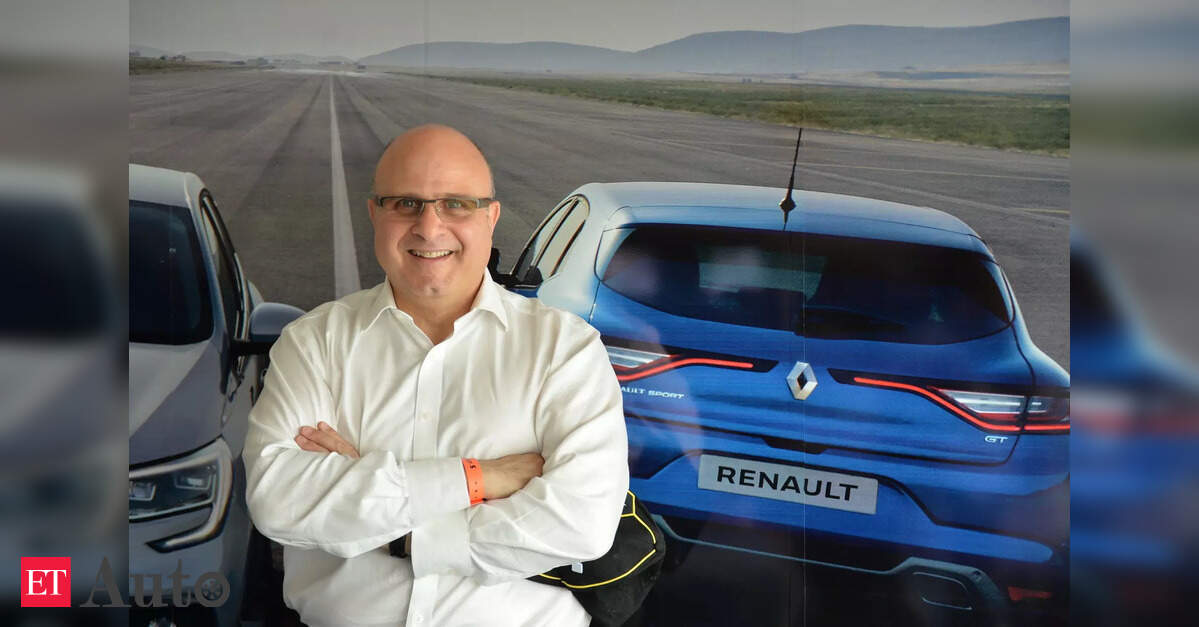

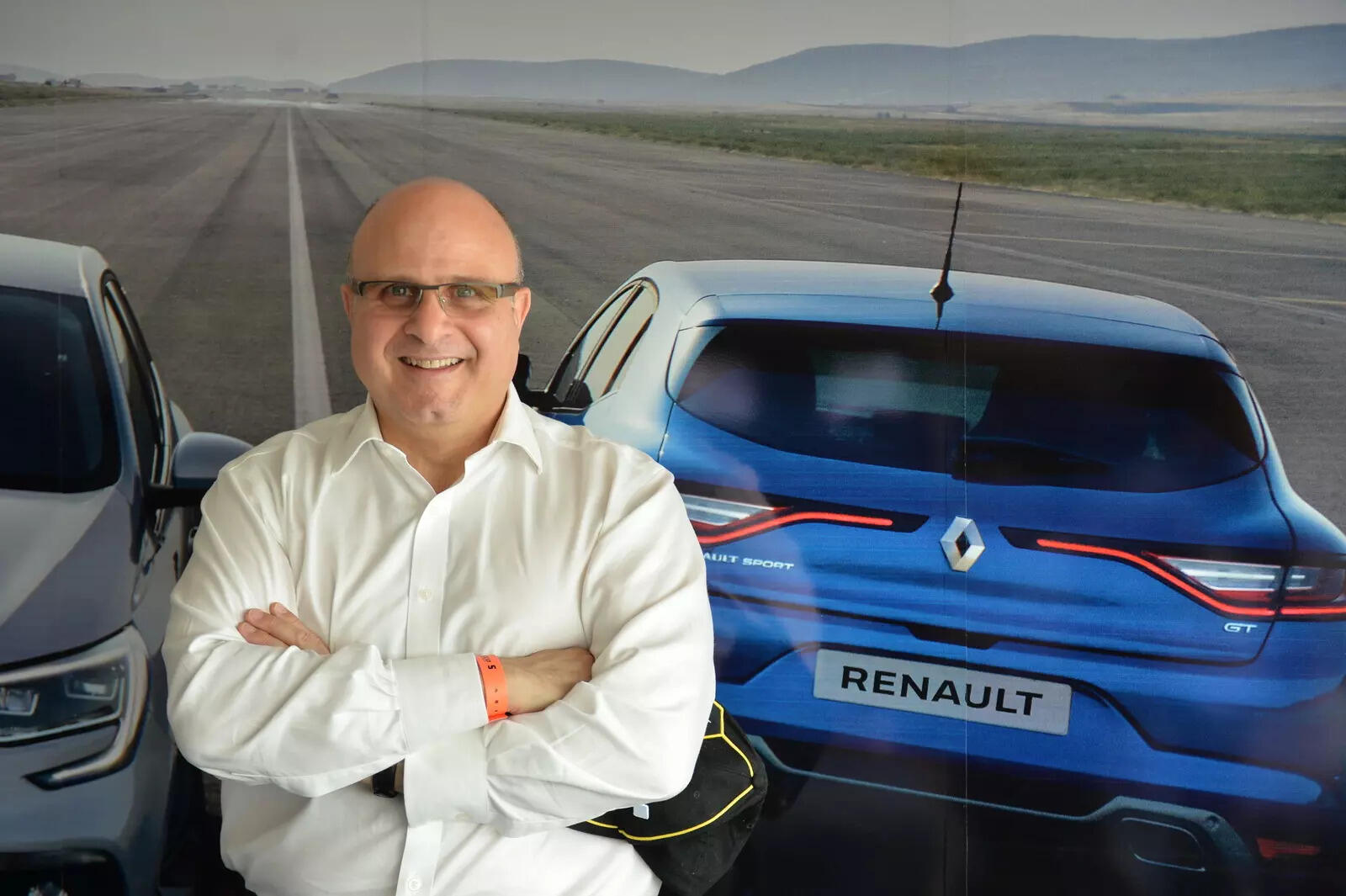
 Marc Nassif
As Marc Nassif watched the Duster unveiling event streaming live from Chennai to his living room in Barcelona over six weeks ago, memories came flooding back. The former Managing Director of Renault India vividly remembered the time when this SUV made its debut nearly 15 years ago and took the market by storm.
“I recollect that it was in early July 2012 and the India team carried the show alone at the Delhi launch. There was nobody from Paris, nobody from corporate but the magic was the team itself. It was like a beautifully conducted orchestra,” Nassif told ET Auto in a video interview from Barcelona, Spain.
The all-new Duster is different from its super-successful predecessor, and Renault is confident it can create the same magic once more. Nassif echoes this optimism and believes that history will be written all over again.
“The Duster that is being launched right now in India is completely different from any (Duster) you have around. It is a specific masala and the Duster we brought in was the best masala we had at that time in 2012,” he said.
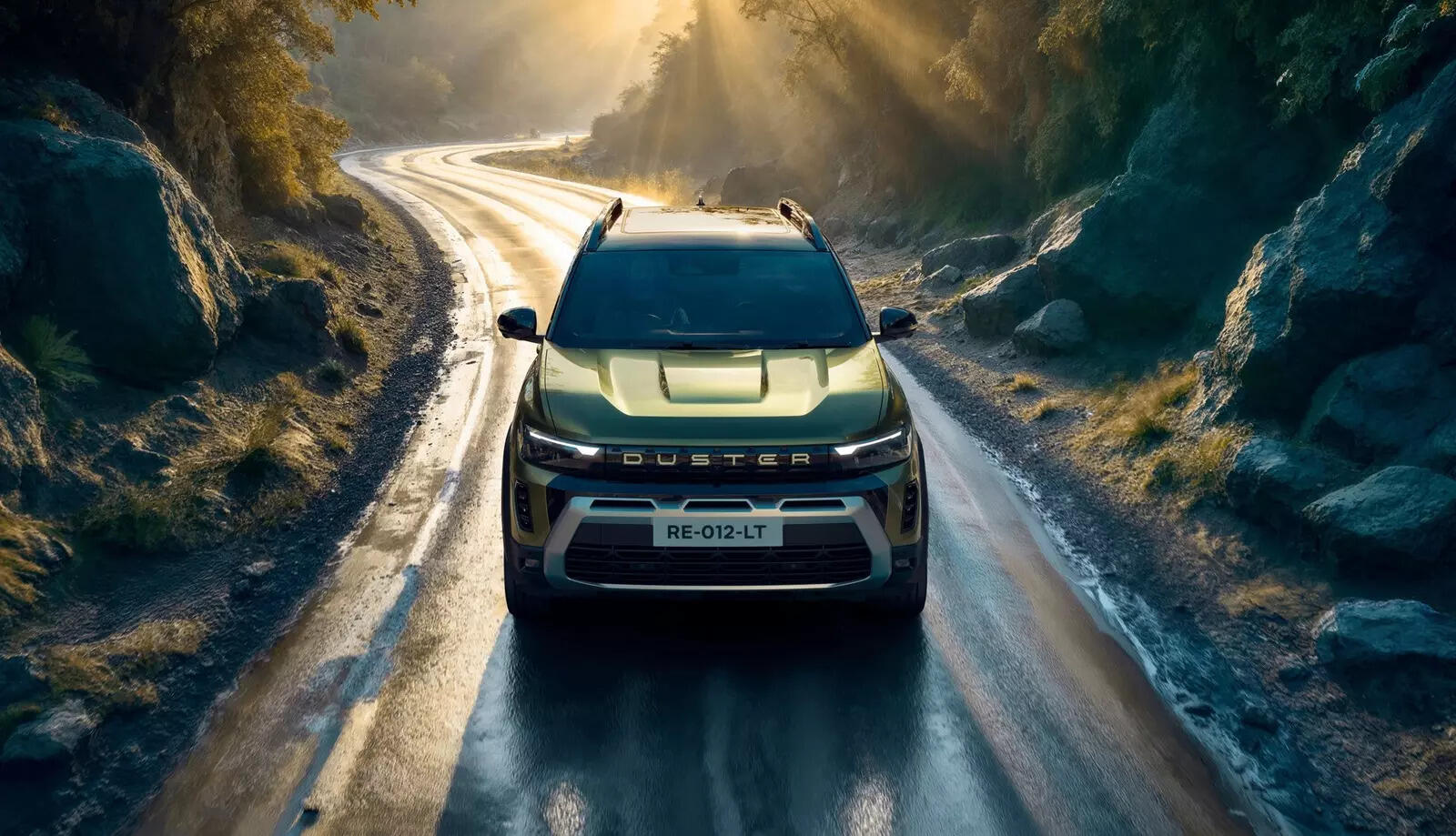
It was a runaway hit, and customers loved the compact SUV as its sales soared and Renault became a strong brand to reckon with in the market. Today, the most interesting part of the new Duster is the brand name prominently engraved on the grill.
Emerging as a brand in its own right
“I think it is a smart move where you do not have Renault on the front but Duster. This tells you that Duster has by itself become a brand on its own. If you build your brands on robust bricks, you will achieve your goals. When you have a strong product, awareness comes along,” explained Nassif. Also Read: Renault’s new global growth strategy puts India in driver’s seat
The success of the new Duster is imperative for Renault, which has, over the years, struggled to get its act together in India. The company tried to do its bit with products like Kwid, Triber and Kiger, but these could not keep pace with rival manufacturers’ launches.
The bigger mistake, perhaps, was not capitalising on the success of the Duster, launched in 2012. Nassif concedes that this could have been an error of judgment.
“Well, obviously, I was not involved in further decisions after I left India, but I can state now that not launching the next-generation Duster was a big mistake. Obviously, there were some cash constraints because it was a new platform, but I think the bill has been quite expensive for Renault in the process,” he said.
A Renault veteran for many decades, Nassif saw the India story fall apart after he bid adieu in 2014 to take on another overseas assignment.
“When you look at all those years with no results while struggling to survive, it was a very sad condition that Renault did not deserve to be in. You will now see things looking up,” he said.
When everyone was in sync
Nassif looks back once again at the heady Duster days when he was MD, and things were a lot different for his company.
“Everybody was in tune right from the plant, product planning, marketing and purchasing to quality and engineering. I think that made the difference along with the fact that the concept of a compact SUV was spot-on. We did not know what was going to happen but could feel that we had something big in our hands,” he recalled.
This was not arrogance but a sense of quiet confidence that the lessons from the Logan debacle had been learnt. As Nassif put it, “I started in 2006 when I jumped on to the world of Mahindra Renault from Paris and for two years was shuttling between Paris and Mumbai followed by Chennai six years after.”
It was intensive work, which involved fixing the first JV for the Logan “with no bad feelings”. While the model was perceived as the most valuable solution for emerging markets, it was a non-starter in India. “Mahindra kept the platform, produced Verito, and I think that was a smart move,” he said.
As Renault began rebuilding its house, it launched CKD products like Fluence and Koleos, followed by rebadged models with Nissan, its Indian ally. These included Scala-Sunny and Pulse-Micra.
Steering clear of the Logan
The bigger job on hand was to build Renault’s distribution network and convince dealers that it meant business. “We prepared the foundation of the brand while building awareness and getting away from the Logan story. Sure, the car was very good in terms of reliability and quality, but it was not very sexy,” said a candid Nassif.
The change in market perception began happening gradually with Fluence and Koleos before Duster came along in 2012.
“I do not think it would have worked without doing that preparatory work. If you don’t have dealers, you don’t get customer reach and, subsequently, the final quality that you need. Dealers have that extra special touch with customers,” he pointed out.
Quite unlike today, where Renault has complete ownership of the Chennai plant, there was Nissan to contend with for many years prior to the recent change. The two continue to be partners to operate RNTBCI (Renault Nissan Technology & Business Centre India) in Chennai.
Also Read: How IIT Kanpur helped shape the new Renault Duster
“Getting everybody aligned was for me the biggest challenge. We had to be quick with smart solutions and deliver on time. There was a single management committee with people from the plant and tech centre along with sales and marketing, product planning, finance and so on,” elaborated Nassif.
Value matters more than low cost
From his point of view, the mantra was simple: when low cost doesn’t work, value does. This was the time when the company was weaning itself away from the Logan chapter while simultaneously pursuing the ULCC (ultra low-cost car) project with Bajaj Auto.
“You cannot tell someone that you are going to buy the cheapest car in the world and we learnt that we need to really go on value. The value you bring to the customer is key and cost is not the only parameter,” said Nassif.
This perhaps affected Datsun sales too, even though it was part of the Nissan portfolio. Customers did not feel too chuffed about what they perceived as driving a cheap product, and the message of value-for-money got lost.
Renault was betting big on Triber and Kiger, but its headquarters in Paris was grappling with its own set of challenges. The arrest of Carlos Ghosn in 2018 sent shockwaves through the Renault-Nissan ecosystem, and the alliance went through a rocky phase thereafter.
Then came the COVID outbreak, followed by the more important task of putting things in order. India did not get the attention it deserved, and Renault found itself on a sticky wicket.
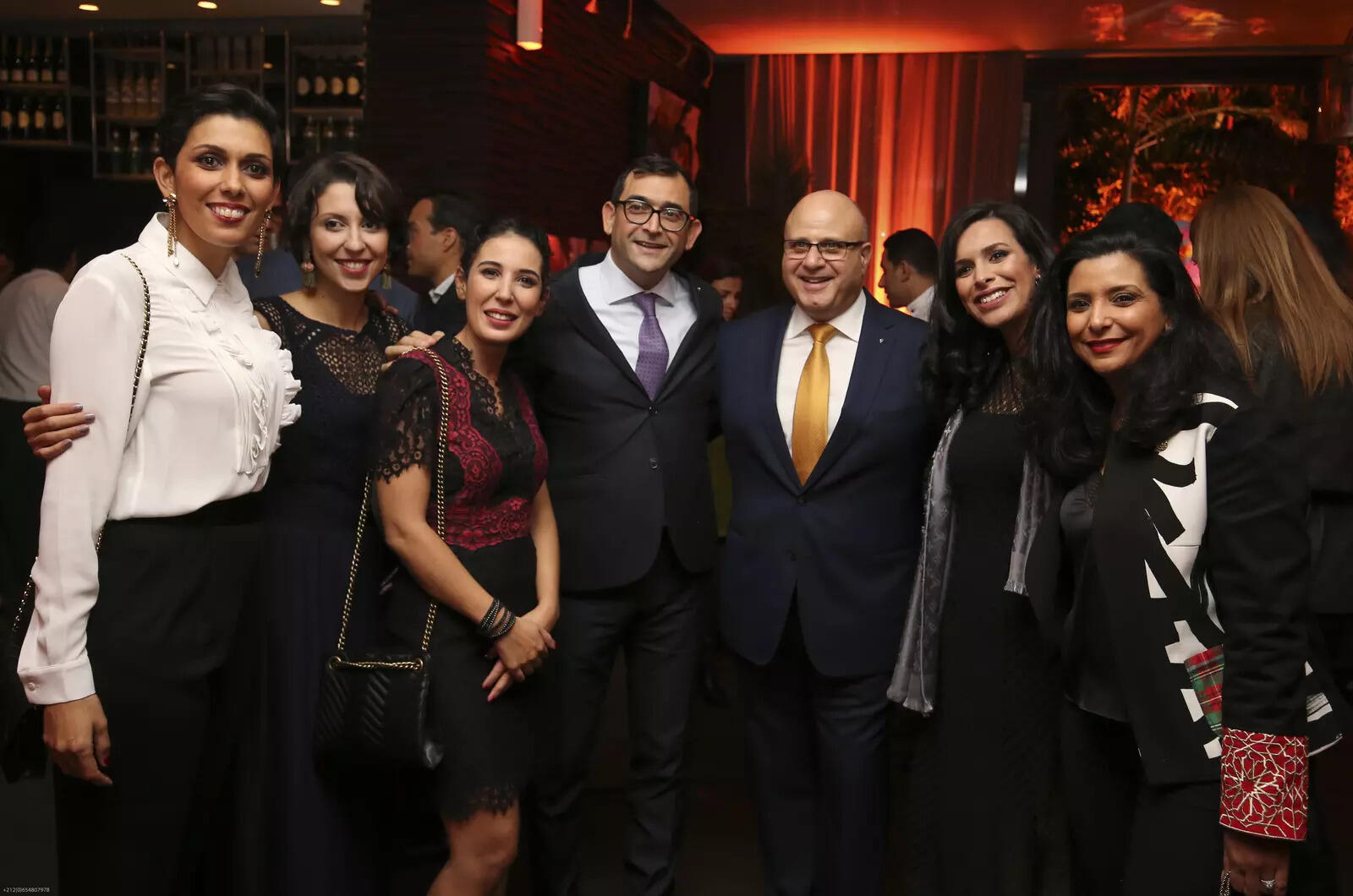
Happy days in Morocco
After moving out of India in 2014, Nassif spent six years as Renault Group CEO in Morocco, where he ensured that the French carmaker’s market share did not slip by 40 per cent at any point.
The plants were also operating at “full throttle”, delivering over 400,000 vehicles every year.
“It is something I feel very good about and I was fortunate to have worked with some really special people at Renault,” he told this writer in an earlier interview. Between his stints in India and Morocco, Nassif spent two years (mid-2014 to early ’16) at headquarters in Paris overseeing international engineering operations across Brazil, South Korea, Spain, India, Romania, Turkey, Morocco, Colombia, Russia and Argentina.
He had also told this writer, while preparing to head Renault’s Morocco operations in 2016, that it would almost feel like an Indian homecoming.
The plant in Tangier was inspired by the Chennai facility’s manufacturing processes — teams from Morocco had visited Chennai on several occasions to understand and replicate some of the systems there prior to its commissioning in 2012.
Nassif also had to oversee the other Renault plant in Casablanca, and the models sold in Morocco included the Logan, Sandero, Lodgy, and the Dokker LCV. Over 90 per cent of the four lakh cars produced jointly at Tangier and Casablanca head out to 70 markets worldwide under the Dacia and Renault brands.
Leaving on a high note
Nassif admitted that he had a “wonderful professional stint” in Morocco, where the efforts to increase market share had paid off handsomely. “To that extent, I am leaving on a high,” he added. Apart from a huge jump in annual output, his tenure also saw a massive boost in the supplier ecosystem, with the number of Tier 1 suppliers tripling.
Nassif called it a day at Renault in 2022 and spends time between Barcelona and Paris, where he does a mix of consulting work and mentoring university students. India still has a very special place in his heart, and he constantly keeps track of what is