
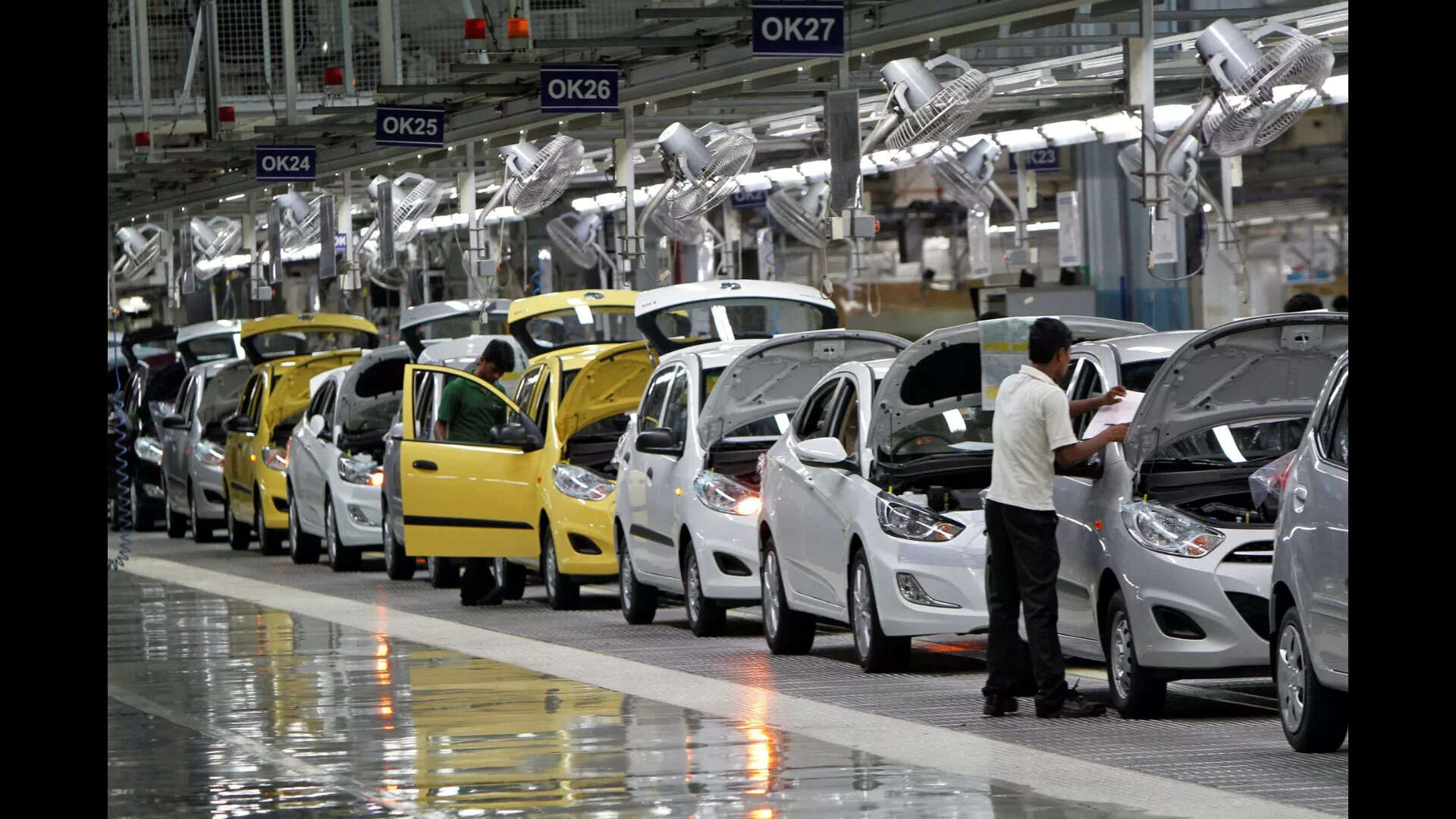
India’s passenger vehicle (PV) industry is set to close the ongoing financial year with sales of about 4.7 million units, staying on track to meet its annual target despite supply disruptions and rising logistics costs linked to tensions in West Asia.
Industry executives said volumes could have been higher had freight bottlenecks and higher transportation costs not constrained dispatches from factories in the closing month of FY26.
Even so, the sector’s growth trajectory remains intact. With domestic demand holding firm and supply conditions expected to stabilise, the industry is projected to cross the five-million annual sales mark in FY27 — taking India’s PV market to a new scale.
Dealers across markets report strong bookings ahead of the fiscal year-end, traditionally the busiest period for vehicle sales, but say inventories have tightened due to slower dispatches from automobile manufacturers.
According to a senior executive at a leading automobile manufacturer, “Demand on the ground continues to be strong and bookings remain healthy, but supplyside pressures are building up.” “Freight rates have moved up sharply and logistics availability has tightened in some pockets. If these issues persist, wholesale dispatches could see some dip even though retail demand remains intact,” the person added Dealers say the supply constraints are already translating into missed sales opportunities.
“Even now there is year-on-year growth, but steady supply is becoming a challenge,” said Vinkesh Gulati, a dealer. “We are losing opportunity this month as supply from manufacturers is down by about 10-15%.”
Industry bodies have also taken up the issue with the government. The Society of Indian Automobile Manufacturers (SIAM) has flagged concerns over supply chain disruptions, freight bottlenecks and rising transportation costs that could affect factory dispatches.
Cos Bank on Domestic Demand
Dealers say vehicle movement has become more expensive as transport operators charge higher freight rates after losing earlier diesel discounts, further squeezing margins.
Automakers also pointed to rising operational costs in energy-intensive processes such as paint shops at manufacturing plants. Despite these near-term challenges, companies say domestic demand remains the key growth driver for the industry. Strong order books and sustained consumer interest, particularly in sport-utility vehicles, continue to support sales momentum.
“India’s automotive market is showing remarkable resilience despite global uncertainty,” said Ravi Bhatia, president at Jato Dynamics. “Domestic demand remains the central growth engine, and that underlying strength allows the industry to keep expanding even as companies prepare contingency plans for potential disruptions.”
Automakers say order books remain robust. Maruti Suzuki recently said it is “closely tracking developments in the Middle East”, though its exposure to the region is limited and strong domestic demand continues to support production. Mahindra & Mahindra saw an increase in domestic SUV sales in February, reflecting sustained demand for sport-utility vehicles. Tata Motors also reported strong momentum in passenger vehicle sales, driven by demand for its SUV and electric vehicle portfolio.
Supply chains have also become more resilient over the past few years. Localisation levels at major manufacturers now exceed 70-80 per cent, reducing exposure to global disruptions and helping companies maintain production even during periods of international volatility.
The rapid shift toward sport-utility vehicles has also reshaped the market. SUVs now account for the majority of passenger vehicle sales in India, supporting higher volumes and improved margins across the sector, experts said.