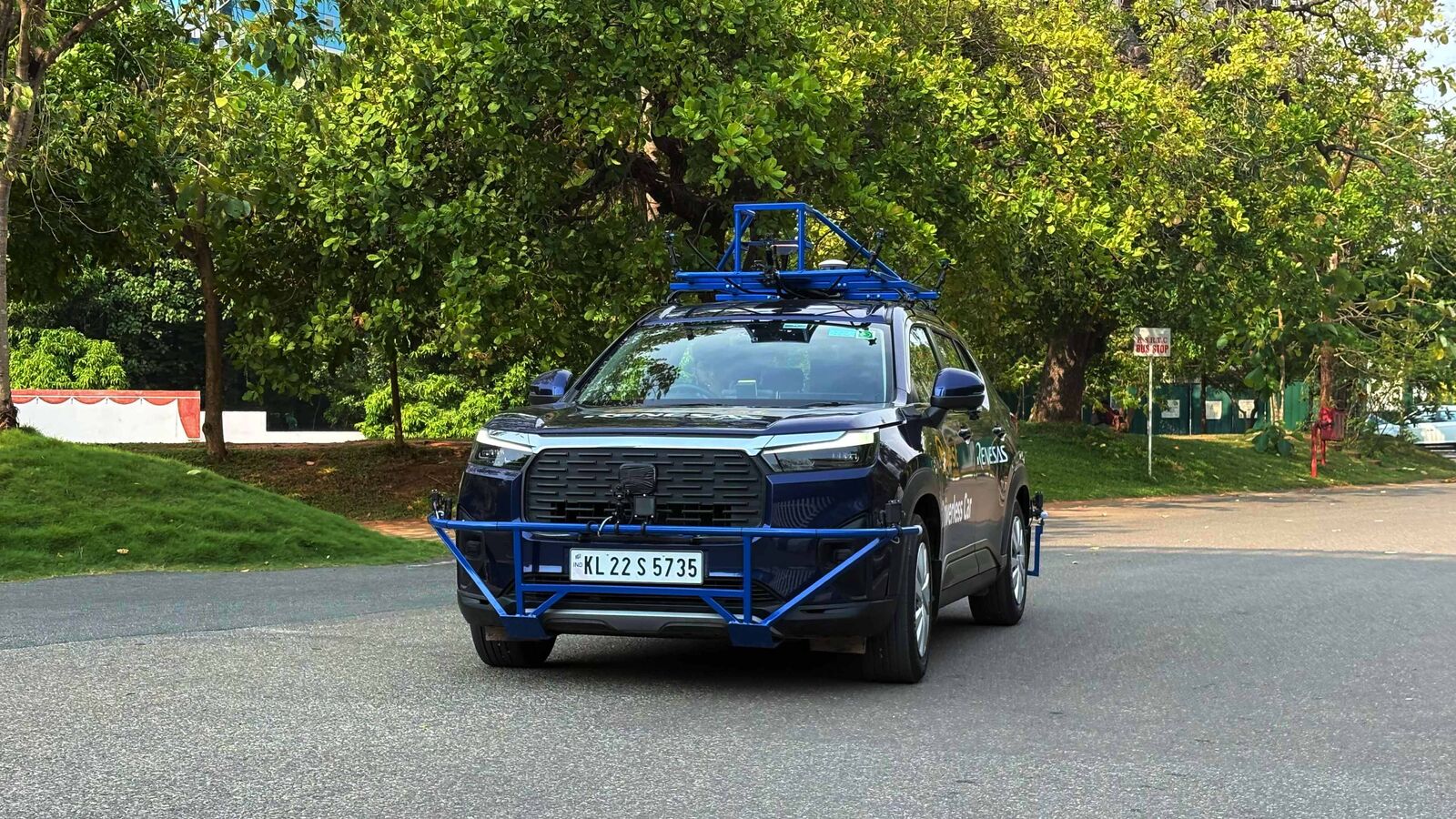

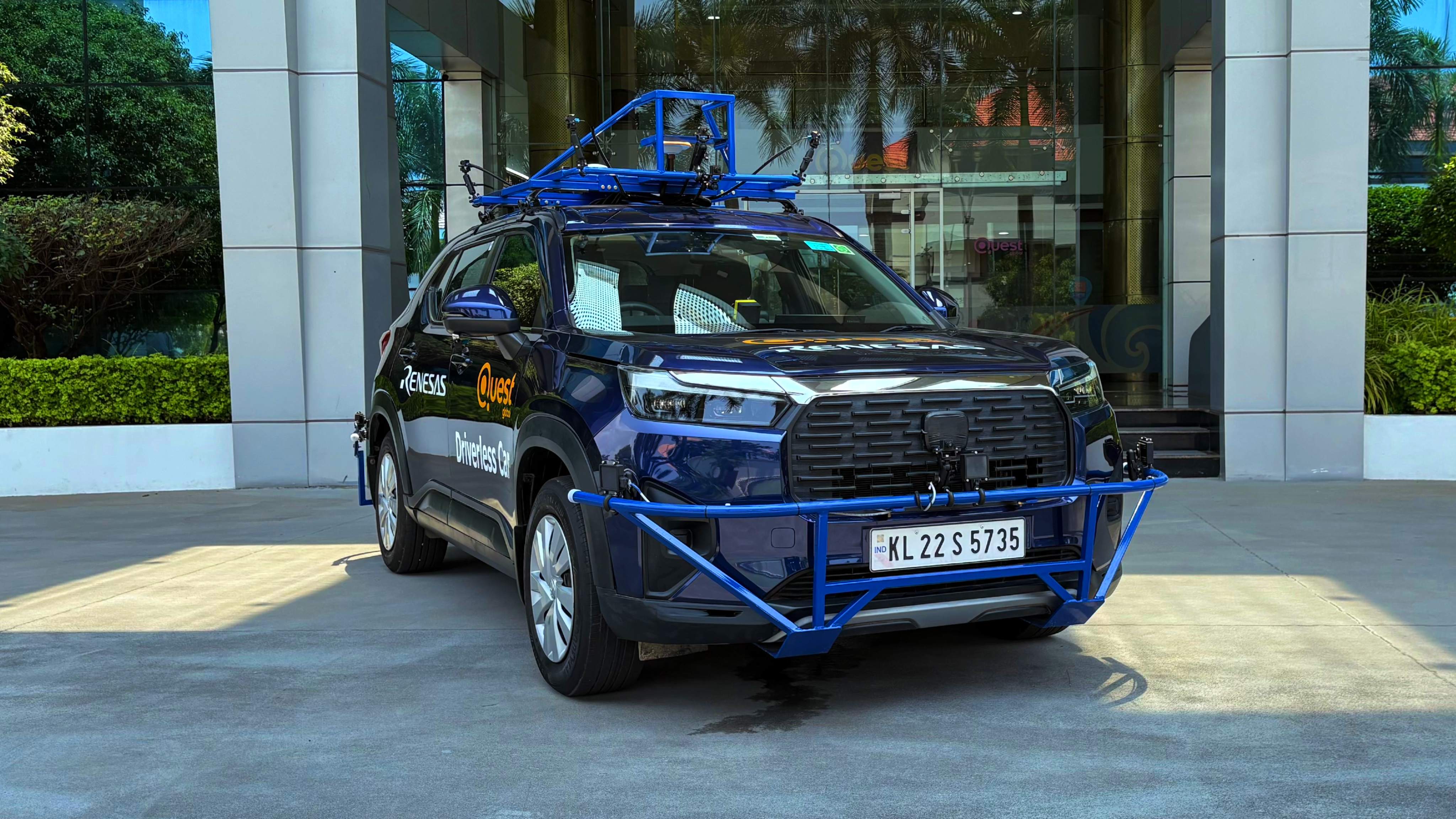
Bengaluru-based Quest Global recently invited us to its R&D centre in Thiruvananthapuram, Kerala, to give us a first-hand look at its ADAS tech development for Indian roads, and sample the QUAD prototype vehicle.

View Personalised Offers on
 Check Offers
Autonomous Driving Assistance Systems (ADAS) are now increasingly common in new-age vehicles. However, India remains a challenging market when it comes to relying on technology to do the heavy lifting. Our roads are unmarked, unpredictable, and come with unprecedented obstacles, far from the ideal conditions that allow ADAS to thrive in developed markets. But one company is aiming to change that by adapting the tech for Indian streets. To understand more about how it’s achieving the same, Bengaluru-based Quest Global recently invited us to its R&D centre in Thiruvananthapuram, Kerala, to give us a first-hand look at its tech development and also sample the QUAD prototype vehicle.
What Is Quest Global?
With a legacy spanning 27 years, Quest Global offers engineering services to OEMs across the globe. The company offers services across aerospace, railways, automotive, medtech, and more, all of which have helped it expand its understanding of different services. With over 20,000 personnel worldwide, the team is offering dedicated services to developing automotive solutions, with 4,000 members of its team working solely in this domain.
Scaling Up From L2 To L3 ADAS
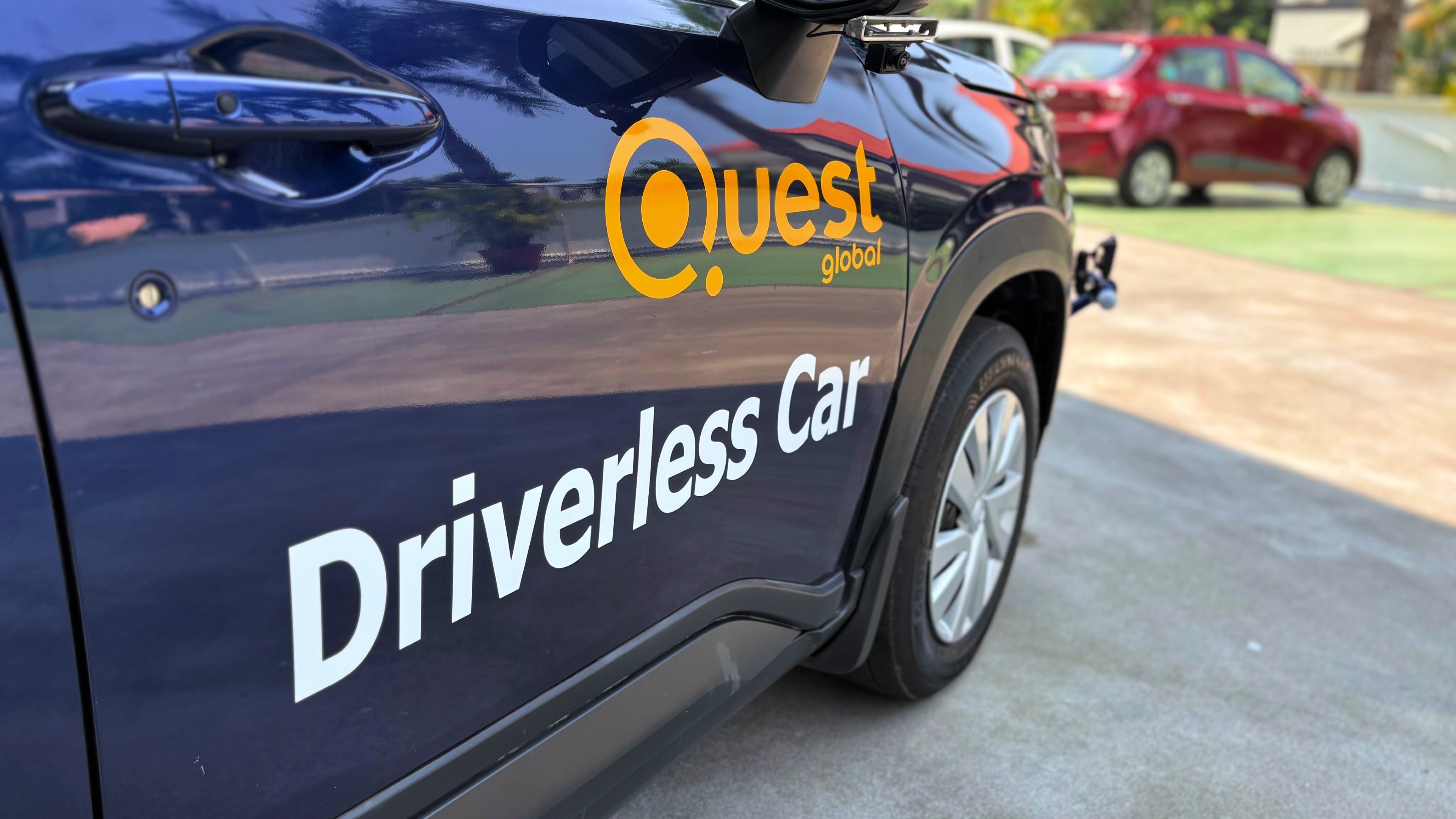
With the QUAD prototype, Quest Global is looking at developing the next generation of ADAS tech that’s more adapted to Indian conditions. QUAD stands for Quest Global Autonomous Driving and builds on the Level 2 (L2) tech currently seen on ADAS-equipped vehicles. It represents the technology moving forward to L2+, and can be scaled up to L3 and L4, as and when the market matures for the same.
Kamal Deep Sethi, Global ADAS and Autonomous Mobility Centre of Excellence Leader – Quest Global, explains, “Most Indian customers use Adaptive Cruise Control and Emergency Braking Assist. These are the most prominent features Indian OEMs are offering under the L2 stack. However, to move from L2 to L3, the car needs to function more autonomously. And to do that, the algorithm needs to see the 360-degree view from the sensors. Typically, an L3 car has 10 cameras to give you a full perspective. Four cameras offer a surround view, and the remaining six give you a 360-degree long-view perception stack. And then we need radars, either camera-based or Lidar-based, which have a lateral view. You essentially get a longitudinal and lateral view, allowing the car to carry out functions like automatically changing lanes. With L4, the vehicle moves to being fully autonomous without the need for a human in the driver’s seat.”
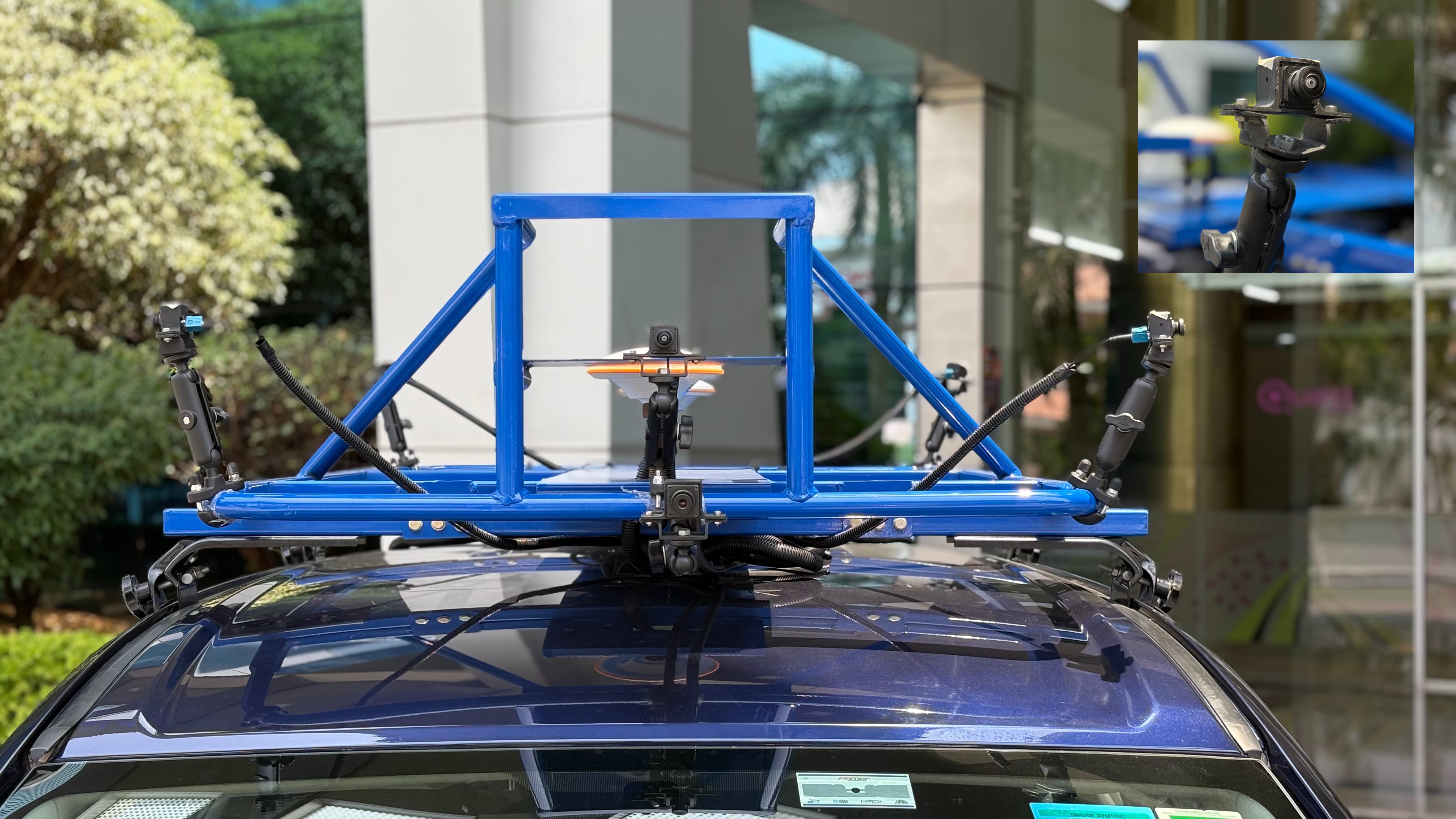
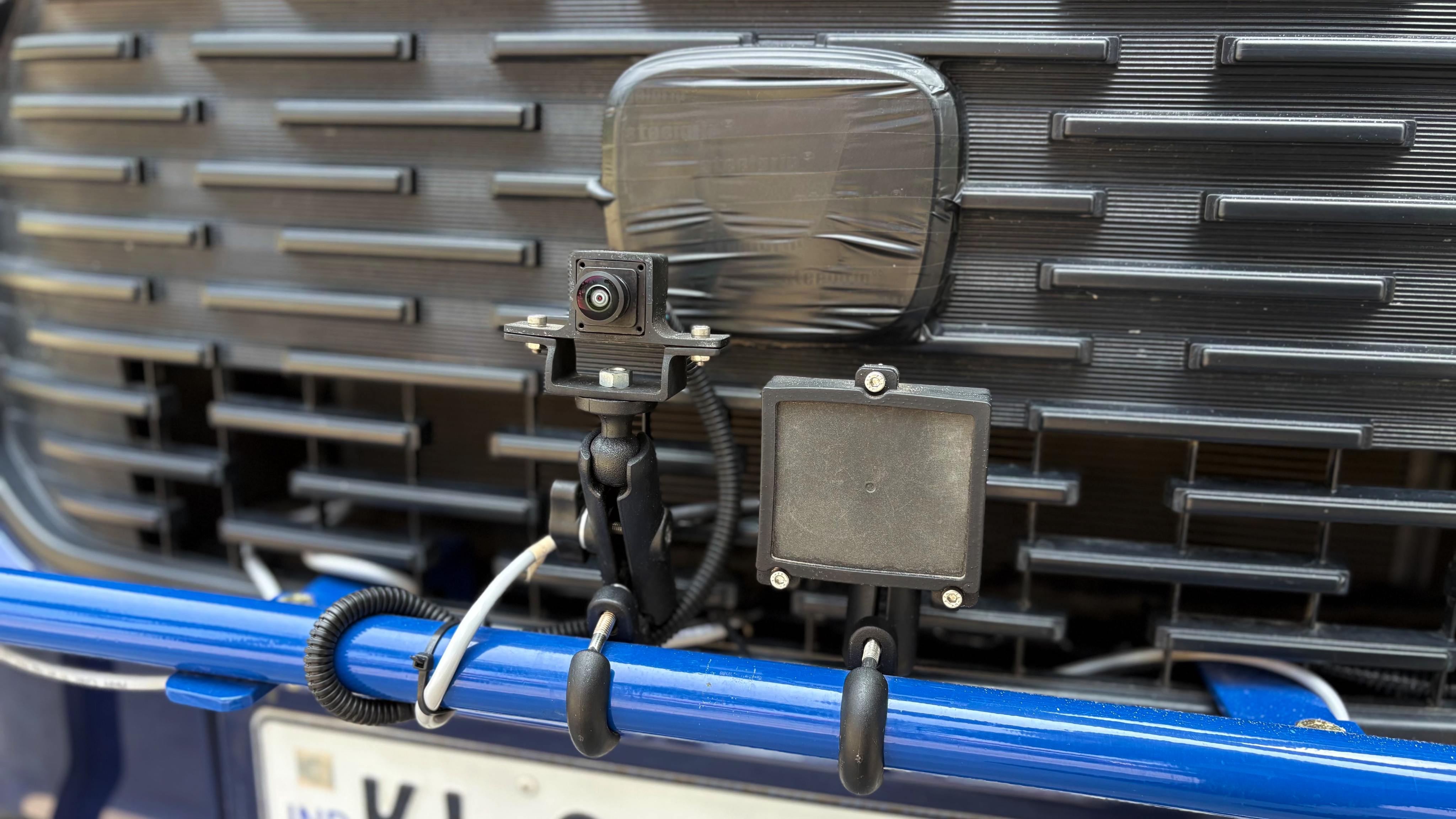
An L2-equipped car comes with five 3D radars, one long-distance front camera, and four surround cameras. This setup allows for the system to detect longitudinal movement. QUAD enhances its computational abilities with 4D radars, which can help measure the object’s height. There are an additional six cameras on top of the QUAD prototype for a 360-degree long-distance perception. This brings the total to 11 cameras and five radar systems, which helps create on point cloud data.
However, for L3, there are infrastructure-related constraints. GPS usually has an error rate of 3-5 metres with respect to localisation accuracy. This needs to be reduced to 3-5 centimetres for more precise data. Sethi says this can be achieved by upgrading the infrastructure to GNSS sensors. The new technology uses GPS with an Inertial Measurement Unit (IMU), which brings more information like yaw, pitch and roll. This brings crucial data like the terrain and elevation angles, crucial for L3 to work correctly, while paving the way for the adoption of L4 and L5 tech.
Addressing Autonomous Driving Challenges In India
Only 35 per cent of our roads have lane markings, leaving 65 per cent of roads unmarked. Then there are several other variables, including pedestrians, two and four-wheelers, six- and eight-wheelers, and driver behaviour. Another challenge is the low-speed and dense traffic, which makes it even more complex to execute fully autonomous manoeuvres at low speeds.
Quest Global aims to address these concerns with the help of an array of cameras and 4D radar systems. The ADAS system on the QUAD prototype can offer lane assist without lane markings on the road. The data from the 4D radar allows the system to mark the road boundaries, which is then fused with the camera stack, allowing the tech to create the right algorithm. The longitudinal view also allows it to read speed breakers and slow down accordingly.
The move to L3 and L4 systems will require a strong planning algorithm, which will then prompt the control algorithm – actuate, brake or steer. In dense Indian driving scenarios, the planning algorithm must begin detecting the vehicle in front’s intent to move. It also needs to detect behavioural patterns much earlier for seamless operation. This will help the planning algorithm determine if it needs to slow down or increase the speed.
Transition to L2+ ADAS is sooner than you think
One of the use cases to come with L2+ will be autonomous parking, wherein the vehicle will be able to parallel park itself, which should be a reality in the coming years. You can also expect to see the vehicle park itself at a 50-80 metre distance autonomously. Another early application of the adoption of autonomous technology will be for commercial vehicle operators over long distances. Dangerous activities like mining sites can switch to the tech as well, where extreme external conditions can be dangerous for the drivers. This is where fully autonomous technology will be crucial in ensuring employee safety without vehicle downtime.
Sethi says that India is about 7-9 years away from fully adopting L3 tech in its cars. But it can come in steps. The next three to five years will see more L2+ features coming to cars. Certainly, the ball is rolling, and it’s now moving faster than ever when it comes to bringing advanced tech to Indian vehicles. The challenge is for the infrastructure to catch up. Not just with prestige projects, but with city roads and bylanes also conforming to the right structure to enable the right use of ADAS. After all, the technology is intended to reduce the chaos, not add to it.
Check out Upcoming Cars in India 2025, Best SUVs in India.
First Published Date: 22 Aug 2025, 18:47 pm IST
 "‘It’s a confession of failure, shows plundering mentality’: Rajnath Singh on Munir’s anti-India speech")