
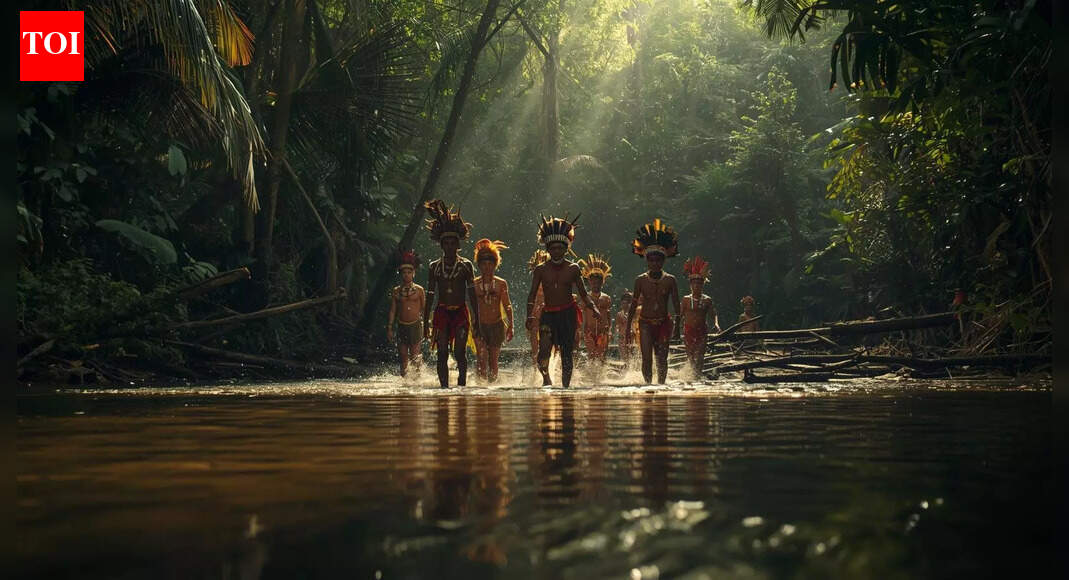


AI-generated
Footage of an uncontacted Amazonian tribe has entered public view through a recent interview involving American conservationist Paul Rosolie. “George was driving the boat, leaning back; he is driving as fast as he can and one arrow came in just above his scapula and came out by his belly button, and so he had that 7-foot arrow through him, then we pulled him out, and I saw the boat later and there was horrific amount of blood in the boat” said Paul Rosolie. The material, shown during a long-form conversation with podcaster Lex Fridman, offers unusually clear images of people who have avoided sustained contact with the outside world. Until now, most visual records of such groups were distant, blurred or captured on outdated equipment. The footage appears to show a coastal riverbank encounter that unfolded over several minutes, marked by visible tension and restraint on both sides.
Election Results
Conservation groups stress that the value of such material lies not in the spectacle but in what it reveals about vulnerability, isolation, and the growing pressures facing remote Indigenous communities across the Amazon Basin today and beyond.
Paul Rosolie’s footage offers a close look at an uncontacted tribe in the Amazon
Paul Rosolie is an American author and conservationist who has worked in the Amazon rainforest for more than twenty years. His work has often focused on protecting ecosystems and drawing attention to threats faced by wildlife and Indigenous groups. During the interview, Rosolie described the footage as one of the most intense moments of his life. He said the encounter happened while travelling by river with a small crew. The intention, he explained, was observation rather than contact, though the line between the two can be thin in such environments.
The footage shows an uncontacted tribe emerging from dense forest
In the clip, members of the uncontacted tribe emerge from dense forest onto a sandy riverbank. Butterflies fill the air, partially obscuring the scene. The group moves slowly and with clear coordination, scanning the visitors and the boat from a distance.Weapons are visible. Bows are raised. Rosolie said he focused closely on body language, watching how individuals positioned themselves and responded to movement. For a brief period, he believed violence was likely. Then, he said, something changed. As the distance closed, several members of the group lowered their weapons. Tension eased. A few appeared curious. One or two seemed almost amused.
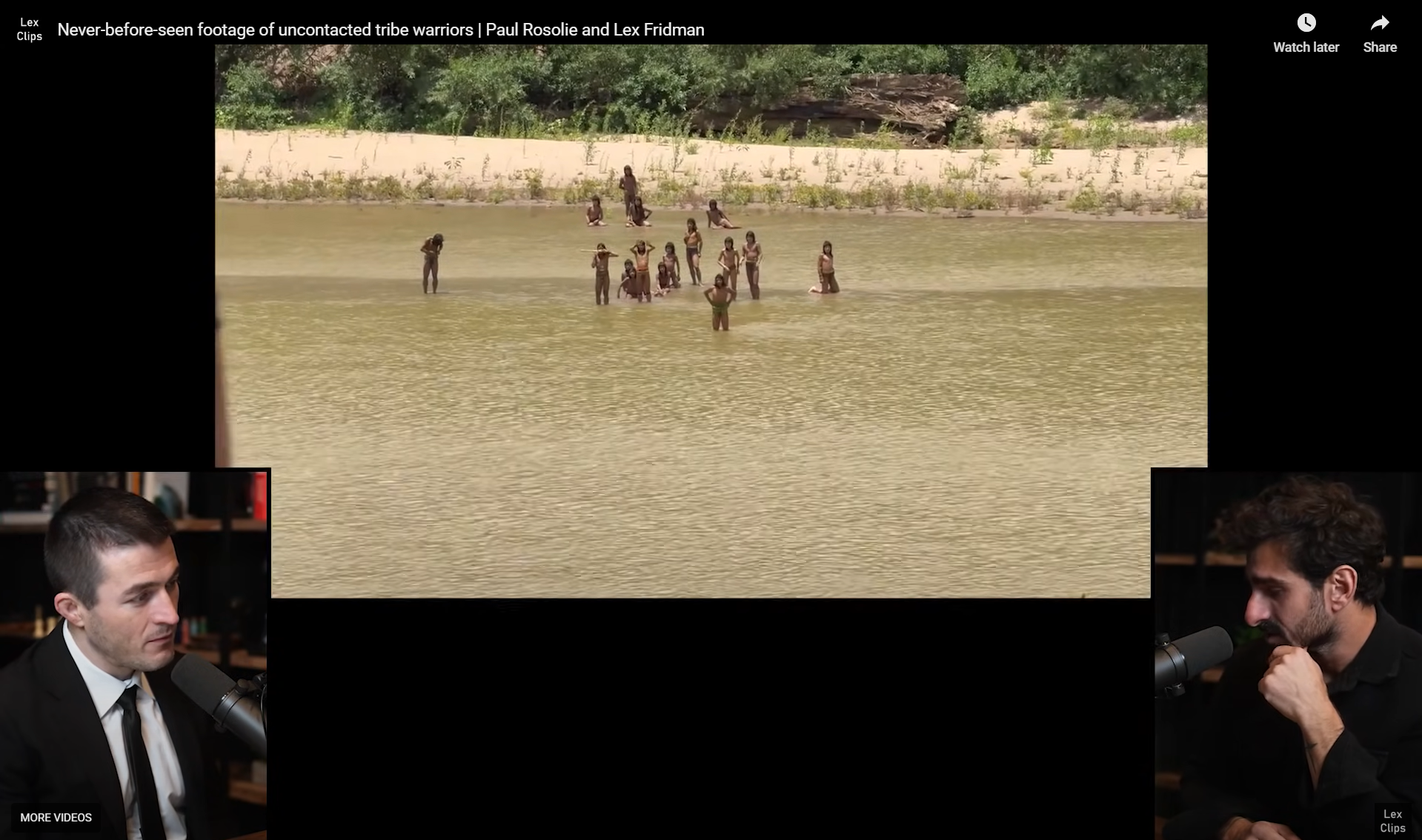
The footage shows an uncontacted tribe emerging from dense forest (Image Source – Lex Clips)
On day 2 tribe encounter turned violent
The following day, Rosolie and his team attempted to travel through the same area. At first, they could not locate the tribe. While moving upriver, the situation shifted quickly. Rosolie described how a large group suddenly appeared along the riverbank. He estimated around two hundred people. The boat was surrounded. Arrows were fired. He said, “George was driving a boat, and there is people on the boat, and as they were going up the river, the tribe, he 200 of the tribe, ran out and surrounded the boat, and they started firing arrows, and everybody else could hit the deck and get under the benches and hide behind the bags of rice. George was driving the boat, leaning back; he is driving as fast as he can and one arrow came in just above his scapula and came out by his belly button, and so he had that 7-foot arrow through him, then we pulled him out, and I saw the boat later and there was horrific amount of blood in the boat.”Contact like this can be dangerous for uncontacted tribesAnthropologists and biologists have long warned that even brief encounters can be deadly for isolated groups. Viruses that cause mild illness in industrialised societies can wipe out entire communities with no immunity. History offers repeated examples. Measles, influenza and common colds have caused sudden population collapses after contact. For this reason, most conservation organisations oppose direct interaction, even when intentions are peaceful. The footage has renewed debate about how such material should be handled and shared.
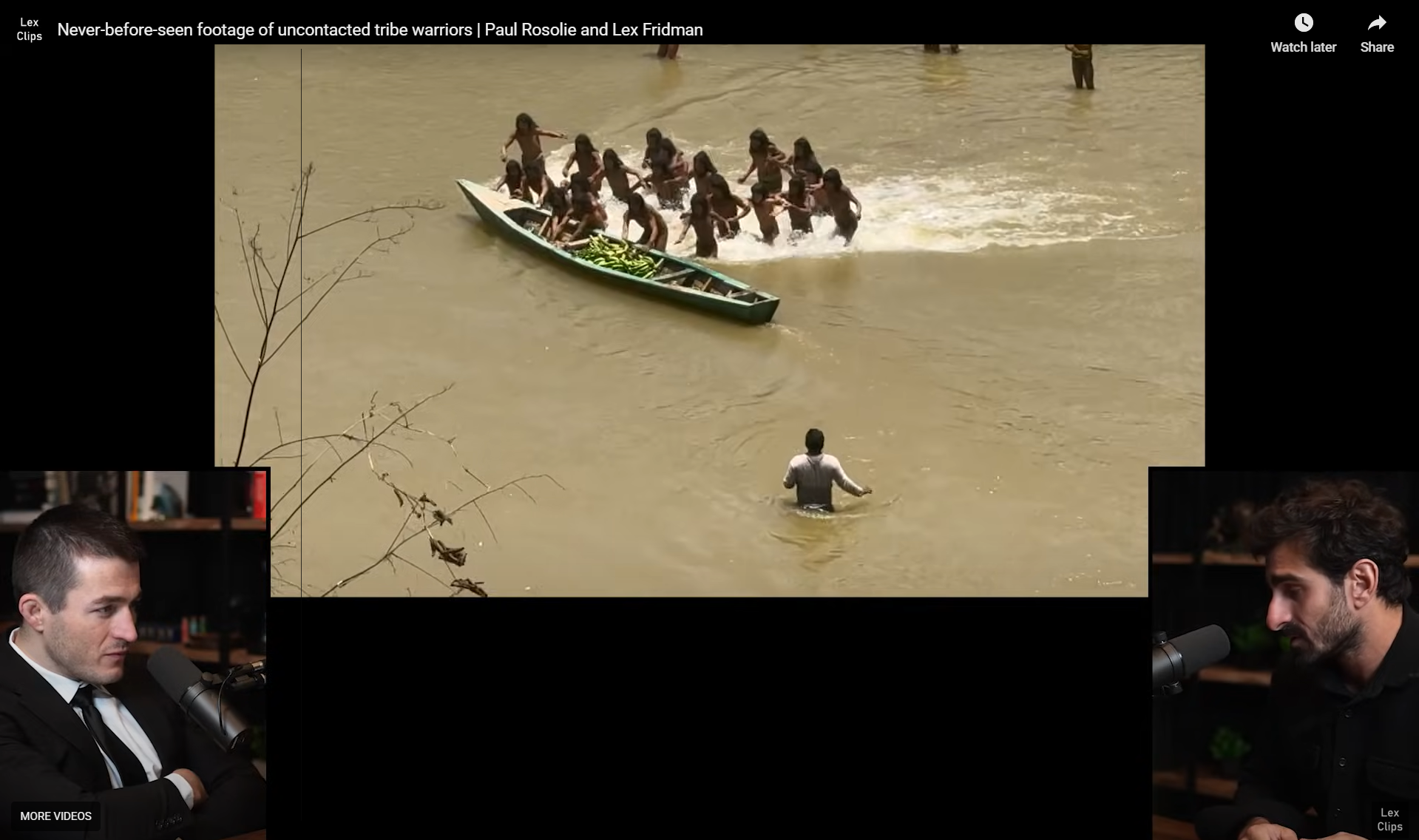
The footage shows an uncontacted tribe (Image Source – Lex Clips)
Sightings are becoming more frequent
Experts say increased sightings of uncontacted tribes are linked to expanding industrial activity in the Amazon. Illegal logging, mining operations and drug trafficking routes have pushed deeper into previously remote areas. Buffer zones that once protected isolation are shrinking. As forests are cleared and rivers become busier, encounters become harder to avoid.Conservationists fear that without stronger enforcement and land protection, these moments will become more common and more dangerous.For now, the footage sits uneasily between documentation and warning. It shows restraint, fear and misunderstanding in a few quiet minutes on a riverbank. It also shows how fragile distance has become. Go to Source