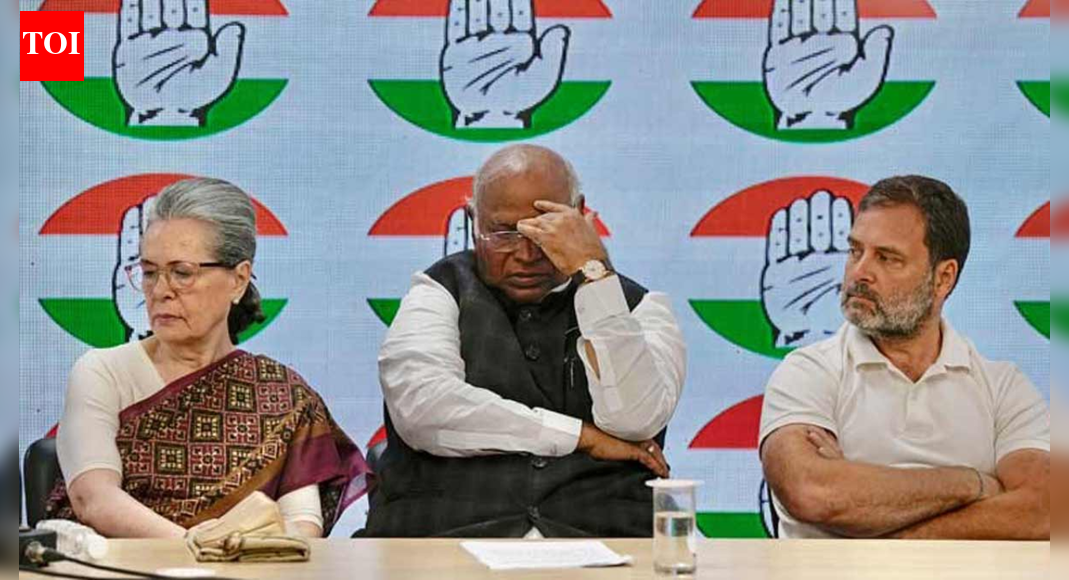

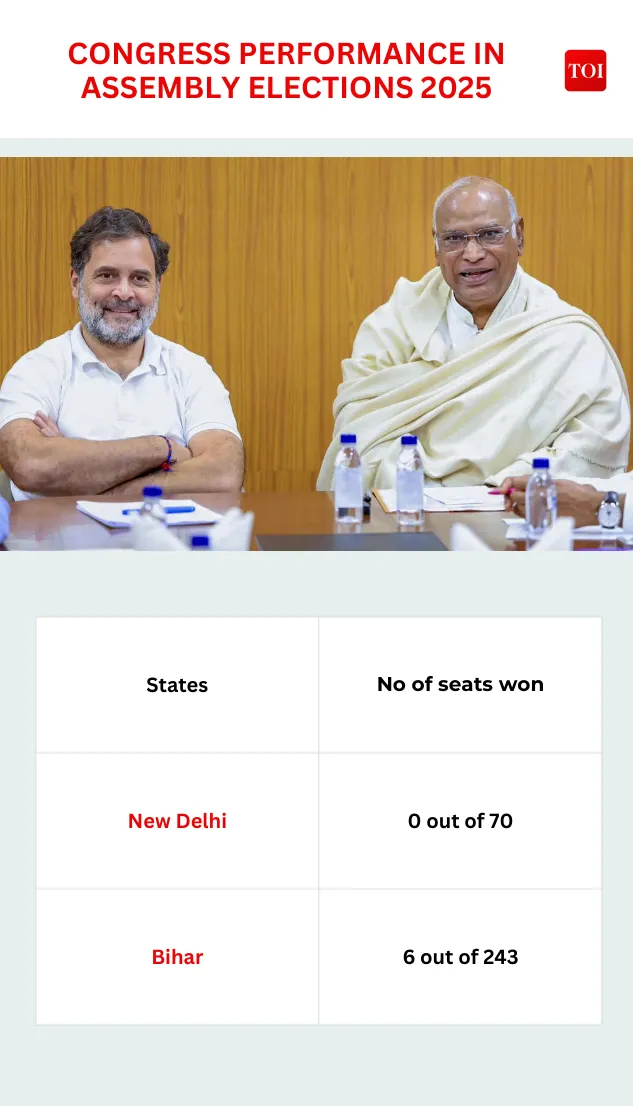
NEW DELHI: The Congress is gearing up for the latest round of electoral challenges in 2026. With assembly elections due in four key states – Assam, West Bengal, Tamil Nadu, and Kerala, as well as one Union Territory, Puducherry – there is a lot at stake for the grand old party. The Congress is the principal challenger to the ruling dispensation in Kerala and Assam, while in Tamil Nadu, it will try to win a second term along with its ally, the DMK.2025 was a disastrous year for the Congress electorally. It could not open its account in the Delhi assembly elections, while it was reduced to its lowest score in Bihar.So, will 2026 see a change in the electoral fortunes of the Congress? Well, it all depends on how the grand-old party negotiates with its “grand-old problems.” And one of the biggest problems of the Congress in recent times has been its dilemma over alliances. The party, which successfully ran two coalition governments at the Centre between 2004 and 2014, has been struggling to get its alliance arithmetic right ever since it was pushed out of the ‘centre’stage of Indian politics by the BJP in 2014. A string of electoral defeats and the simultaneous winning spree of the BJP forced the Congress to join hands with parties that were once its political opponents in several states. And this perhaps explains why the grand-old party struggles when it comes to forming alliances. While on the one hand, the Congress wants to use coalitions to stay politically relevant, on the other, it also does not want to cede much space to the regional partners to ensure that it does not lose its political ground and influence. Torn between these two objectives, the Congress often finds itself juggling between “bullying”, “blackmailing” and “bargaining” to stitch alliances. 2026 is unlikely to be any different, as the initial developments show. In Tamil Nadu, the Congress seems to be flexing its muscles with the DMK, with which it has had a stable alliance for a very long time, but is not part of the state government.Congress MP Manickam Tagore had set the stage for this arm-twisting earlier this week when he said that alliances remain the political reality in Tamil Nadu and the time has come to move beyond seat-sharing and initiate discussions on the sharing of power.
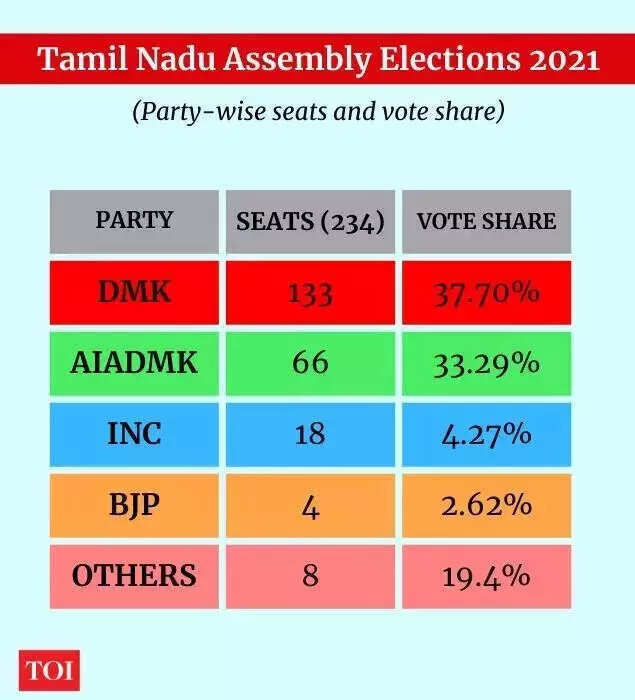
However, with his statement leading to speculations on the future of the alliance, Manickam Tagore was quick to do damage control and said: “Tamil Nadu is an important state, and we all know that the INDIA alliance is a significant alliance, with Congress being a part of it and the DMK as its major partner. We have contested eight elections together, as the DMK is a long-term ally of Congress.” Tagore’s remark was the second time that a Tamil Nadu Congress leader had spoken of the party joining the state government. Months ago, Killiyoor MLA S Rajeshkumar had said that the party legislators and office bearers would urge the All India Congress Committee to persuade the DMK to accept “coalition government” and allot more seats to the party.So, is the Congress-DMK alliance really under strain? Or is the Congress trying to use pressure tactics to renegotiate its position within the alliance?The emergence of Tamilaga Vettri Kazhagam (TVK) under Vijay as the third regional player in the state’s politics has made the game of alliances in the state interesting. Vijay has had a growing political presence in Tamil Nadu politics and the public response to his meetings and rallies has been impressive. The TVK chief has made it clear that he will not join hands either with the “corrupt” DMK or the “communal” BJP. While the party has kept the alliance cards close to its chest, a comment by its national spokesperson Felix Gerald triggered speculations about its preferences.”The Congress and TVK are natural allies in terms of secularism and their stand against communalism. In that sense, we have always been natural partners. Rahul Gandhi and our leader are also friends,” Gerald had said.Later, when senior Congress leader and head of the party’s Data Analytics Unit, Praveen Chakravarty, met TVK leader Vijay, it added fuel to the fire. While Chakravarty called the meeting personal, it did little to help end the speculations.The Congress perhaps wants to use Vijay’s TVK to increase its bargaining power vis-a-vis the DMK. But it should be careful of the flip side of these pressure tactics. History is replete with instances when Congress has suffered due to its botched alliance experiments.The most recent example is Bihar, where the Congress and the RJD could not come to an agreement on seat sharing even after the date for filing of nominations for the first phase was over. The fallout of this was that when RJD leader Tejashwi Yadav went to file his nomination papers, no Congress leader was by his side. Though the allies did manage to come to an agreement eventually, it was perhaps too late for them to pose any real challenge to the NDA.In Madhya Pradesh, the Congress refused to give seats to the Samajwadi Party, leading to an open war of words between the two parties. SP chief Akhilesh Yadav had then reacted strongly to the Congress’s move. However, the two parties eventually managed to iron out differences and contested the 2024 Lok Sabha elections in alliance in Uttar Pradesh.In Delhi, the Congress and Arvind Kejriwal’s AAP have been in and out of alliance several times. While they contested the 2024 Lok Sabha elections together, in the last assembly elections, they went all out against each other. Analysis of the results later showed that Congress played a key role in the defeat of AAP at the hands of the BJP, facilitating its return to power.
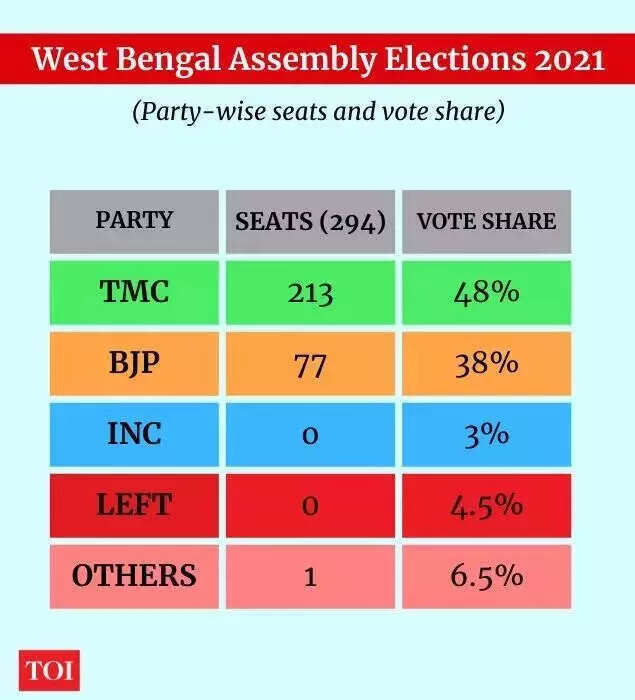
In Maharashtra, the Congress has walked out of the opposition alliance Maha Vikas Aghadi and is contesting the civic polls alone. This was after the Thackeray brothers decided to join hands for the BMC polls and also the NCP factions scripted a union of sorts.In West Bengal, which also goes to polls in a few months, the Congress and Mamata Banerjee’s Trinamool Congress are allies at the national level under the INDIA bloc, but are bitter political rivals in the state. The two parties have made several unsuccessful attempts to reach an understanding. The ruling Trinamool accuses the Congress, which has been literally wiped out in the state, of being unreasonable in its demand for seats. The Congress, on the other hand, argues that complete surrender to Trinamool would mean that the doors for the party’s possible revival in future are closed forever.
Clearly, in many of these states, the Congress seems to be stuck between the devil and the deep sea in terms of its choices. The party’s first predicament is to decide if it wants an alliance or wants to contest alone to start the process of revival. Once it decides on an alliance, the priority shifts to safeguarding its long-term interests by not conceding too much to the regional partner. This often results in protracted bargaining, bullying and even blackmailing. And at the end of all this, more often than not, the Congress ends up having egg on its face.So, the question is: Has the Congress learnt its alliance lessons? Well, we will have answers in the next few months. Go to Source