
In a significant policy push to strengthen India’s position in the global Meetings, Incentives, Conventions and Exhibitions (MICE) landscape, the Union Ministry of Tourism has announced plans to establish independent, city-level convention promotion bureaus across the country beginning 2026.
The proposed City MICE Bureaus will function as autonomous, professionally run bodies in collaboration with state governments and industry stakeholders, and are expected to play a central role in positioning Indian cities as competitive global event destinations.
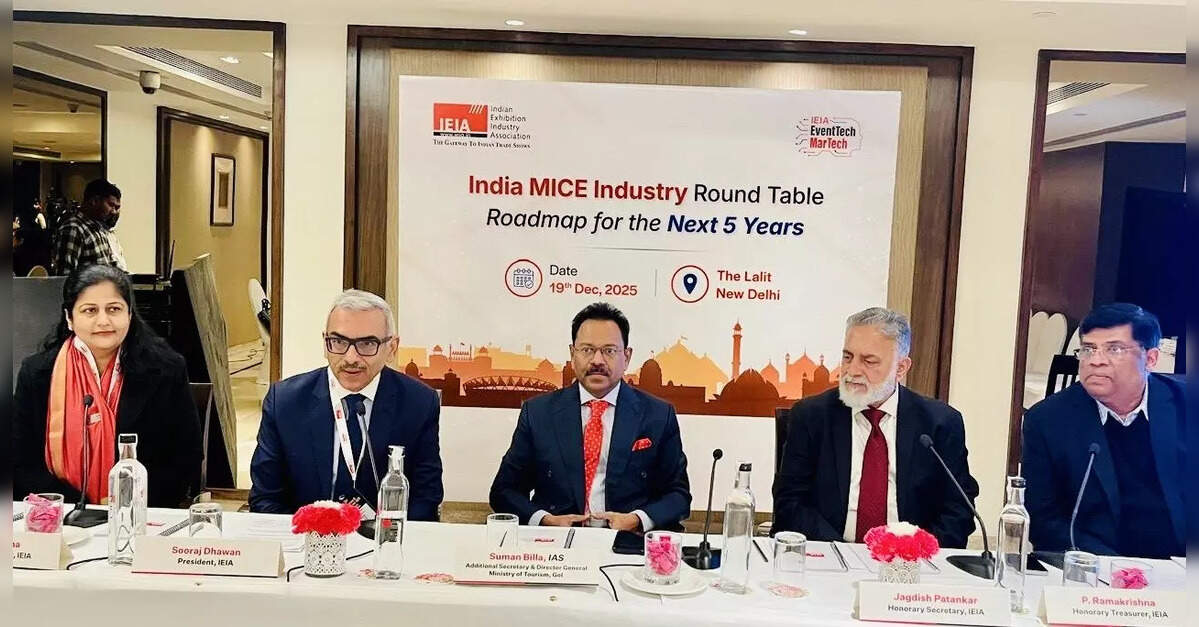
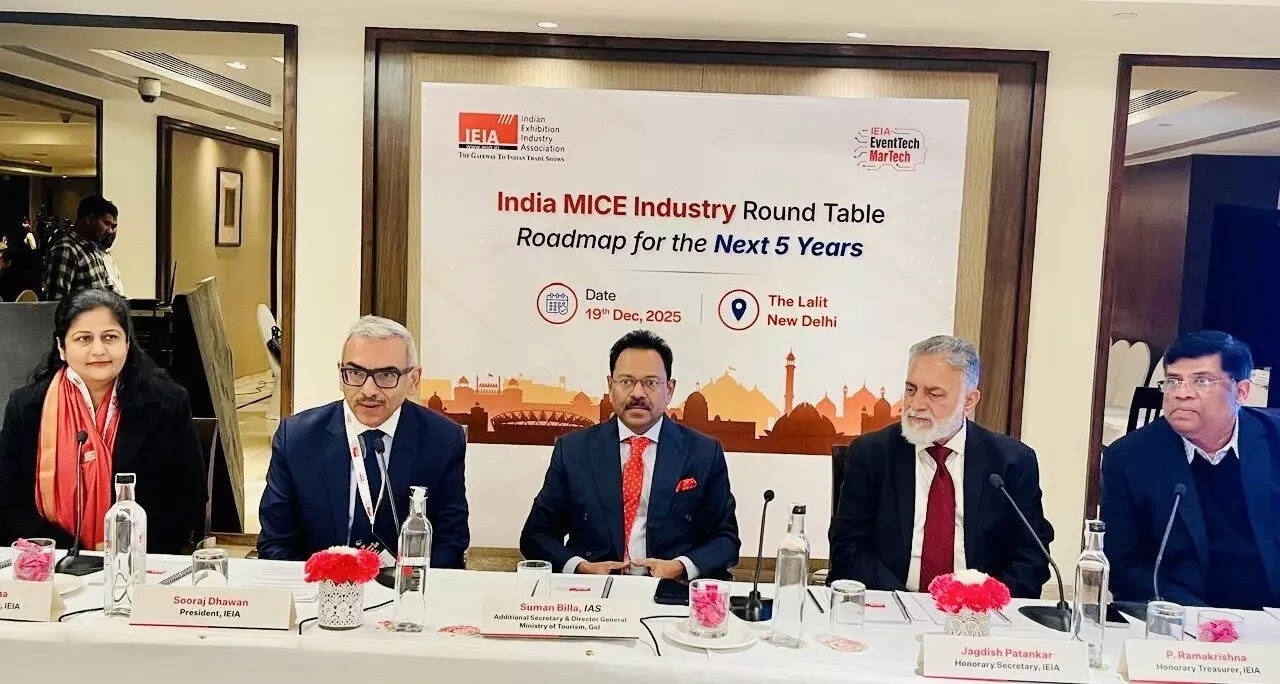
Speaking at the inauguration of the EvenTech & MarTech Summit 2025, organised by the Indian Exhibition Industry Association (IEIA), Suman Billa, Additional Secretary and Director General, Ministry of Tourism, said that India is now ready to move from venue-led growth to institution-led MICE development.
“Various states across India are unlocking tourism opportunities in their own unique ways. Now it is time to place India prominently on the global MICE map. With world-class venues such as Bharat Mandapam, Yashobhoomi and Jio World Centre, and MICE being prioritised under the Incredible India campaign, our goal is to elevate several Indian cities into globally competitive MICE destinations,” Billa said.
According to the ministry, the City MICE Bureaus will operate as single-window facilitators for international and domestic event organisers, coordinating permissions, destination marketing, and local supplier networks. The move is aimed at addressing long-standing challenges such as fragmented approvals, lack of destination-level branding, and inconsistent service standards across cities.
“The establishment of professional City MICE Bureaus is the cornerstone of our national strategy. These bureaus will provide the coordinated, world-class support that global events demand. By moving to an autonomous institutional framework, we aim to double India’s share of the global MICE business within the next five years,” Billa added.
Digital transformation and technology adoption also emerged as key pillars of the government’s MICE roadmap. Billa emphasised that advanced computing, artificial intelligence and data-led solutions will be critical in repositioning India as a future-ready exhibition and events destination.
“The MICE sector must adopt AI-led planning tools, predictive analytics and smart venue technologies to redefine how large-scale national and international events are planned and delivered. Integrating digital solutions across venues and stakeholders will be essential to improving efficiency, sustainability and global competitiveness,” he said.
Industry representatives at the summit echoed the need for institutional reform and deeper public-private collaboration. Sorraj Dhawan, President, Indian Exhibition Industry Association, highlighted the scale of opportunity ahead, noting that India’s MICE market, valued at USD 49.4 billion in 2024, is projected to reach USD 103.7 billion by 2030.
“City MICE Bureaus, structured on a public-private partnership model, will be central to capturing this growth. Designed as a single-window interface for organisers, these bureaus will significantly enhance ease of doing business and resolve long-standing ecosystem fragmentation,” Dhawan said.
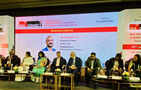
India is intensifying its MICE tourism ambitions with a push for city-level convention bureaus and a national strategy to boost its share in the USD 850 billion global market. At the IEIA South India Meet in Chennai, Tourism Ministry and state leaders outlined plans to elevate 10 cities into global MICE hubs, starting with southern states like Tamil Nadu, Karnataka and Kerala.
He added that professionalisation, combined with the adoption of BIS standards for exhibition organisation, would help de-risk market entry for global organisers and ensure consistency in quality across Indian destinations.
The summit also featured a high-level roundtable on the Indian MICE industry roadmap for the next five years and saw the launch of IEIA’s strategic report, India MICE Opportunities Overview (2025–2030). The report outlines a framework for leveraging institutional support, technology adoption and destination-led planning to strengthen India’s global MICE footprint.
With the proposed rollout of City MICE Bureaus, policymakers and industry leaders believe India is laying the groundwork for a more coordinated, scalable and globally competitive MICE ecosystem, capable of driving tourism, trade and economic growth across multiple cities beyond the traditional metros.