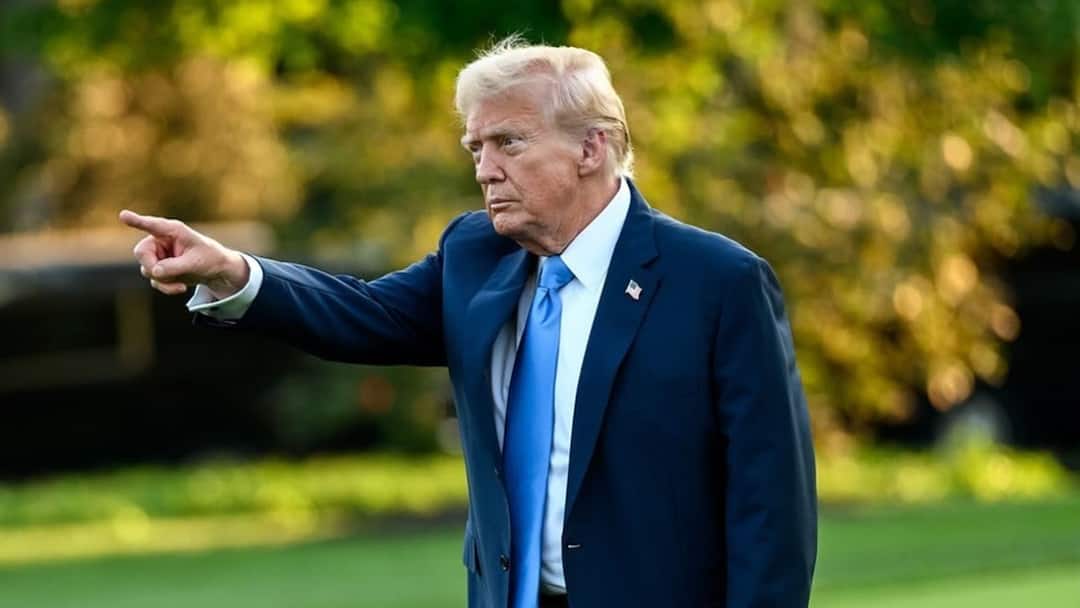

U.S. President Donald Trump on Friday issued a stark warning amid continuing unrest in Iran, saying Washington could intervene if Iranian security forces resort to shooting demonstrators. His comments come as protests over economic hardship ripple across the country, leaving multiple people dead and placing Iran’s leadership under intense pressure at home and abroad.
Posting on social media, Trump adopted unusually blunt language, declaring, “If Iran shots and violently kills peaceful protesters, which is their custom, the United States of America will come to their rescue. We are locked and loaded and ready to go.”
Tehran Pushes Back Against U.S. Rhetoric
Iranian leaders swiftly condemned Trump’s statement, accusing Washington of inflaming an already fragile situation. Senior politician Ali Larijani warned that American involvement in Iran’s internal affairs could further destabilise the Middle East, pointing to Tehran’s regional influence through allied groups operating in Lebanon, Iraq, and Yemen.
At the local level, authorities signaled a hard line against continued demonstrations. A senior official in western Iran, where deaths have been reported, told state media that unauthorized protests would be dealt with “decisively and without leniency”.
UN Diplomacy and Escalation Concerns
Iran has also taken its objections to the international stage. Ambassador to the United Nations Amir-Saeid Iravani called on the UN Security Council to condemn Trump’s remarks, cautioning that the United States would be held responsible for any escalation that might follow, as per a report on Reuters.
Protests Driven by Economic Pain
The demonstrations, sparked largely by rising inflation and economic stress, have spread to multiple cities, though they remain smaller than some past protest movements. Human rights organizations and state-affiliated media outlets report at least ten deaths since Wednesday. Among those killed are members of the Basij militia, a paramilitary force linked to Iran’s powerful Revolutionary Guards.
Iran’s clerical leadership has a long history of quelling dissent through mass arrests and heavy security deployments. However, analysts note that persistent economic strain and public frustration may be making the system more vulnerable than in previous years. The current unrest represents the most serious challenge since the nationwide protests of 2022 following the death of a young woman in custody—demonstrations that effectively shut down large parts of the country and resulted in hundreds of fatalities.