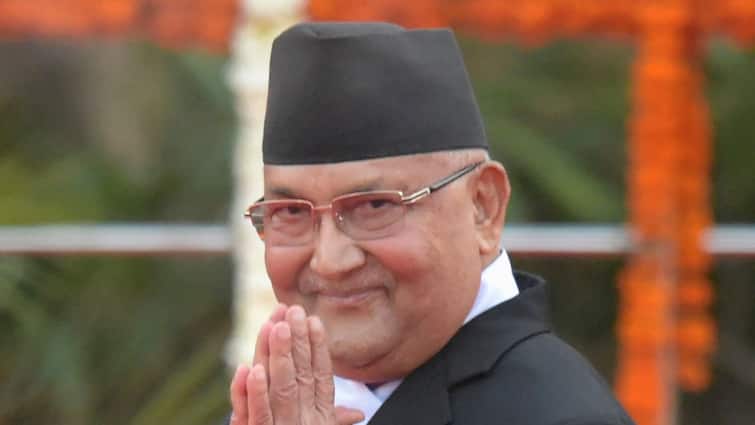

Kathmandu, Sep 9 (PTI) Veteran politician K P Sharma Oli, who wrecked many governments in the past, kindled hopes for much-needed political stability in Nepal when he assumed power for the third time in 2024, but that proved to be short-lived due to his own actions.
Known for his pro-China stance, Oli was forced to resign in the face of massive protests by youths over corruption and a government ban on social media that resulted in the death of at least 19 people in police firing and injuries to hundreds.
The 73-year-old leader’s ouster has once again pushed Nepal, which has had 14 governments in the last 17 years, into political instability.
He came to power in July 2024 after he ditched his one-time friend Pushpa Kamal Dahal ‘Prachanda’ and joined hands with his foe-turned-friend Sher Bahadur Deuba, who was leading the largest party – Nepali Congress – in the House of Representatives.
Oli, the CPN-UML Chairman, defended his party’s decision to ditch ‘Prachanda’ and form a coalition government with the Nepali Congress, saying it was required for maintaining political stability and development of the country.
Oli, who joined politics as a student activist in his teenage years and spent 14 years in jail for opposing the now-abolished monarchy, became Nepal’s prime minister for the first time in October 2015. During his 11-month stint, Kathmandu’s ties with New Delhi strained.
He publicly criticised India for interfering in Nepal’s internal matters and accused it of toppling his government. He, however, promised to forge a partnership with India to move forward towards the path of economic prosperity ahead of assuming office for the second term.
Oli became prime minister for the second time in February 2018 when the alliance between the CPN (Unified Marxist–Leninist) and ‘Prachana’-led CPN (Maoist Centre) won a majority in the House of Representatives in the 2017 elections. After their victory, the two parties formally merged in May 2018.
During his second term, Oli claimed that efforts were being made to oust him after his government redrew Nepal’s political map by incorporating three strategically key Indian territories, a move that strained ties between the two countries.
India had termed as “untenable” the “artificial enlargement” of the territorial claims by Nepal after its Parliament unanimously approved the new political map of the country featuring Lipulekh, Kalapani and Limpiyadhura areas, which India maintains belong to it.
Oli accused his rivals within the party of making efforts to topple his government.
He served as the prime minister from February 5, 2018, to May 13, 2021. He continued to serve from May 13, 2021, to July 13, 2021 — because of an appointment by the then President Bidya Devi Bhandari, described by local media as a success of Oli’s Machiavellian tricks.
Later, the Supreme Court ruled that Oli’s claim to the post of prime minister was unconstitutional.
Born on February 22, 1952, in Terhathum of the eastern Nepal district, Oli is the eldest child of Mohan Prasad and Madhumaya Oli. His grandmother raised him after his mother died of smallpox.
He left his school in Class 9th and joined politics. He, however, did an Intermediate level in Arts from jail later. His wife, Rachana Shakya, is also a communist activist, and the two had met in the course of party activities.
Oli started his political career as a student activist in 1966 by joining the fight against the autocratic Panchayat System under the direct rule of the King.
He joined the Communist Party of Nepal in February 1970. He went underground soon after taking the party’s membership. The same year, he was arrested for the first time by the Panchayat government.
In 1971, he took leadership of the Jhapa Rebellion, which was initiated by beheading landlords in the district.
Oli is one of the few political leaders of Nepal who spent several years in jail. He was imprisoned for 14 consecutive years from 1973 to 1987.
After his release from prison, he became a central committee member of UML in charge of the Lumbini Zone until 1990.
Following the 1990 democratic movement that brought down the Panchayat regime, Oli became a popular name in the country. In 1991, he became the founding chairman of Prajatantrik Rastriya Yuwa Sangh. A year later, he became the party’s publicity department chief and established himself as a key figure in Nepali politics.
He was elected as a member of the House of Representatives for the first time from Jhapa district in 1991. Oli had also served as the minister of home affairs in 1994– 1995. He was re-elected to the House of Representatives from Jhapa electorate no 2 in 1999.
He had served as deputy prime minister during the interim government led by Girija Prasad Koirala in 2006 after the successful conclusion of the second People’s Movement.
Oli was elected as leader of the CPN-UML Parliamentary Party in the Second Constituent Assembly on February 4, 2014, and further consolidated his position when he became the prime minister for the first time in October 2015. PTI ZH ZH ZH