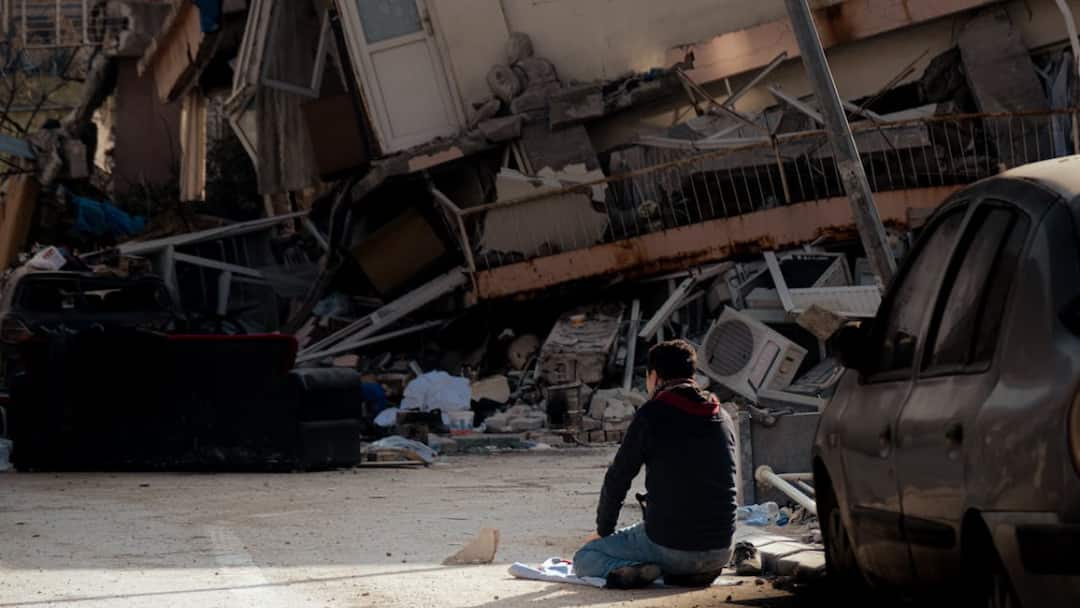

A powerful 7.5-magnitude earthquake that jolted northeastern Japan on Monday has reignited nationwide anxiety over the prospect of a catastrophic “megaquake.” The tremor, felt across a vast stretch of the country, has pushed the long-feared “big one” back into public debate and prompted renewed warnings from authorities and seismologists.
Renewed Warnings After A Major Jolt
In recent years, experts have repeatedly cautioned that Japan faces a significant seismic threat. The country’s earthquake investigation panel estimated in September that there is a 60–90% probability of a megaquake striking the Nankai Trough within the next three decades, as reported by BBC. This volatile segment of the Pacific coast has long been considered one of the world’s most dangerous seismic zones.
Early projections this year suggested that such a quake could generate tsunami waves over 20 meters high, potentially hitting Tokyo and multiple other prefectures. The estimated toll is staggering — up to 300,000 fatalities and economic losses running into the trillions.
Monday’s quake, officials warned, is a reminder that the risk is far from theoretical. Authorities cautioned residents across seven prefectures, from Hokkaido to Chiba, that “a large-scale earthquake with a magnitude of 8 or higher could occur as a follow-up earthquake.” Although no evacuation orders were issued, people were urged to review evacuation plans and secure their homes.
What the Latest Quake Exposed
The tremor struck off the Pacific coast of Aomori at a depth of about 54 km, generating tsunamis of 60–70 cm. At least 30–33 people were injured, and nearly 90,000 were temporarily evacuated as shaking damaged buildings, cracked roads, and rattled cities as far away as Tokyo, roughly 550 km to the south.
Under Japan’s updated advisory system — established in 2022 — the Meteorological Agency issues a “megaquake advisory” whenever a magnitude 7 or stronger quake occurs near zones linked to historically massive earthquakes. The current alert, the first for the Hokkaido–Sanriku sector, warns that the chance of an M8 or larger quake is “relatively higher than normal,” though still low at around 1%, as per reports.
Officials emphasised that this advisory is intended to encourage preparedness rather than cause alarm. The data indicates only a small likelihood of a larger follow-up event.
Debate Over Prediction Accuracy
Despite the heightened alert, scientists urge caution in interpreting such warnings. Predicting earthquakes remains beyond the reach of modern science. Seismologists note that only about 5% of quakes turn out to be foreshocks, meaning early tremors rarely predict a larger event. But history complicates the picture: the devastating 2011 Tōhoku disaster was preceded by a 7.2 foreshock that went largely unnoticed.
Japan’s warning system, first activated in August 2024, was designed after 2011 to improve readiness without triggering panic. While it cannot forecast specific events, authorities hope it will push residents to stay alert, stock emergency supplies, and plan ahead.
What Does It Mean For India?
A massive undersea earthquake off northern Japan would mainly pose intense tsunami and ground-shaking threats across the northwest Pacific, with Japan, Russia’s Far East and possibly parts of Alaska’s Aleutian Islands facing the strongest effects.
Scientific simulations of long-distance tsunami waves show that quakes similar to those along the Japan Trench tend to channel much of their energy into the wider Pacific Ocean. In contrast, the Indian Ocean is more at risk from megathrust events that originate along subduction zones such as the Sunda (Java) Trench near Sumatra.
For India, the advisory issued by Japanese authorities serves as a reminder of the common geological vulnerabilities shared among global seismic belts and the need for reliable early-warning mechanisms, as reported by India Today. Importantly, it does not indicate any immediate rise in tsunami or earthquake danger for India’s coastline at present.