
- Germany commits to Poland, acknowledges guilt, seeks future normality.
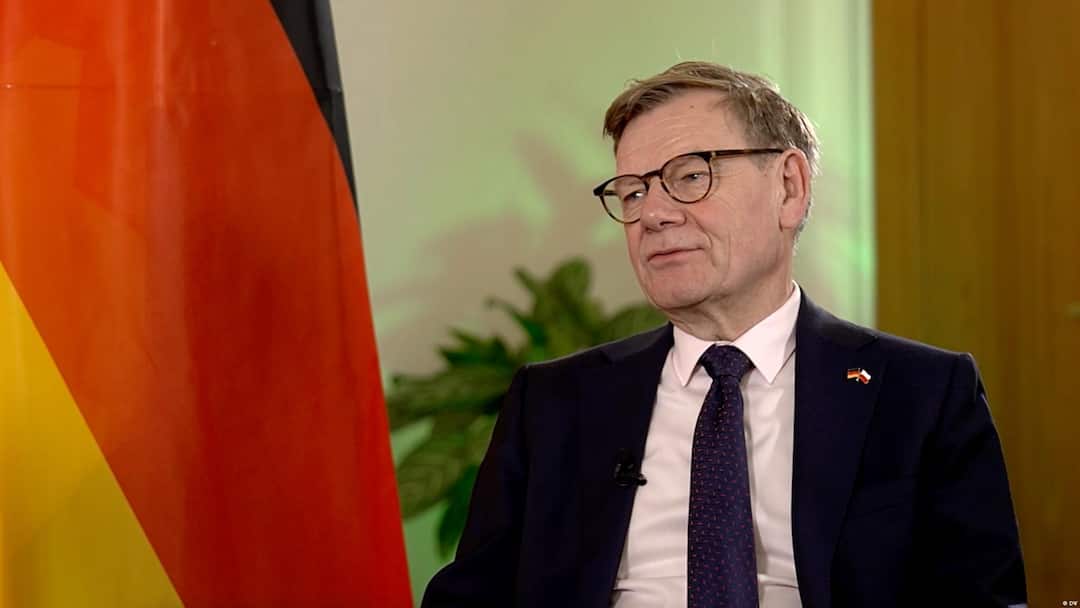
Long before taking office, German Foreign Minister Johann Wadephul was already a politician deeply engaged in trans-Atlantic relations and kept a close eye on Central and Eastern Europe.
Within the federal government, he is seen as someone for whom support for Ukraine in its war with Russia is a key priority. He also has personal ties to Poland, with family roots in the region around Bydgoszcz. He maintains a close and friendly relationship with Polish Foreign Minister Radoslaw Sikorski.
On the occasion of the signing of the German-Polish defense agreement, DW spoke with Wadephul about these issues.
Speaking about trans-Atlantic relations, the foreign minister said they are “no longer as straightforward as they used to be,” adding that the United States nevertheless remains a partner. What concerns him most, he said, is the cohesion of Europe, which is of decisive importance.
Germany’s commitment to NATO allies
The minister said that the German-Polish defense agreement underlines mutual defense commitments within NATO. Wadephul was unequivocal: “We won’t hesitate for a second … if NATO territory is attacked — and this can only mean by Russia — German soldiers will immediately defend every centimeter.”
For Wadephul, support for Ukraine is central to European security policy. A Ukrainian flag even hangs in his office. “We need to support Ukraine together,” the foreign minister said.
He also spoke with unusual clarity about Russia as the aggressor. Asked whether Russian President Vladimir Putin might have more endurance, he replied firmly: “Definitely not. We will always have more staying power.” The Russian war of aggression, he said, has fundamentally changed everything.
“Any remaining illusions about a possible understanding with Russia have been destroyed by the war of aggression,” he said.
While he did not rule out diplomatic efforts, he insisted they must be conducted “without any illusions.” For the foreseeable future, Europe’s security will have to be organized against Russia, Wadephul stressed.
Poland, he added, plays a key role in this context. He said he understands the occasional criticism from Warsaw that key European coordination formats, such as the E3 (Germany, France and Italy) cooperation to support Ukraine, do not include sufficient Polish involvement.
“We could not support Ukraine without Poland,” he said, adding, “The E3 format will not set a single comma without Poland agreeing.”
Germany’s historic responsibility to Poland
Overall, relations between Germany and Poland are significantly better than is often assumed, said the minister.
“We are on an equal footing,” Wadephul said, adding that Poland is of considerable importance for Germany and Europe.
At the same time, Wadephul stressed Germany’s historic responsibility toward Poland: “Germans bear an immense amount of guilt.”
He views recurring anti-German sentiment in Poland with regret. “That troubles me,” he said. “But let us now shape the European future together.”
He also argued that the remaining survivors of German crimes committed during the occupation in the Second World War should be compensated.
For the future of German-Polish relations, Wadephul wishes above all for one thing: normality. “To be quite honest: boring normality. If we had that, everything would be fine,” he said.
At the end of the interview, he became more personal. Asked about Poland as a travel destination, he smiled and noted that things often run more smoothly there. He added: “Frankly, the food in Poland usually tastes better to me than in Germany.”
(Disclaimer: This report first appeared on Deutsche Welle, and has been republished on ABP Live as part of a special arrangement. Apart from the headline, no changes have been made in the report by ABP Live. for DW)