
Tuesday, March 3, 2026
19.1 C
New Delhi

From Personal Tragedy To Pinnacle Of Power: The Making Of Bangladesh’s Three-Time PM, Khaleda Zia

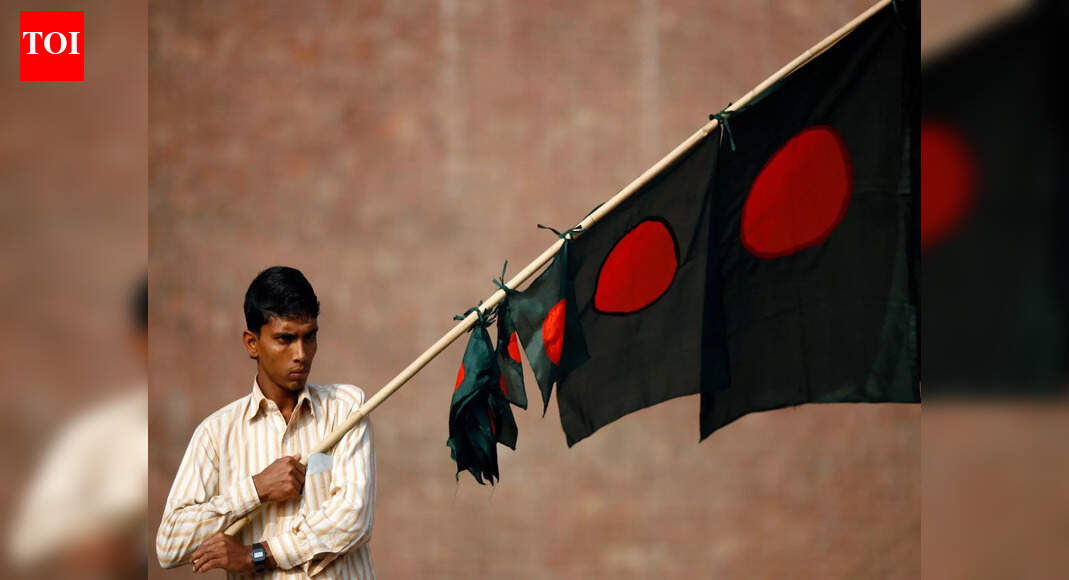
The death of Khaleda Zia, the former prime minister and enduring face of the Bangladesh Nationalist Party (BNP), has shook Bangladesh’s political landscape on Tuesday. She was 80. Party officials said she died at 6:00 a.m. on December 30, 2025, while undergoing treatment at Evercare Hospital in Dhaka. She is survived by her elder son, Tarique Rahman, the acting chairman of the BNP. 

The BNP press wing confirmed her passing in an official statement, which was also corroborated by her physician, Professor Dr. AZM Zahid Hossain, a member of the party’s National Standing Committee. With her death, Bangladesh closes a defining chapter shaped by decades of intense political competition, landmark electoral battles, and historic firsts for women in leadership.

Who Is Khaleda Zia?

Khaleda Zia was born in 1945 in Dinajpur, a district located in the northwestern region of Bangladesh.  In 1960, she married Ziaur Rahman, who went on to play a prominent role in the nation’s liberation movement and later served as the President of Bangladesh. In April 1977, Ziaur Rahman founded the Bangladesh Nationalist Party (BNP), which became one of the country’s major political forces.

However, Zia’s entry into politics followed a personal and national tragedy—the assassination of her husband, President Ziaur Rahman, in 1981. Until then, she had largely remained outside active political life, known primarily as First Lady during Rahman’s presidency beginning in 1977.

After Ziaur Rahman was assassinated, Vice President Justice Abdus Sattar succeeded him as president and assumed leadership of the BNP. His tenure, however, was brief. In March 1982, Army chief General H.M. Ershad took control of the government in a military coup, imposed martial law, and brought Sattar’s presidency to an abrupt end.

Later, Khaleda Zia gradually assumed a public role, taking charge of the BNP in 1984. Her leadership coincided with a period of military dominance and political uncertainty in Bangladesh. Through sustained opposition activism, she emerged as a central figure in the movement that ultimately restored parliamentary democracy in the early 1990s.

Three Terms & A Historic First

Khaleda Zia led the BNP to electoral victory in 1991, becoming Bangladesh’s first female prime minister. Her win was also globally notable, as she became only the second woman to head a Muslim-majority country, following Pakistan’s Benazir Bhutto.

She served three terms as prime minister—from 1991 to 1996 and again from 2001 to 2006. Her administrations focused on economic liberalisation, infrastructure expansion, and governance reforms, while also navigating frequent political unrest and parliamentary boycotts.

Rivalry, Legal Battles, and Later Years

No account of Khaleda Zia’s career is complete without reference to her enduring rivalry with Sheikh Hasina of the Awami League. Their decades-long contest for power, often described as the “Battle of the Begums,” defined Bangladesh’s politics for more than thirty years.

In 2018, Zia was sentenced to 17 years in prison in corruption cases related to the Zia Orphanage Trust and Zia Charitable Trust. She and the BNP maintained that the charges were politically motivated. Due to deteriorating health, she was transferred to hospital care in 2019 and later placed under house arrest.

Following Sheikh Hasina’s removal from office in August 2024, Khaleda Zia was freed by presidential order and subsequently cleared of several major cases.

Family & Final Chapter

In her final years, Khaleda Zia battled multiple chronic illnesses, including liver cirrhosis, diabetes, and heart disease. After receiving advanced treatment in London in early 2025, she returned to Dhaka, where her condition worsened.

Her younger son, Arafat Rahman Koko, died in 2015.
Go to Source

Hot this week

Macron unveils security plan: France to expand atomic arsenal, deploy nuclear-armed aircraft in ally nations

Macron stated that eight European countries had agreed to join the initiative, which would use France’s nuclear capabilities to reinforce continental security Go to Source Read More

How Europe has been drawn into Iran war as its military bases come under attack

The war between the US and Iran in West Asia is now dragging Europe into it, as countries like the UK, France and Germany are being forced to respond by strengthening security around their military bases and working to evacuate nationals trapped in t Read More

Tehran’s Traffic Cameras Allowed Israel To Track Khamenei, Senior Iranian Officials: Report

Iran’s cameras are believed to be part of the state’s surveillance system used to identify and track protesters and opponents of the regime. Read More

Nita Ambani Masters Quiet Luxury In A Classic Beige Saree For Mark Carney’s Mumbai Visit

Nita Ambani stuns in a refined beige saree with zari accents and emerald jewels while hosting Canadian PM Mark Carney, mastering quiet luxury and diplomatic elegance. Read More

US Cancels Visa Appointments in Pakistan After Deadly Karachi Consulate Protests

Show Quick Read Key points generated by AI, verified by newsroom The United States has cancelled all visa appointments in Pakistan, citing the “current security situation” following deadly unrest outside its consulate in Karac Read More

Topics

Macron unveils security plan: France to expand atomic arsenal, deploy nuclear-armed aircraft in ally nations

Macron stated that eight European countries had agreed to join the initiative, which would use France’s nuclear capabilities to reinforce continental security Go to Source Read More

How Europe has been drawn into Iran war as its military bases come under attack

The war between the US and Iran in West Asia is now dragging Europe into it, as countries like the UK, France and Germany are being forced to respond by strengthening security around their military bases and working to evacuate nationals trapped in t Read More

Tehran’s Traffic Cameras Allowed Israel To Track Khamenei, Senior Iranian Officials: Report

Iran’s cameras are believed to be part of the state’s surveillance system used to identify and track protesters and opponents of the regime. Read More

Nita Ambani Masters Quiet Luxury In A Classic Beige Saree For Mark Carney’s Mumbai Visit

Nita Ambani stuns in a refined beige saree with zari accents and emerald jewels while hosting Canadian PM Mark Carney, mastering quiet luxury and diplomatic elegance. Read More

US Cancels Visa Appointments in Pakistan After Deadly Karachi Consulate Protests

Show Quick Read Key points generated by AI, verified by newsroom The United States has cancelled all visa appointments in Pakistan, citing the “current security situation” following deadly unrest outside its consulate in Karac Read More

US embassy in Riyadh attacked, stranded Indians return from UAE… The latest as Iran war enters Day 4

Iran continues its attacks across West Asia as the conflict with the US and Israel enters Day 4. The US embassy in Riyadh was hit by two suspected Iranian drones as America urged its nationals to leave the region. Read More

‘No So-Called Iranian Threat’: Araghchi Slams US Over ‘War Of Choice’ As Rubio Defends Strikes

In a post on X, Araghchi said, “Rubio admitted what we all knew: U.S. has entered a war of choice on behalf of Israel. There was never any so-called Iranian ‘threat’. Read More

Satellite Image Shows Major Damage At Saudi Arabia’s Ras Tanura After Iran Drone Strike

Satellite images show Iranian drone attack damage at Ras Tanura refinery, disrupting Aramco and raising fears of Middle East conflict and energy turmoil. Read More

Related Articles