


An early engineering mould of the Xiaomi 17 Air has appeared online, giving tech fans a rare look at a phone that was planned but never launched. The leak shows how Xiaomi was experimenting with ultra-thin designs long before slim phones became a trend again. The device looks premium, modern, and surprisingly bold for its time. But this project never moved past the prototype stage.
What we are seeing now is not a future launch, it’s a window into Xiaomi’s internal ideas, and the risks brands take while shaping tomorrow’s smartphones.
Xiaomi 17 Air Leak Reveals Ultra-Thin Flagship Design
The Xiaomi 17 Air leak comes from a video shared by tipster Bald Panda. The mould shows a phone that looks similar to Apple’s rumoured iPhone Air, but with two rear cameras instead of one. The camera bar runs horizontally across the back, giving it a clean and minimal look.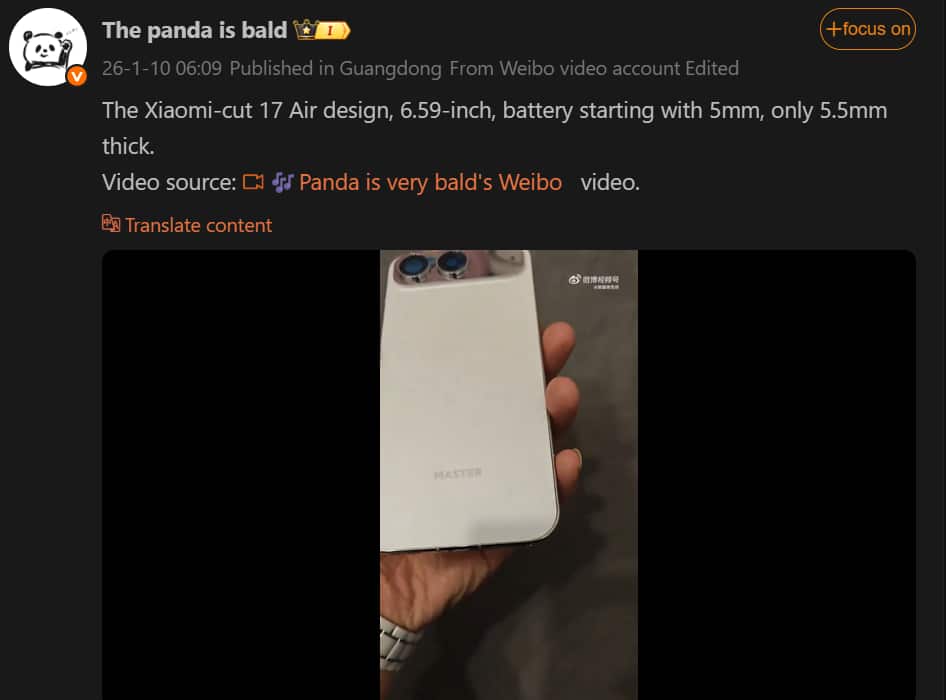
What really stands out is the thickness. The mould measures just 5.5mm, making it even slimmer than the iPhone Air, which is said to be around 5.6mm. The front is believed to feature a 6.59-inch display, placing it in the large-screen flagship category despite its thin body.
Earlier leaks from October 2025 hinted that Xiaomi was testing a 6.6-inch ultra-thin phone with rounded corners and a cold-sculpted metal body.
It was expected to launch as the Xiaomi 17 Air. There were even claims of a massive 200MP main camera, which would have been impressive for such a slim device.
Why The Xiaomi 17 Air Project Was Cancelled
While the Xiaomi 17 Air leak looks exciting, the project was reportedly cancelled due to real-world limitations. Ultra-thin phones come with big challenges.
There is very little space for a large battery, which means weaker battery life. Heat management becomes harder, and camera hardware often has to be compromised.
These trade-offs make such phones difficult to sell in today’s market, where users care more about battery life, performance, and durability. Slim designs look great, but they often fail to deliver in daily use.
Xiaomi likely realised that the demand for ultra-thin phones is still too small to justify the risks. Instead of launching a product that might disappoint users, the company chose to stop the project.
This leaked mould is not a teaser for an upcoming phone. It is simply a reminder that many ideas never reach store shelves—but they still shape the future of smartphone design.

