
Last Updated:
Dead venomous snakes can still bite and inject venom up to three hours after death. Avoid touching dead snakes to stay safe



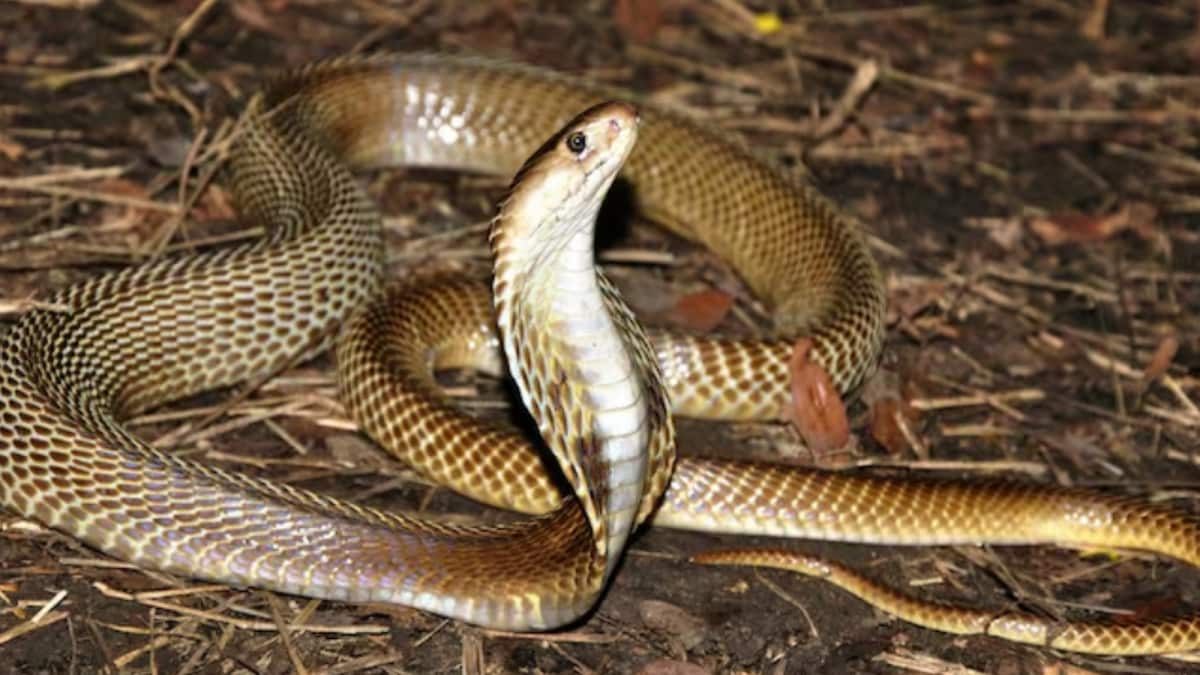
Due to their slow metabolism, cold-blooded snakes can still deliver reflexive bites up to six hours after death if their head or neck is touched. (News18)
Incidents of snake bites tend to increase during the rainy season. But did you know that a snake’s jaw can still expand and bite even after its death? Yes, you read that correctly. A startling report from Guwahati, Assam, has even taken scientists by surprise.
Dead Snakes Can Still Bite: A Surprising Discovery
Recommended Stories
It was long believed that the threat posed by a snake ends once it dies. However, recent findings by a team of biologists and health experts in Assam have proven this assumption wrong. So, exercise caution if you come across a dead snake or witness one dying; it is best to keep your distance.
According to The Hindu, new research indicates that venomous snakes, such as cobras and kraits, can still bite and inject venom up to three hours after their death.
Cases Of Post-Mortem Snake Bites In Assam
This study, published in the international journal Frontiers in Tropical Disease, documents three incidents in Assam where dead snakes delivered venomous bites.
Two involved Monocled Cobras (Naja kaouthia) and one involved a Black Krait (Bungarus lividus). All victims required 20 vials of anti-snake venom and were hospitalised for 25 days.
The person bitten by the Black Krait required ventilation and additional treatment.
How Were These Cases Uncovered?
- The first case occurred in Sivasagar district of Assam, where a 45-year-old man killed a cobra that was threatening his chickens and decapitated it. While disposing of the body, the cobra’s severed head clamped onto his hand and injected venom.
- The second case, also in Sivasagar, involved a farmer who was bitten by a dead cobra while inspecting it after his tractor had crushed it.
- The third case took place in Boko, Western Assam, where a black krait bit a man three hours after its death.
Scientific Explanation Behind The Phenomenon
Dr Surajit Giri, an anaesthesiologist involved in the study, explained this is the first documented instance worldwide. He noted that the brains of warm-blooded animals, including humans, shut down within 6 to 7 minutes after death or decapitation.
Cold-blooded snakes, however, have a slower metabolism, which keeps their brains active for 4 to 6 hours post-mortem. Consequently, snakes can still deliver reflexive bites if their head or neck is touched during this period.
A Strong Warning From Experts
Experts strongly advise against touching dead or decapitated snakes. In rural areas, people often handle or display dead snakes, unaware of the danger. This study serves as a crucial warning, not just for India but globally, that even dead snakes can remain venomous and pose serious risks.
Loading comments…
Go to Source
Author: News18