Over the past few days, a claim has been circulating widely on social media in the name of astrology. According to this viral assertion, if Rahu forms a Shadashtak (6/8) relationship with Venus placed in Pisces, Libra, or Taurus, especially in the fourth or fifth house, the native is guaranteed to live in a live-in relationship.
Such statements often create unnecessary panic among parents, who begin to fear for their child’s marital and social future. The individual, too, may experience guilt and anxiety, believing their horoscope has already judged their character. Slowly, astrology is misrepresented, not as a guiding wisdom, but as a harsh verdict. This raises a vital question: does this claim have any real shastric foundation?
ALSO READ: ABP Live Astro Analysis | How 2026 Will Redefine Indian Entertainment With Emotion, Family Stories And OTT Dominance
No Classical Text Supports This Claim
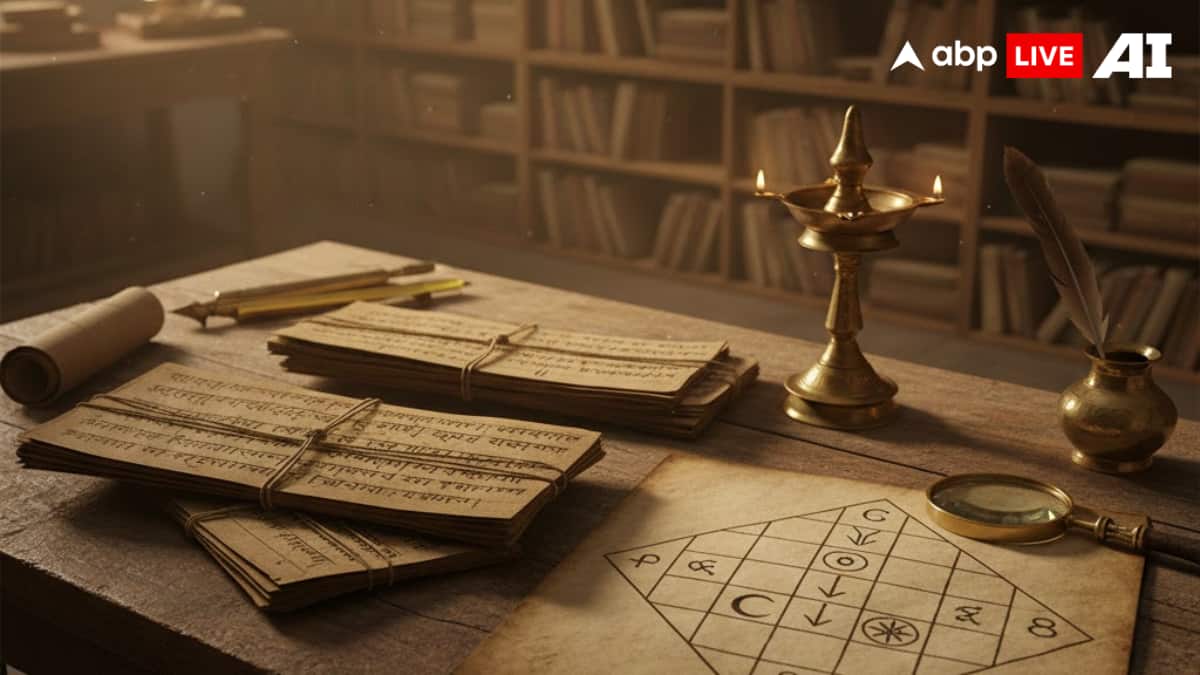
The first and most important fact is clear, no authentic Vedic astrology text mentions such a rule. Indian astrology is a shastra-based science, rooted in precise sutras and established principles. Any conclusion is accepted only if it is either directly stated in classical texts or logically derived from recognised shastric rules.
There is no reference linking Rahu–Venus Shadashtak Yog with live-in relationships in authoritative texts such as:
- Brihat Parashara Hora Shastra
- Phaladeepika
- Saravali
- Jataka Parijata
- Jaimini Sutras
None of these scriptures state that a 6/8 relationship between Rahu and Venus forces a person to live outside marriage. This fact alone weakens the foundation of the viral claim.
How Did This Belief Originate?
This idea did not emerge from shastra, but from modern interpretations influenced by social trends. Three separate astrological concepts were merged to create a single, fear-driven conclusion.
Shastric Nature Of Rahu
Classical texts describe Rahu as a planet that challenges convention, experiments with new paths, and questions social boundaries. Rahu introduces alternatives—but it does not impose decisions.
When supported by a strong seventh house, benefic Jupiter, or a well-placed Navamsa, Rahu can indicate:
Inter-Caste Marriage
- A foreign spouse
- Delayed marriage
However, forcing live-in relationships is not Rahu’s shastric role.
True Role Of Venus In Astrology
Venus signifies love, attraction, pleasure, and relationships, this is undisputed. But shastra clearly explains that Venus shows the desire for connection, not the structure of the relationship.
The social and legal framework of relationships is determined by:
- The seventh house
- The second house (family lineage)
Navamsa (D-9 chart)
Judging the nature of a relationship based solely on Venus is an incomplete and unscientific conclusion.
What Shadashtak (6/8) Really Means
The Shadashtak relationship is one of the most misunderstood concepts in astrology. Shastrically, it indicates:
- Internal conflict
- Emotional imbalance
- Mental stress
- Lack of harmony
Nowhere does shastra state that Shadashtak signifies immoral or socially unacceptable relationships. It shows struggle, not character judgement.
Astrology never decides marriage or relationships based on:
- A single planet
- One Yog
- One house
A complete analysis always includes:
- Seventh house and its lord
- Second house (family and values)
- Navamsa (D-9 chart)
- Darakaraka
- Dasha And Antardasha
Without all these factors aligning negatively, a “100%” conclusion is not shastrically valid.
Navamsa: The Final Authority On Marriage
In classical astrology, Navamsa is the ultimate decision-maker for marriage and dharma. Experienced astrologers always prioritise D-9 before drawing conclusions.
In real charts, it is often seen that Rahu–Venus Shadashtak exists in the birth chart, but Navamsa remains strong. As a result, the individual enters a normal, socially accepted, legal marriage. When Navamsa is supportive, even Rahu leads to stability rather than disruption.
The Core Principle: Desh–Kaal–Patra
Astrology is governed by the principle of Desh (place), Kaal (time), and Patra (individual). Without considering societal structure, era, personal upbringing, and family values, no astrological statement can be treated as absolute truth.
What This Yog Actually Indicates
When interpreted correctly, Rahu–Venus Shadashtak Yog may indicate:
- Modern and unconventional thinking
- A different perspective towards relationships
- Emotional confusion in love
- Attraction mixed with imbalance
But it does not compel live-in relationships, nor does it destroy marriage by default. Astrology explains tendencies—not destiny written in stone.
[Dislaimer: The content of this article is based solely on astrological predictions, and should be taken as general guidance. Individual experiences may vary. ABPLive.com does not assert the accuracy or validity of any claims or information presented. It is strongly recommended to consult a qualified expert before considering or implementing any information or belief discussed herein.]