
Friday, May 29, 2026
27.1 C
New Delhi

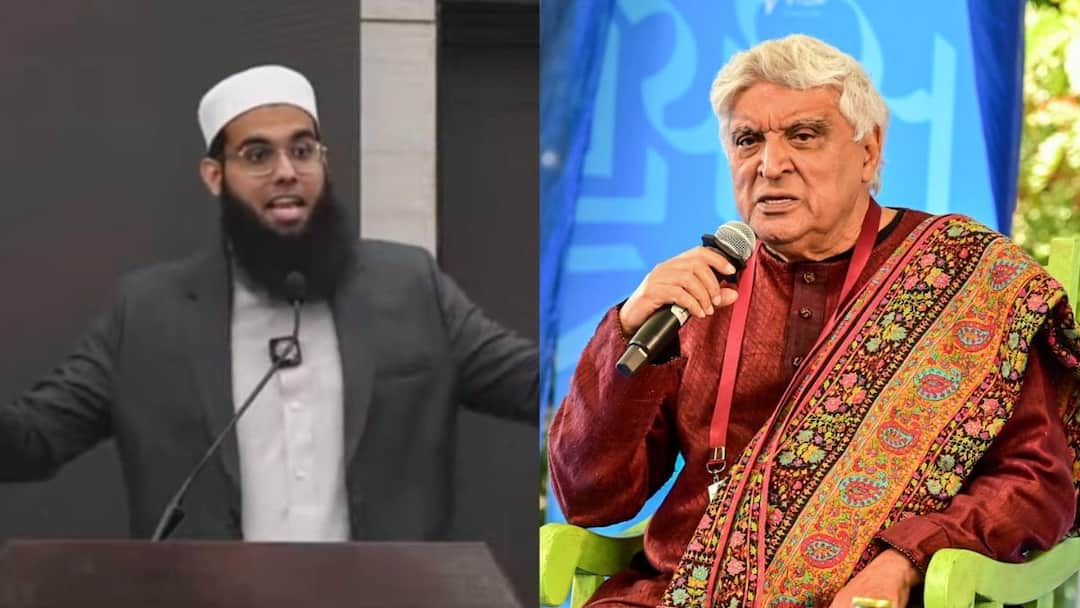
Why Social Media Is Backing Mufti Shamail In Debate With Javed Akhtar On God: Big Takeaways

Show Quick Read

Key points generated by AI, verified by newsroom

A rare public exchange between poet-lyricist Javed Akhtar and Islamic scholar Mufti Shamail Nadwi on the existence of God drew a packed audience to the Constitution Club and sparked a wider ideological debate online. The nearly two-hour discussion titled “Does God Exist?” brought together sharply contrasting worldviews, touching on suffering, morality, faith and reason, and igniting polarised reactions across social media platforms.

Akhtar Questions Divine Justice Amid Human Suffering

During the discussion, Akhtar, a self-declared atheist, challenged the idea of an omnipotent and benevolent God by pointing to large-scale human suffering, particularly the ongoing war in Gaza. He argued that the deaths of innocent civilians, especially children, posed a serious moral challenge to traditional religious explanations of divine justice.

“If God is omnipresent and all-powerful, then He is present in Gaza as well,” Akhtar said, adding that such realities made it difficult for him to reconcile belief in a compassionate deity with the scale of violence and suffering witnessed in conflict zones.

His remarks triggered strong reactions, particularly among sections of the Muslim community. Critics accused him of insensitivity and deliberate provocation, while supporters defended his right to question religious belief using moral and logical reasoning.

Free Will, Faith & The Limits Of Science

Responding to Akhtar’s arguments, Nadwi emphasised the concept of human free will, asserting that violence and injustice result from human choices rather than divine intent. “The Creator has created the possibility of evil, but He is not evil,” he said, placing responsibility for moral wrongdoing firmly on human agency.

Nadwi also argued that science and religion operate in separate domains. While science explains physical processes, he said, it cannot answer metaphysical questions such as why the universe exists at all. He added that scripture cannot persuade those who reject revelation as a valid source of knowledge.

The debate later turned to belief, faith and morality. Akhtar argued that belief should rest on evidence and logic, warning that faith without proof could discourage critical questioning. He also maintained that morality is a human construct shaped to sustain social order. Nadwi countered by questioning whether moral standards can simply be determined by majority opinion, asking whether injustice becomes acceptable if it is widely endorsed.

The exchange, marked by sharp disagreements and philosophical depth, has since fuelled extensive online discussion, reflecting enduring tensions between religious belief, secular reasoning and moral responsibility in contemporary public discourse.


Go to Source

Hot this week

‘When I see desis…’: Sabeer Bhatia reacts to Indians doing garba on Vietnam airport tarmac

Hotmail co-founder Sabeer Bhatia reacted to the viral video showing a group of Indian tourists performing ‘Garba’ on an airport tarmac in Vietnam. He said culture is more about behaviour than public display. Read More

Vivek Ramswamy says it never happened after blogger claims Knicks denied him entry to locker room

Vivek Ramaswamy blasted the fake news that he was denied entry to the Knicks locker room and said he did not even wait after his team was crushed. Read More

Eliminating language, culture & faith: Xi’s repression of Uyghurs enters new phase

AI image Nearly a decade after China launched its sweeping crackdown in Xinjiang, rights groups and researchers say Beijing’s campaign against Uyghurs has entered a new phase, one focused less on mass internment camps and more on re Read More

How tomatoes have become the latest symbol of America’s affordability squeeze

Tomato prices in the US have jumped nearly 40 per cent in a year, outpacing most grocery items and becoming a symbol of rising living costs. Read More

US judge blocks Trump administration’s $1.8 billion ‘anti-weaponisation’ fund

A federal judge has temporarily halted the Trump administration’s plan to create a $1. Read More

Topics

‘When I see desis…’: Sabeer Bhatia reacts to Indians doing garba on Vietnam airport tarmac

Hotmail co-founder Sabeer Bhatia reacted to the viral video showing a group of Indian tourists performing ‘Garba’ on an airport tarmac in Vietnam. He said culture is more about behaviour than public display. Read More

Vivek Ramswamy says it never happened after blogger claims Knicks denied him entry to locker room

Vivek Ramaswamy blasted the fake news that he was denied entry to the Knicks locker room and said he did not even wait after his team was crushed. Read More

Eliminating language, culture & faith: Xi’s repression of Uyghurs enters new phase

AI image Nearly a decade after China launched its sweeping crackdown in Xinjiang, rights groups and researchers say Beijing’s campaign against Uyghurs has entered a new phase, one focused less on mass internment camps and more on re Read More

How tomatoes have become the latest symbol of America’s affordability squeeze

Tomato prices in the US have jumped nearly 40 per cent in a year, outpacing most grocery items and becoming a symbol of rising living costs. Read More

US judge blocks Trump administration’s $1.8 billion ‘anti-weaponisation’ fund

A federal judge has temporarily halted the Trump administration’s plan to create a $1. Read More

Trump says making ‘final determination’ on Iran deal as Tehran rejects ‘excessive demands’

Trump said any agreement would require Iran to permanently abandon nuclear weapons ambitions and fully reopen the Strait of Hormuz, while Tehran accused Washington of making shifting and excessive demands. Read More

Nuclear Curbs, Sanctions, War: What Are The Possible Scenarios If Trump-Iran Deal Is Finalised

US and Iran near 60 day ceasefire extension, Trump to lift naval blockade and reopen Strait of Hormuz, proposed deal would ease some sanctions but deep nuclear disputes remain Go to Source Read More

Should New York Have Free Housing? JPMorgan’s Jamie Dimon Has This Advice For Zohran Mamdani

Jamie Dimon said the discussion focused heavily on affordable housing and childcare- two pillars of Zohran Mamdani’s progressive economic agenda. Read More

Related Articles