
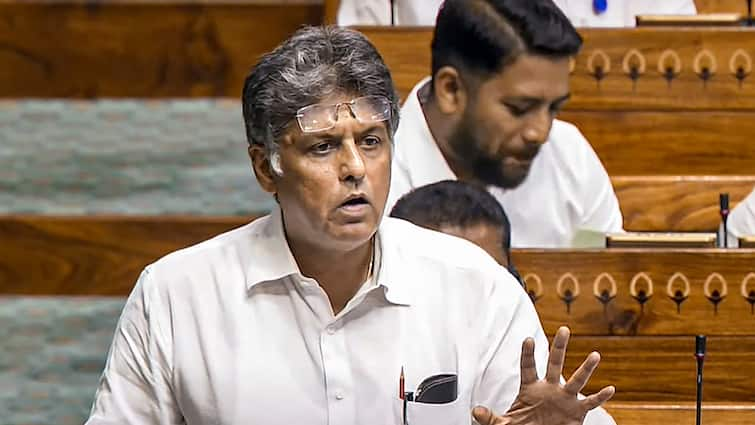


Congress MP Manish Tewari has once again pushed for freeing Members of Parliament from strict party control during voting, introducing a private member’s bill in the ongoing winter session of the Lok Sabha. The legislation, which seeks to amend India’s anti-defection law, proposes that MPs should not be compelled to follow party whips on most bills and motions. Tewari argues this shift is essential to restore democratic primacy to elected representatives and reduce what he calls the “whip-driven tyranny” that undermines genuine debate and meaningful lawmaking.
Tewari Calls For Freedom From Party Whips
Under current rules, MPs must vote as directed by their party through a formal whip. Tewari’s bill seeks to end this compulsion, except in cases linked to government stability, such as trust votes, adjournment motions and money bills. He frames the proposal as a step towards empowering legislators to act on conscience and constituent interests rather than party mandates.
The Chandigarh MP questions who should hold primacy in a democracy: the voter “standing in the sun for hours” or the political party whose whip reduces an elected representative to a “helot”. Although private member’s bills rarely pass, Tewari’s move comes at a moment when the Congress faces electoral setbacks and internal dissent. He has also often taken independent positions on key national issues, joining leaders like Shashi Tharoor in challenging traditional party lines.
Tewari argues that excessive reliance on whips has weakened Parliament, reducing MPs to “lobotomised numbers” and “dogmatic ciphers”. He says many laws today pass without substantial discussion because MPs feel they have no meaningful role in the legislative process. Instead, legislation is drafted by bureaucrats, briefly outlined by ministers and then approved through predictable voting patterns dictated by whips.
He recalls that from 1950 to 1985, whips carried no coercive force. The anti-defection law, introduced by Rajiv Gandhi in 1985 as the Tenth Schedule, was meant to curb rampant defections, a trend symbolised by the “Aaya Ram Gaya Ram” episode of 1967. Yet Tewari says defections only escalated: what began as a “retail activity” in the 1960s became “wholesale” in the 1990s and a “mega mall activity” after 2014.
He asserts that true reform lies in empowering MPs to research, debate and legislate independently-restoring conscience, constituency and common sense to Parliament.