


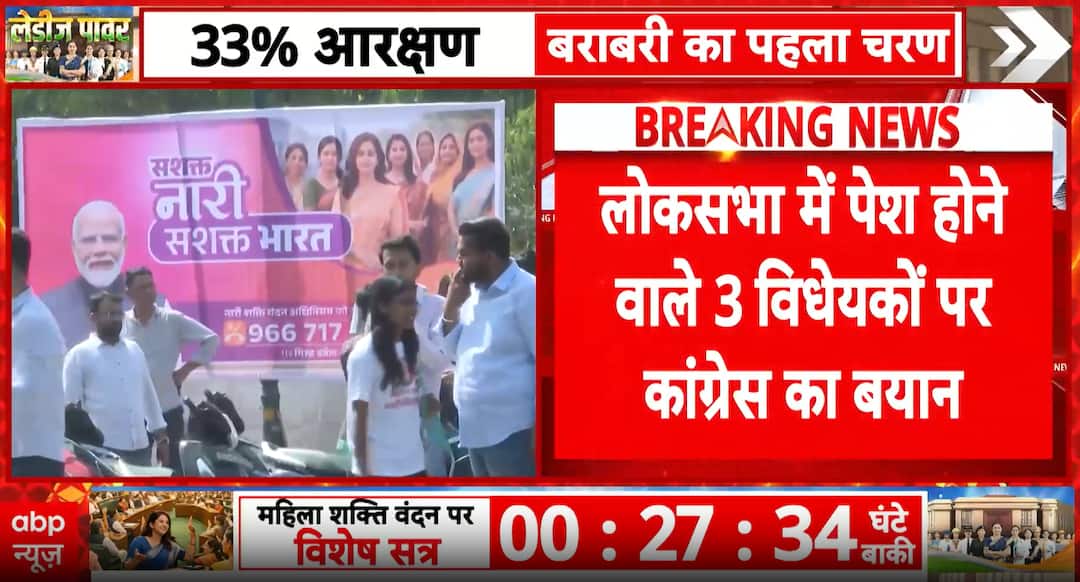
The political debate over the proposed women’s reservation legislation intensified further as the Kanimozhi formally submitted a notice opposing the three bills introduced in Parliament. The move marks a significant escalation in resistance from opposition parties, who argue that the government’s proposal conceals broader political intentions linked to delimitation and electoral restructuring. The ruling party, however, strongly defended the legislation. Union Minister Kiren Rijiju asserted that the bill is aimed solely at empowering women and ensuring 33% reservation in Lok Sabha and state assemblies. He rejected allegations of political manipulation, stating that the legislation is designed to benefit all sections of society without discrimination. Rijiju further criticized opposition parties for linking the bill to delimitation, calling such claims misleading and politically motivated. He emphasized that the government’s intention is to implement women’s reservation as a landmark reform that would set a global example for gender representation in politics. Meanwhile, opposition leaders continue to argue that the linkage between women’s reservation and future delimitation could alter the balance of political representation across states. They claim the process may disproportionately impact certain regions, particularly in southern India. Adding to the political tension, members of the ruling alliance have also intensified their response, defending the bill as a historic step toward inclusive governance. The debate has now turned into a broader confrontation between the government and opposition over federal structure, representation, and electoral reform. As the special parliamentary session continues, the women’s reservation bills remain at the center of a heated political battle, with both sides firmly entrenched in their positions.

POLITICAL HEAT: DMK joins opposition on women’s bill as ruling party defends reservation push
Previous article
Next article
