
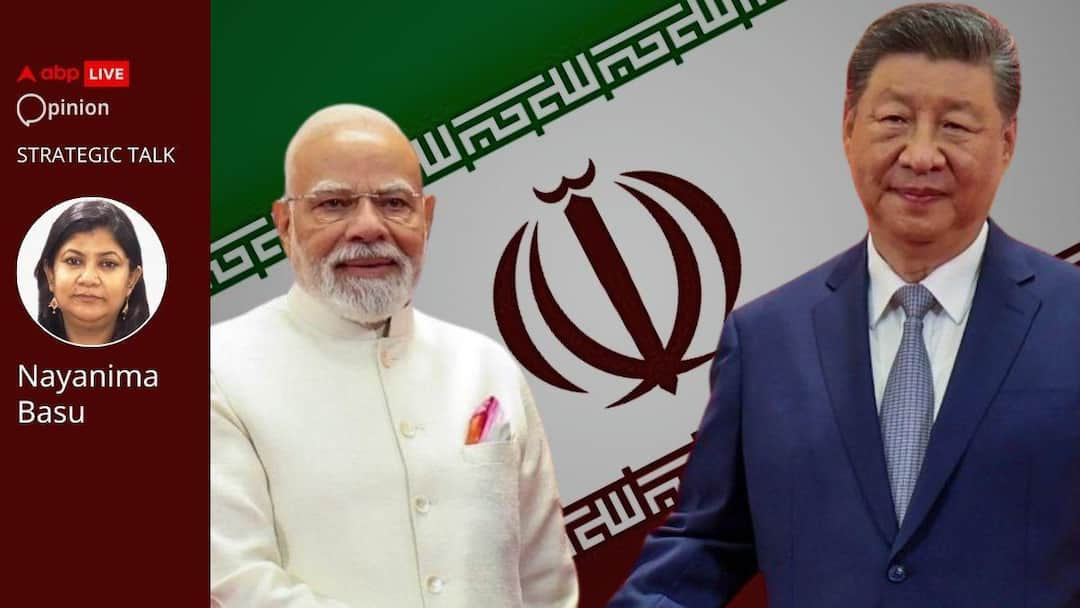

While the war in Iran that was initiated by the United States and Israel rages on even as the world is staring at a massive potential energy crisis, India, rather quietly, unlocked the floodgates thereby easing the entry of Chinese investments into the country making it amply clear that the Narendra Modi government finds itself in a far more difficult position today than it had anticipated when the deadly conflict began on February 28.
India is currently facing a significant energy crisis, and New Delhi has recognised that it must take immediate measures to protect the economy from an impending downturn. One such measure is allowing Chinese investment to enter the country, even if it makes the government appear desperate.
On March 10, as the war in Iran entered its eleventh day, leading to a global energy crisis and disruptions in supply chains, India announced that it had eased restrictions on investments from “neighbouring countries.” These restrictions were initially imposed under the Press Note 3 (PN3) amendments introduced in April 2020, allegedly to prevent opportunistic takeovers and acquisitions of Indian companies due to the COVID-19 pandemic. Needless to mention that the decision was met with significant discontent from Beijing.
The PN3 amendments in 2020 effectively shifted almost all Chinese investments from the automatic approval process—permitted for most countries—to a separate government route. The changes required additional security and political clearance. Even when approvals are granted in certain cases, the additional layer of scrutiny acts as a significant obstacle.
Within days of the restrictions being introduced, India witnessed a massive amassing of troops of the People’s Liberation Army (PLA) near the Line of Actual Control (LAC), in the eastern sector of Ladakh, that also saw the killing of 20 Indian soldiers in a hand-to-hand midnight combat with Chinese soldiers in the Galwan River Valley on intervening night of 15-16 June, 2020. This was the first time in 45 years that a military confrontation between India and China resulted in fatalities.
The Union Cabinet, chaired by Prime Minister Narendra Modi, decided to lift the restrictions on Chinese investments under PN3 on March 10. While this move can be seen as a further step toward India-China rapprochement, the timing of this decision is particularly compelling, as it comes during a period when India’s foreign policy appears to be shifting in response to the escalating Iran conflict and a series of crises unfolding across West Asia, while New Delhi has signalled a clear support for the United States and Israel over Iran.
The PN3 acted as a major barrier to enhancing economic relations between India and China. Since 2020, it has contributed to a decrease in Chinese investments in India, and it includes several ambiguous terms, such as the definition of ‘beneficial owner’ and its interpretation across different thresholds in Indian legislation. In general, PN3 has fostered an uninviting atmosphere for investors, with reliance on governmental processes further introducing considerable administrative obstacles.
Total FDI inflows from China stood at $ 886 million between 2016 and 2020. However, in the subsequent period from 2021 to March 2025, this plummeted to $68 million, registering a whopping decline. This sharp drop was largely triggered by the PN3 restrictions, according to a report by ICRIER.
The ICRIER report, published in August 2025, recommended reconsidering the PN3 policy to fully unlock the potential for Chinese investments in the country while establishing safeguards for national security. However, it remains uncertain whether the actions taken on March 10 will lead to an influx of investments from China that reaches the levels seen before 2020.
Iran Crisis, US Tensions
While seemingly unrelated, the decision to remove PN3 restrictions and allow Chinese FDI to flow into the country cannot be seen in isolation from India’s stance in the West Asia crisis. China today holds considerable influence in Iran, as well as in West Asia. Therefore, an amicable working relationship with Beijing will help Delhi reach out to Tehran, which is steadily drifting away from India.
External Affairs Minister S. Jaishankar has reached out to his Iranian counterpart, Seyed Abbas Araghchi and his deputy, Saeed Khatibzadeh, to iron out some of the immediate problems like the passing of ships meant for India through the Strait of Hormuz and the welfare of the Indians living and travelling in that country. However, the truth is, irritants in the bilateral relationship have risen sharply over the years.
Tensions between Delhi and Tehran had been rising steadily since the first tenure of the Donald Trump administration, when India brought its crude imports from Iran to zero, owing to the unilateral sanctions imposed by the United States.
Additionally, India’s lackadaisical approach towards the strategically significant Farzad-B gas field project and finally its exclusion contributed to more tensions between both civilisational partners.
In May 2021, India’s state-owned ONGC Videsh Ltd (OVL) was officially excluded from the development of the Farzad-B gas field in the Persian Gulf. Despite the Indian consortium discovering the field in 2008, the National Iranian Oil Company (NIOC) awarded the $1.78 billion development contract to a local Iranian firm, Petropars Group.
Long-standing disagreements over the price of the gas and the financial model of the development plan persisted for over a decade. Iran eventually chose a “buyback” contract model with its own domestic firm to ensure project progress. Facing ongoing international isolation, Iran shifted toward a policy of “domestic engineering capacity,” preferring to develop critical energy infrastructure using local companies like Petropars rather than waiting for foreign partners hampered by geopolitics.
India’s reliance on Chinese investments can also be viewed through the lens of growing tensions between New Delhi and Washington DC. The United States, under Trump 2.0, continues to crack the tariff whip on India, which has brought some of the country’s labour-intensive sectors to its knees.
While a recent February 2, 2026 trade deal slashed general tariffs from a peak of 50% down to 18%, India’s micro, small and medium enterprises (MSMEs) continue to grapple with thin margins and fresh targeted duties. The sectors that have been hit the hardest are textiles and apparel, gems and jewellery, marine products and chemicals, among others.
The Indian government has proposed interest subsidies and loan guarantees to cushion MSMEs rather than direct retaliatory tariffs. Over 50,000 small exporters, reportedly, are actively pivoting to markets in the EU, UAE, and Africa to reduce reliance on US buyers.
Meanwhile, the United States has initiated a Section 301 investigation, under the US Trade Act of 1974, into India and 15 other trading partners. This probe targets alleged “structural excess capacity” in manufacturing that the U.S. claims distorts global markets and restricts American commerce.
India’s foreign policy is undergoing a noticeable shift, reflecting a significant change in its strategic approach. This shift has become increasingly apparent following recent events, including the Russia-Ukraine war, the Israel-Gaza conflict, and the ongoing tensions involving the United States, Israel, and Iran. Even on a multilateral level, India has effectively declared that it is not supporting Iran in this conflict.
On March 11, 2026, the UN Security Council adopted Resolution 2817 (2026), a Bahrain-led measure co-sponsored by India and over 130 other nations. The resolution condemns what it calls “egregious attacks” by Iran against Gulf Cooperation Council (GCC) countries and Jordan. The resolution passed with 13 votes in favour, none against, and two abstentions from China and Russia.
This, after India refused to condemn the assassination of Iran’s Supreme Leader Ayatollah Ali Khamenei. India remains the odd one out within BRICS (Brazil, Russia, India, China and South Africa) for taking such a stance.
The implications of these developments will significantly impact the Indian economy. In light of this situation, New Delhi’s only viable strategy has been to permit Chinese investments to flow into the country. This decision is seen as a crucial step towards mitigating the various challenges it faces and reducing its dependency on external pressures.
Nayanima Basu is a senior independent journalist.
[Disclaimer: The opinions, beliefs, and views expressed by the various authors and forum participants on this website are personal and do not reflect the opinions, beliefs, and views of ABP News Network Pvt Ltd.]


