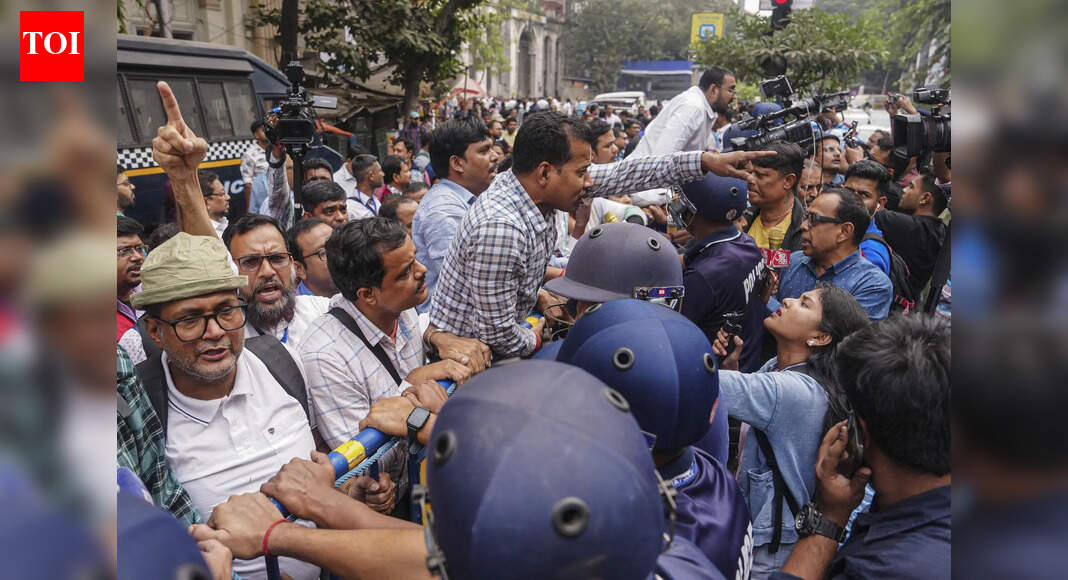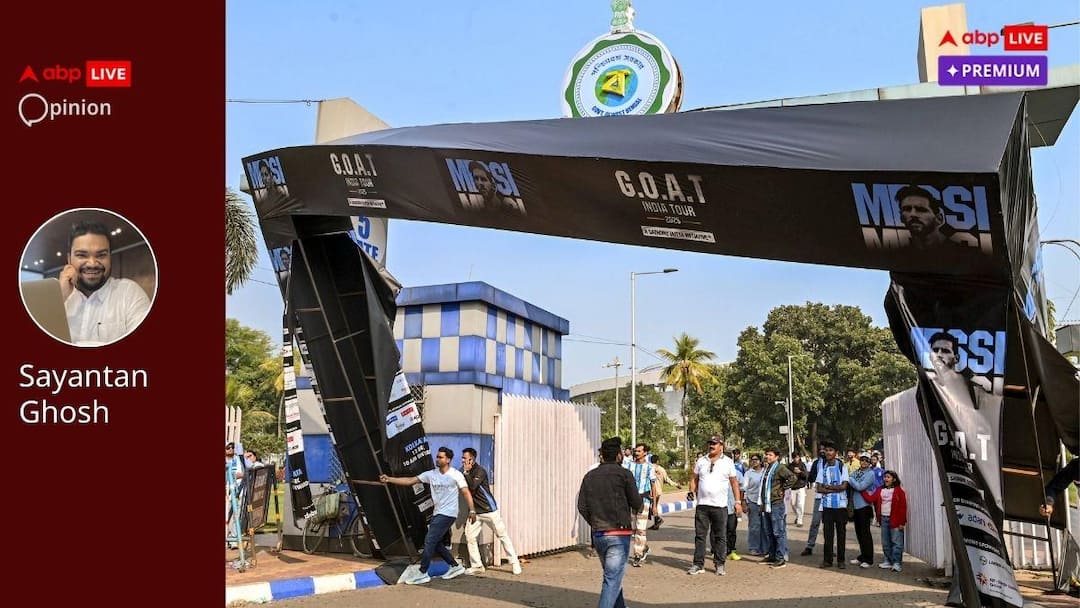

The much-anticipated arrival of Lionel Messi in Kolkata on December 13, 2025, as part of his GOAT Tour of India, was meant to be a celebratory milestone for a city renowned as the cradle of Indian football. Thousands of fans, many travelling from distant parts of the country and spending significant sums on tickets ranging from several thousand rupees to premium prices exceeding ₹15,000, gathered at the iconic Salt Lake Stadium expecting a memorable encounter with the Argentine legend.
Instead, the event descended into chaos: Messi’s appearance lasted barely 20 minutes, during which he was encircled by a dense crowd of officials, security personnel, and invited dignitaries, rendering him virtually invisible to the paying spectators in the stands. Frustrated fans, unable to glimpse their idol despite the promises of a prolonged showcase, resorted to vandalism—ripping seats, hurling objects onto the pitch, and causing damage estimated at over ₹2 crore.
This fiasco stands in sharp contrast to the tour’s subsequent legs. Mere hours later in Hyderabad, under a Congress-led government, the event proceeded smoothly: Messi participated in a penalty shootout, conducted football clinics with children, and interacted freely with the crowd for nearly an hour, earning enthusiastic applause. Similar success followed in Mumbai and Delhi.
While the ruling Trinamool Congress in Bengal may attribute the Kolkata debacle to external factors, the seamless execution in another opposition-ruled state underscores a deeper issue: administrative incompetence and a pervasive culture of privilege that prioritised photo opportunities for the powerful over the experience of ordinary fans. Bengal, long celebrated for its unparalleled passion for football, not only disappointed Messi but also betrayed its own sporting legacy, exposing a bankruptcy in governance that treats public events as private fiefdoms.
The Toxic Grip Of VVIP Culture
At the heart of the Kolkata chaos was an unchecked VVIP culture that hijacked what should have been a fan-centric spectacle. From the moment Messi stepped onto the pitch, he was enveloped by a swarm of politicians, officials, and their associates, many linked to the ruling establishment.
Reports highlight how the sports minister and other dignitaries dominated access, with family members and aides securing prime positions for photographs and interactions. This entourage effectively formed a human barrier, shielding Messi from the very audience that had funded the event through exorbitant ticket sales. Fans, who endured long waits and high costs—some saving for months or travelling thousands of kilometres—were reduced to distant spectators, straining for a view obstructed by this privileged circle.
In a state where football evokes deep emotional ties, this prioritisation of elite access over public enjoyment was particularly galling. The irony is profound: Kolkata, home to fervent support for Argentina and Messi, allowed influencers and power brokers to monopolise the moment, turning a global celebration into an exclusive gathering. This episode illuminates a broader malaise in Bengal’s public life, where events meant for the masses are routinely co-opted by those in authority, eroding trust and diminishing the democratic spirit of shared experiences.
An Apology And A Questionable Probe
Chief Minister Mamata Banerjee’s swift public apology to Lionel Messi and football fans—describing the Salt Lake Stadium chaos as “deeply disturbing” and expressing personal shock—marks a rare moment of political humility. By acknowledging failure without immediate deflection and reiterating her intention to attend the event as a spectator, she signalled accountability in a political culture where responsibility is often diluted. This gesture deserves recognition as an initial step toward redress.
However, the rapid constitution of a three-member inquiry committee to examine security lapses, crowd management, and overall mismanagement has raised concerns about perceived impartiality. The panel is chaired by retired Calcutta High Court Justice Ashim Kumar Ray, alongside Chief Secretary Manoj Pant and Home Secretary Nandini Chakraborty, both senior bureaucrats functioning directly under the state executive.
Justice Ray, who served as West Bengal’s Lokayukta from November 2018 until August 2025 (including extensions amid procedural delays), has frequently been appointed to government-mandated panels. According to media reports citing RTI disclosures, during the initial phase of his Lokayukta tenure, no investigations were concluded for over two years despite the receipt of complaints, an issue that attracted public criticism regarding institutional effectiveness rather than judicial intent.
Reports also note that some of his appointments occurred amid procedural disagreements, including gubernatorial observations on consultation norms during re-nomination processes. Over the years, he has chaired or served on several state-appointed bodies, including the police complaint authority and committees reviewing criminal law reforms.
In a broader context of strained relations between the Calcutta High Court and the Trinamool Congress–led government—shaped by adverse rulings on public employment, OBC classifications, communal matters, and heritage-related issues—the selection of a retired judge frequently associated with state panels inevitably invites scrutiny. The inclusion of senior bureaucrats whose departments were responsible for aspects of event planning further reinforces perceptions of an internal review rather than a fully arm’s-length investigation.
While the committee’s site visit and its stated mandate to assign responsibility and recommend safeguards are constructive steps, its composition risks being viewed as predisposed. In high-profile public failures, accountability must not only be pursued but must also be seen to be pursued through demonstrable neutrality. Without that, public confidence in uncovering the full extent of administrative and political lapses may remain fragile.
Token Gestures: Arrests, Notices, And A Curious Resignation
The government’s swift actions included arresting Satadru Dutta, the primary organiser and promoter behind the GOAT Tour, a Kolkata-based entrepreneur who previously facilitated visits by legends like Pelé and Maradona. Dutta was detained at the airport en route to Hyderabad, charged with mismanagement, and remanded to 14-day police custody despite bail denial.
Notably, the tour proceeded flawlessly in subsequent cities without him. Show-cause notices were issued to top officials, including DGP Rajeev Kumar and Bidhannagar Police Commissioner, while departmental proceedings targeted others. Then-sports minister Aroop Biswas submitted a handwritten resignation in Bengali on plain paper, devoid of official letterhead, urging relief from his sports portfolio for an impartial probe.
The note, riddled with spelling errors—including misspellings of “sports minister” and stadium names—drew widespread ridicule, underscoring a casual approach to formal accountability. Banerjee accepted it temporarily, assuming the portfolio herself, while Biswas retained other cabinet roles. These steps—arrest of the private organiser, bureaucratic notices, and a partial ministerial step-back—project responsiveness but raise doubts about depth.
Dutta’s role as sole scapegoat seems convenient, given the event’s success elsewhere. Routine show-causes for senior officers and a limited resignation months before elections hardly constitute stringent reform. Unaddressed remain critical lapses: security coordination, itinerary approvals promising extended access, oversight of ticket pricing and inflated concessions, and the involvement of other ministers in related activities like ticket distribution.
Ultimately, the Messi mess transcends isolated blunders, revealing entrenched VVIP excesses and administrative inertia. Bengal’s football legacy demands systemic overhaul—dismantling privilege barriers and prioritising public trust—to prevent future betrayals of its passionate populace.
Sayantan Ghosh teaches journalism at St. Xavier’s College (Autonomous), Kolkata. He is on X as @sayantan_gh.
[Disclaimer: The opinions, beliefs, and views expressed by the various authors and forum participants on this website are personal and do not reflect the opinions, beliefs, and views of ABP News Network Pvt Ltd.]