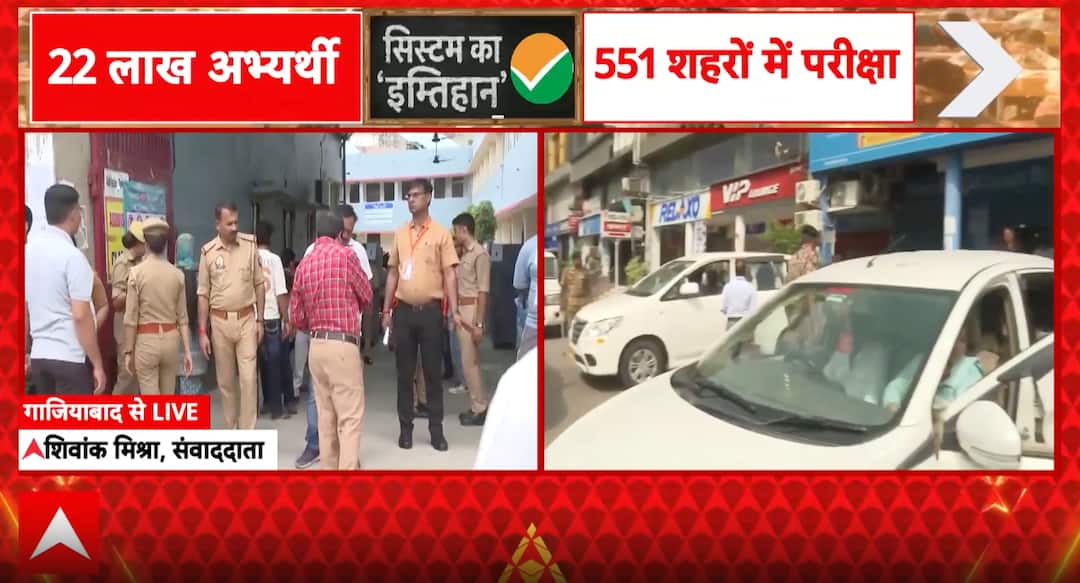
The NEET re-examination across India has begun amid intense security arrangements, following the paper leak controversy that led to the cancellation and re-conduct of the exam. With lakhs of aspirants appearing across 551 cities and more than 5,000 examination centres, the focus has shifted beyond students to the credibility of the examination system itself. Candidates started arriving at centres hours before entry time, with gates opening at 11:00 AM and final entry allowed until 1:30 PM. Authorities have deployed multiple layers of security, including police forces, paramilitary units, AI-enabled CCTV surveillance, signal jammers, flying squads, and dog squads to ensure a malpractice-free examination environment. In several states including Rajasthan, Madhya Pradesh, Uttar Pradesh, Delhi, and Bihar, question papers were transported under heavy security cover. In sensitive locations such as Sikar, BSF personnel were involved, while CRPF teams were deployed across multiple centres, including major hubs like Bhopal. Officials confirmed that strict monitoring protocols have been implemented at every stage of the examination process. In the national capital, Delhi Police along with paramilitary forces have been stationed at all centres. Special arrangements, including cooling zones for parents waiting outside, have also been introduced to manage the extreme weather conditions and improve crowd control. Despite the heightened security, many students expressed mixed emotions—relief at appearing for the exam, but also uncertainty and reduced enthusiasm compared to the initial attempt. Parents, too, reflected concern over repeated disruptions while hoping for a fair and transparent process this time. As the examination progresses, attention remains fixed not only on student performance but also on whether the system can successfully restore trust and credibility after recent setbacks. The re-exam is increasingly being viewed as a critical test of institutional accountability as much as academic competition.

EXAMINATION ALERT: NEET Re-Exam Begins as Security Tightens After Paper Leak Controversy
Previous article

Next article