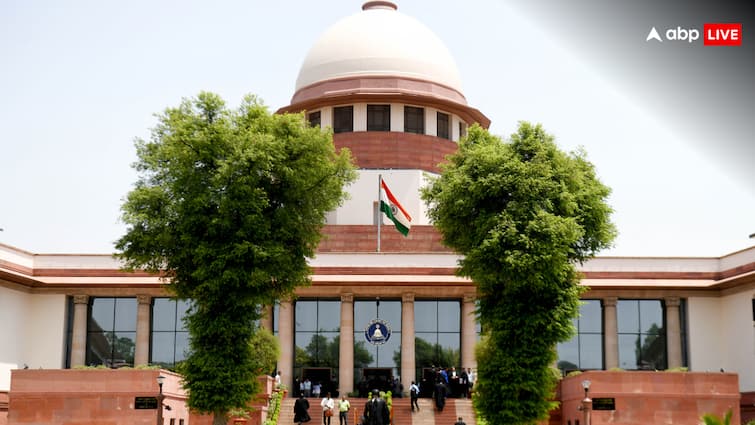

The Supreme Court on Wednesday made it clear that governors cannot send state bills to the President for consideration once those bills have been returned by the assembly and passed for the second time. The observation came during a hearing on the presidential reference concerning the governor’s powers under Article 200 of the Constitution.
A five-judge Constitution bench, headed by Chief Justice B R Gavai and including Justices Surya Kant, Vikram Nath, P S Narasimha and A S Chandurkar, examined the Centre’s argument that a governor retains the authority to reserve such bills for the President even after their re-passage in the state assembly, news agency PTI reported.
Governor’s Options Under Article 200
The bench reminded Solicitor General Tushar Mehta, who represented the Centre, that Article 200 provides four courses of action to a governor: assent to a bill, withhold assent, reserve it for presidential consideration, or return it to the assembly for reconsideration (except in the case of a money bill).
“If the fourth option (of returning the bill to the assembly for reconsideration) is to be exercised (by Governor) with a message for reconsideration to the assembly, then the option of withholding assent or sending the bill to President becomes defunct…,” the bench remarked, as quoted by PTI.
It stressed that once a bill is re-passed and presented again, the governor “shall not withhold assent” and cannot forward it to the President for approval.
SC Flags Governors Withholding Assent ‘At Whims and Fancies’
The bench further cautioned that if governors were allowed to indefinitely withhold assent without returning bills for reconsideration, it would effectively place elected governments at the “whims and fancies of Governor.” It added, “If Governor can indefinitely withhold assent, governments formed by majority support would be at the mercy of an unelected appointee.”
Justice Narasimha rejected the Centre’s claim that withholding assent automatically led to the failure of a bill, terming such a view “counterproductive to Governor’s powers.” He explained that a governor could initially withhold assent while citing reasons, return the bill with suggested amendments, and then later approve it if the assembly made necessary changes. “The interpretation of Governor’s powers cannot be straitjacket. It should be left open-ended. The Constitution is a living document. Its interpretation cannot remain static,” Justice Narasimha said.
Centre’s Defence and Counterarguments
Arguing for the Centre, Solicitor General Mehta said a governor’s role was not to be reduced to that of a “postman” if he could not exercise discretion to withhold assent. He maintained that the governor represented the Union in the constitutional framework and was vested with “more powers” than the President. According to him, the power of withholding assent should be used “sparingly and only in extraordinary situations” and there was no prescribed timeline for the first three options—assent, withhold, or reserve for the President’s consideration.
Senior advocate Kapil Sibal opposed Mehta’s stance, noting that “by that logic, President could also withhold assent on Centre’s bills under Article 111 of the Constitution.” Chief Justice Gavai responded that constitutional authorities were expected to exercise their powers “in a bonafide manner,” adding, “We will interpret the Constitution the way it has to be interpreted without going into the political scenarios.”
SC Bench Raises Question On Harmony Between Governor And State
Earlier in the day, the bench raised a broader question: whether India had lived up to the constitutional framers’ expectations of harmony between the office of the governor and elected state governments.
Defending the institution, Mehta argued that the governor’s post was not “for political asylum seekers” but carried constitutional responsibilities.
The matter arose after President Droupadi Murmu, in May this year, invoked Article 143(1) to seek the Supreme Court’s opinion on whether judicial directions could fix timelines for the President when considering bills reserved by governors. Earlier, on April 8, the court had for the first time mandated that the President must decide within three months on bills reserved for consideration.