
- CJP founder Dipke stated student agitation continues despite concessions.
- He condemned government’s use of force against student protesters.
- Dipke demanded accountability for pellet gun use, warned future protests.
- He questioned exam reform bill’s effectiveness without proper implementation.
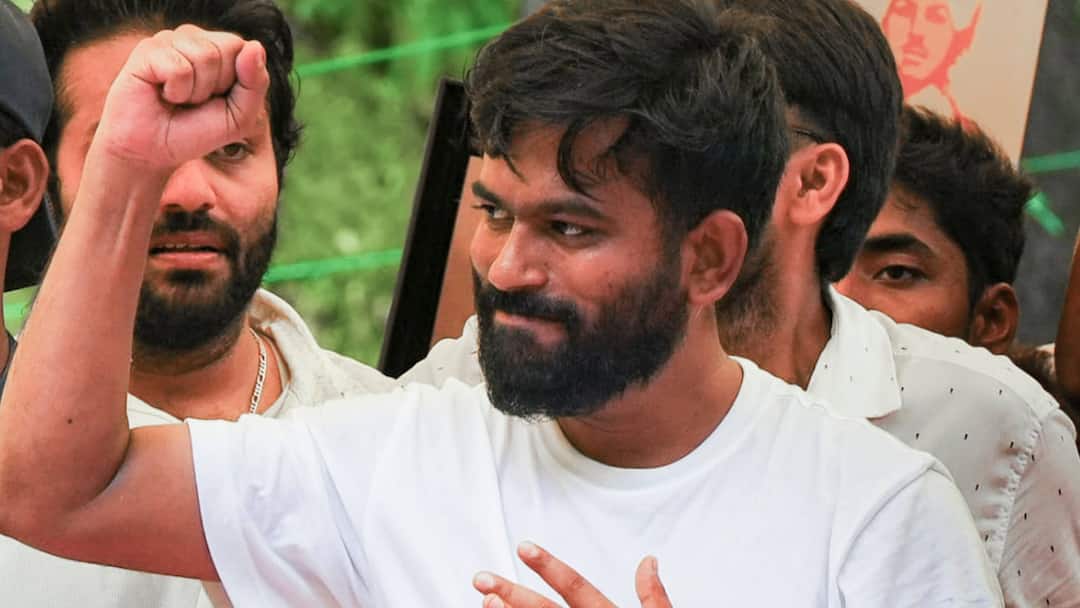
After spearheading a 36-day student agitation at Delhi’s Jantar Mantar, Cockroach Janta Party (CJP) founder Abhijeet Dipke received an enthusiastic welcome on his return to Chhatrapati Sambhajinagar on Wednesday. While supporters gathered in large numbers to greet him, Dipke made it clear that the end of the protest did not mark the end of the movement, asserting that dissatisfaction among students continues despite recent developments.
Dipke Says Student Movement Is Still Alive
Addressing supporters after arriving in the city, Dipke dismissed suggestions that the agitation had lost steam following the Centre’s acceptance of several demands and the resignation of former Union minister Dharmendra Pradhan. Emphasising that students should not be viewed through a law-and-order lens, he said that those students were not terrorists and that they were the future of the country. He added that if the future of the country was troubled in that way, the students would go and change the government if it failed to address their concerns, as per reports.
Dipke alleged that instead of engaging with protesters, authorities responded with force and intimidation. Referring to the aftermath of the agitation, he claimed that students’ blood had been spilled on the streets, yet the government had learnt nothing. He said that students from different states were being threatened at that time, and police were visiting their homes. He added that the government should stop harassing students and listen to them.
ALSO READ: ‘Students’ Anger Has Not Subsided’: Abhijeet Dipke Warns Of Bigger Agitation
Grand Reception Despite Police Advice
According to sources, police had advised Dipke to travel directly from the airport to his residence and postpone any public engagements until Thursday. However, he proceeded with a series of public appearances that drew sizeable crowds.
His first stop was at the statue of Chhatrapati Shivaji Maharaj at Kranti Chowk, where he paid floral tributes. He then visited the entrance of Dr Babasaheb Ambedkar Marathwada University to honour Dr B.R. Ambedkar before heading to Bajajnagar in Waluj. There, family members, including his mother Anita and sister Varsha, welcomed him with a traditional aukshan ceremony as supporters celebrated his return.
During interactions with the media, Dipke also took aim at Prime Minister Narendra Modi’s online outreach amid the ongoing examination controversy. Referring to the Prime Minister’s recent social media activity, he remarked, “I see his videos regularly. He is doing very well as an influencer. Maybe he should focus on that and let someone else handle the Prime Minister’s responsibilities.”
ALSO READ: CJP Protest: Delhi Police Issues Notices To Six X Accounts, Registers FIR
Pellet Gun Action, Fresh Protest Warning and Exam Reform Debate
Dipke renewed his demand for accountability over the reported use of pellet guns during the July 20 protest at Delhi’s Jantar Mantar. Speaking later at his residence, the CJP founder again criticised the use of force during the protest and indicated that continued pressure on students could lead to renewed demonstrations. He suggested that any future agitation would be the result of the government’s actions rather than the organisers’ intentions.
He also questioned the effectiveness of the Public Examination (Prevention of Unfair Means) Amendment Bill, 2026, arguing that stronger laws alone would not solve the problem unless implemented effectively.
The controversy stems from the nationwide outrage over the alleged NEET-UG paper leak, which triggered widespread protests by students demanding accountability and systemic reforms. CJP’s “Chalo Sansad” protest on July 20 witnessed clashes between demonstrators and security personnel near Jantar Mantar, with allegations surrounding the use of plastic pellets becoming a major flashpoint.
Although the 36-day sit-in concluded after the Centre accepted several key demands, Dipke’s remarks suggest that the student movement is far from over. His latest statements indicate that activists intend to keep pressure on the government until they believe justice has been delivered and concerns over examination reforms have been fully addressed.