
Homi Bhabha admired Picasso
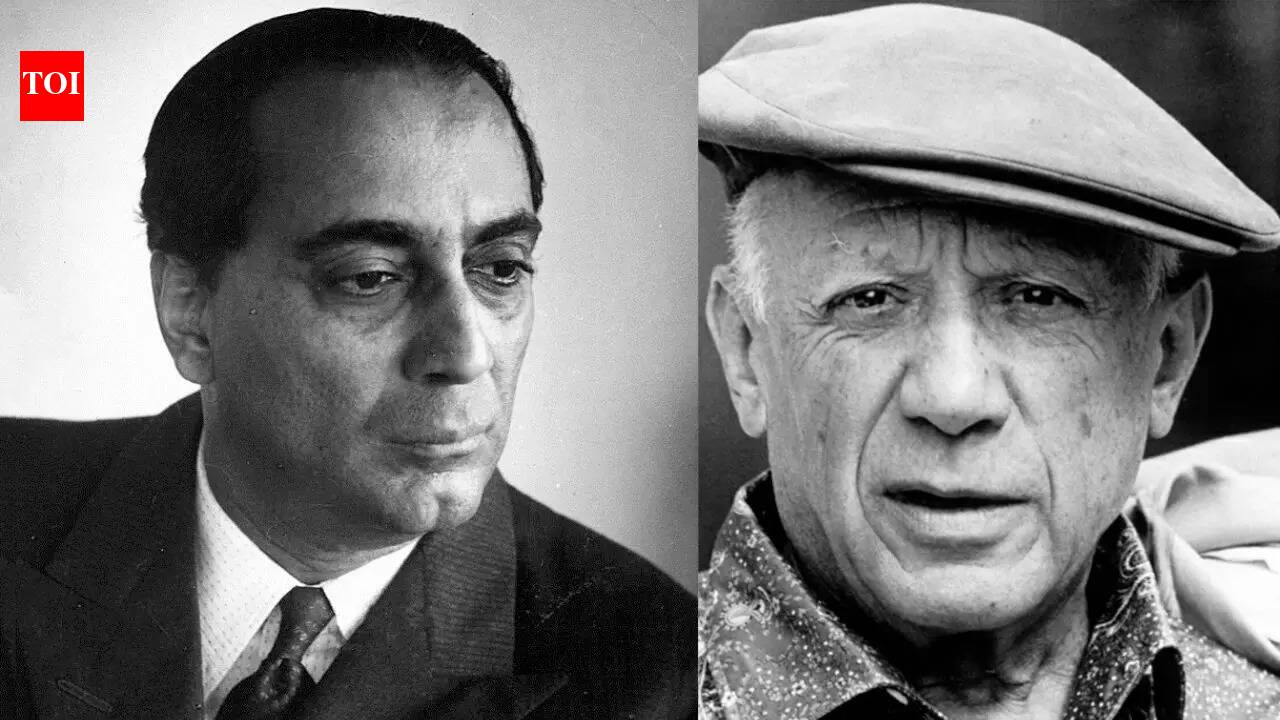
Dr Homi Jehangir Bhabha is a well-known name in India’s scientific community. He is known as the “father of the Indian nuclear program” because he was a visionary physicist who helped shape the country’s nuclear energy policy and set up the Tata Institute of Fundamental Research (TIFR) and the Atomic Energy Establishment in Trombay, which is now called the Bhabha Atomic Research Centre (BARC).Bhabha’s work in science and technology is well-known, but his involvement in the arts is less well-known but still interesting. Few Indians associate the scientist with the world of modern art, yet Bhabha was not just a physicist. He was also interested in music, painting and the broader cultural life of India’s post-independence era. He listened to classical music a lot, drew and painted, and had a strong interest in art and science.This duality of mind, scientific precision on one side and artistic curiosity on the other, shaped a lot of how he saw the world. It also brought him into contact with artists and art movements of the time and shaped the early development of India’s modern art movement. One of the most interesting things about Bhabha’s artistic interests was his desire to bring international artistic dialogue to India. This included a now-famous effort to connect with Pablo Picasso, one of the most famous artists of the 20th century.
Homi Bhabha’s scientific legacy
Homi Bhabha was born in Bombay in 1909. He went to Cambridge University, where he first studied engineering but quickly switched to physics, which he loved. Early in his career, he became well-known around the world for his work on quantum theory, cosmic rays, and particle physics. He went back to India before World War II and joined the Indian Institute of Science in Bengaluru. He started the Tata Institute of Fundamental Research in 1945.Bhabha’s ideas were more than just ideas for research. He was a big part of building India’s nuclear energy infrastructure and pushed for a three-stage program that would eventually let the country use its large thorium reserves to make electricity. He was also one of the people who helped start the Atomic Energy Commission of India and was its first president. Because of his leadership, India was able to use nuclear energy in peaceful ways. Reports say that he won a lot of awards during his life, including the Padma Bhushan in 1954. People in India and around the world thought highly of his scientific work. It was very sad that he died in a plane crash in 1966.
Homi Bhabha’s admiration for Picasso: A scientist with an artistic soul
People are often surprised by Bhabha’s artistic side, even though his scientific work is well known. He was an avid listener of Western classical music and a painter in his own right. Records from his early life reveal that he took violin and piano lessons and regularly spent time with music as part of his routine.Bhabha also took an active interest in the visual arts beyond personal hobbies. He helped build one of the most significant collections of Indian modern art for the TIFR in the 1950s, acquiring works by important painters such as K.H. Ara, V.S. Gaitonde, and M.F. Husain.His role as a patron was not limited to Indian art. At one point, he is believed to have extended an invitation to Pablo Picasso himself, hoping to have the Spanish master contribute to the cultural life around India’s scientific institutions. Bhabha believed that artistic and scientific creativity are the same, and accounts of his correspondence and documented efforts suggest this belief.This link to Picasso, even if it’s indirect, shows how wide-ranging Bhabha’s interests are. He didn’t see art and science as two separate fields. Instead, he treated both as complementary ways to explore the world, enrich society and express human curiosity.
Patronage and impact on Indian art
Bhabha’s influence extended into the broader Indian art movement of the mid-20th century. His support for progressive Indian artists helped elevate modern art during a formative period. He bought works of art and encouraged people to express themselves through art and science. This made it possible for art and science to live together and help each other.His participation was part of a larger cultural scene in India after it became independent, where artists, scientists, and thinkers worked together. This mix of cultures helped India figure out where it fit in the world and helped shape the country’s intellectual and cultural identity.
The lasting legacy of a multifaceted personality
Dr Homi Jehangir Bhabha’s life story is more than just about physics and nuclear strategy. It shows that a scientific mind can also appreciate art, creativity, and cultural leadership. His efforts to get people like Picasso to work with Indian cultural institutions, his support of modern Indian painters, and his own artistic work show that he valued different ways of expressing oneself.People remember Bhabha today as a groundbreaking scientist who helped shape India’s nuclear program. But his connections to the arts and culture are an important part of his legacy that still inspires artists, scientists, and art lovers today. Go to Source