
Monday, July 27, 2026
38.1 C
New Delhi

Researchers made flying harder for Alaskan Seabirds; only 67% returned, survivors bred better

Researchers made flying harder for Alaskan seabirds by clipping some wing and tail feathers; only 67% returned the next year, but the survivors were more likely to breed successfully

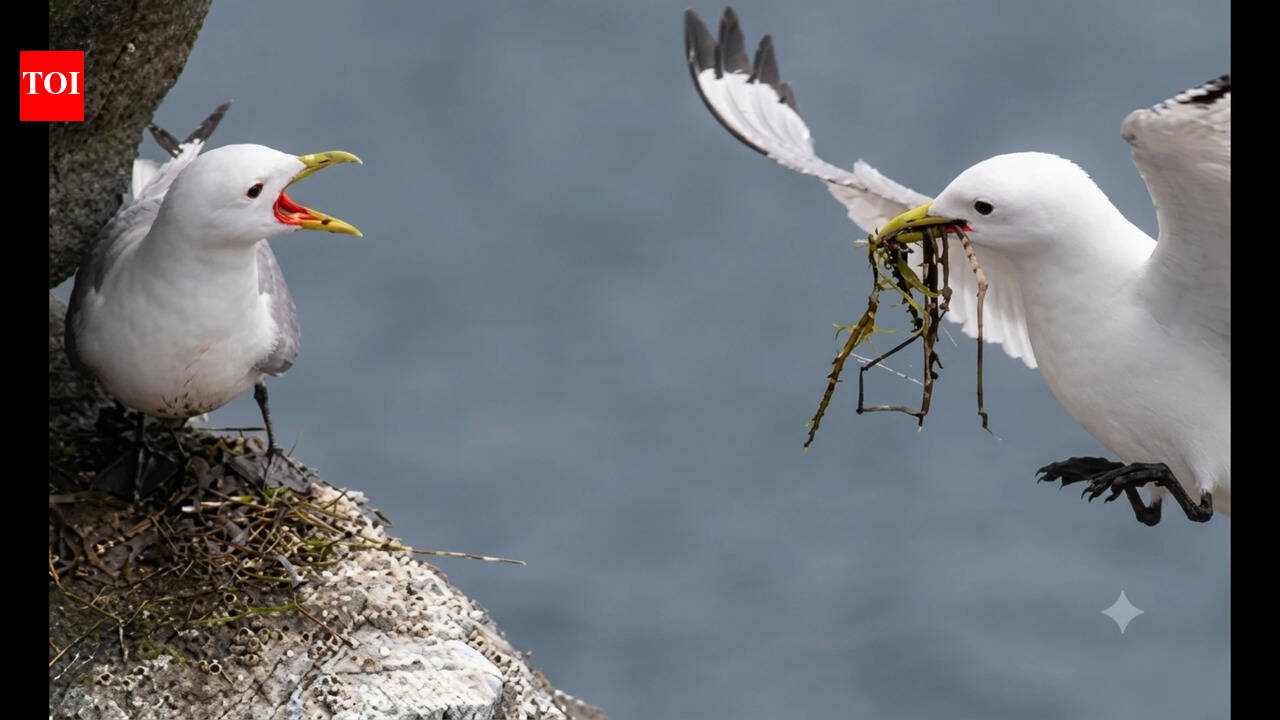
Researchers clipped a few wing and tail feathers of wild Alaskan kittiwakes (AI enhanced image. Credit: Nature Counts)

Researchers who clipped a few wing and tail feathers of wild black-legged kittiwakes in Alaska to make flying harder, have found that the effects lasted well beyond a single breeding season. The birds struggled to raise chicks that year, with only 67% returning to the breeding colony the following year. Researchers also found that those that did return were more likely to breed successfully after travelling farther during migration.The study was carried out by an international team led by researchers from Nagoya University in Japan. They followed 251 black-legged kittiwakes on Middleton Island, Alaska, between 2021 and 2024 to understand how extra energy demands during breeding affect the birds later in the year. The findings have been published in the Proceedings of the Royal Society B, Science X reported.The researchers say the study provides rare experimental evidence that animals can change how they use their energy across different stages of the year. They call this ability ‘energetic flexibility’, which means an animal can adjust how it divides its available energy between raising chicks, migration and its own survival depending on environmental conditions.

Clipping the wings

Black-legged kittiwakes are seabirds that breed in large colonies before migrating across the North Pacific Ocean after the breeding season. The researchers wanted to find out what happens when these birds have to spend more energy while raising their chicks.The birds were divided into three groups during the 2021 breeding season. One group received extra food, which reduced the effort needed to feed their chicks. A second group had three wing feathers and two tail feathers clipped shortly after laying eggs. The missing feathers made flying less efficient for the rest of the breeding season, meaning the birds had to use more energy whenever they flew. The feathers later grew back naturally during the birds’ next moult. A third group was left unchanged and served as the control group.To follow the birds after they left Alaska, every bird carried a lightweight geolocator. These small tracking devices recorded where the birds travelled during the non-breeding season. The researchers recovered 203 of the 251 devices the following year and continued tracking many of the same birds until 2024.
Every bird carried a lightweight geolocator (Macaulay Library photo)<br />” msid=”132659719″ width=”” title=”Every bird carried a lightweight geolocator (Macaulay Library photo)” placeholdersrc=”https://static.toiimg.com/photo/83033472.cms” imgsize=”” resizemode=”4″ offsetvertical=”0″ placeholdermsid=”47529300″ type=”thumb” src=”https://static.toiimg.com/photo/83033472.cms” class=”” data-src=”https://static.toiimg.com/photo/msid-132659719/every-bird-carried-a-lightweight-geolocator-macaulay-library-photobr.jpg” data-api-prerender=”true”/> </p>
<p> Every bird carried a lightweight geolocator (Macaulay Library photo)</p>
</p></div>
</p></div>
<p><h2> Raising chicks became harder</h2>
</p>
<p> The birds whose flight had become more energy-intensive found it much harder to raise their chicks successfully. Only 10% of their chicks survived long enough to leave the nest, a stage known as fledging. By comparison, birds that received extra food achieved a fledging success rate of 44%, while the control group recorded 43%.The researchers say this showed that making flight more difficult during breeding had a direct impact on reproduction. Because the birds had to spend more energy flying, they had less energy available for finding food and caring for their chicks.Another difference appeared once the breeding season ended. The birds with the highest energy costs left the breeding colony about 10 days earlier than birds in the other two groups. They also started their migration across the North Pacific Ocean sooner. </p>
<p><h2> Why birds left earlier</h2>
</p>
<p> Scientists have long known that birds which fail to raise chicks often leave breeding colonies earlier than successful parents. However, this study suggests that breeding failure itself is not the main reason.Instead, the researchers found that the earlier departure was linked to the amount of energy the birds had already spent during breeding. In other words, both breeding failure and early departure resulted from the same high energy demands.”Earlier departure from the breeding colony by birds that failed to raise chicks has long been recognised. However, our study demonstrates that early departure is driven not by breeding success or failure itself, but by the energetic costs incurred during reproduction,” said Akiko Shoji, senior author of the study and professor at the Graduate School of Environmental Studies at Nagoya University.”In other words, breeding failure appears to be one consequence of high energetic costs, rather than the direct cause of early departure,” Shoji said. </p>
<div data-pos=
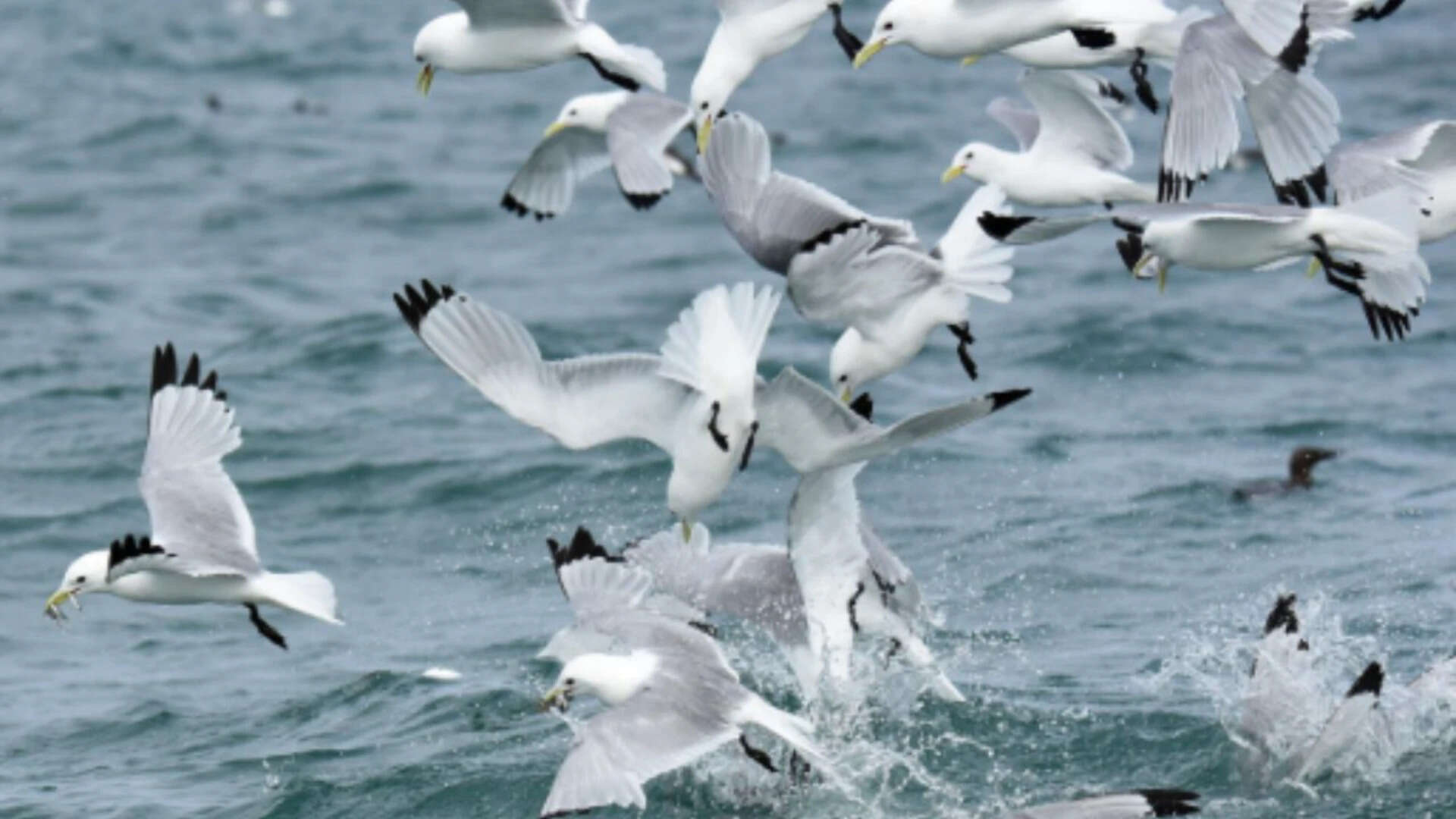
A flock of Black-legged Kittiwakes foraging on small fish. (Picture: USGS)

A flock of Black-legged Kittiwakes foraging on small fish. (Picture: USGS)

Longer migration helped recovery

The tracking data revealed another unexpected pattern. Birds that had faced higher energy costs during breeding travelled farther during the non-breeding season than birds in the other groups.Migration is the seasonal journey animals make between different areas. For black-legged kittiwakes, this period is spent at sea, where they feed and rebuild their energy before returning to breed again. The researchers believe that travelling farther may have allowed the birds to reach feeding areas that helped them recover after the demanding breeding season.The results supported that idea. Birds that migrated longer distances were more likely to breed successfully the following year.

Cost of better breeding

Although the longer migration appeared to improve breeding success, it also reduced the birds’ chances of survival. Only 67% of the birds whose flight costs had been increased returned to the breeding colony the following year. In comparison, 83% of the birds in the control group returned, while the survival rate reached 90% among birds that had received extra food.The researchers say these findings reveal a hidden trade-off. The birds appeared to invest more effort in migration to recover from a difficult breeding season. That strategy increased their chances of breeding successfully the following year, but it lowered their own chances of surviving.The researchers say the findings could become increasingly important as climate change affects ocean conditions. If warming seas and changing prey availability force seabirds to spend more energy finding food, they may also have to change how they divide that energy between breeding, migration and survival.Understanding these long-term effects could help scientists predict which seabird populations are more likely to cope with changing environments and which may struggle.The team now plans to use miniature heart-rate loggers to measure how much energy kittiwakes use throughout the year. By tracking their energy use more closely, the researchers hope to understand the biological processes behind energetic flexibility and learn more about how seabirds respond to changing environmental conditions. Go to Source


Hot this week

Six orphaned rhinos give birth after mothers were killed by poachers

Rescued rhinos defy the odds, give birth after returning to the wild Six rhinos left for dead by poachers in South Africa when they were just young calves have all given birth naturally in the wild, marking a big win for wildlife rec Read More

518 million years ago, one tiny sea creature may have started the evolution of the fangs

Scientists have identified the earliest known evidence of spider fangs in a 518 million-year-old fossil recovered from southern China, tracing the origin of one of the animal kingdom’s most feared biological tools back to a small Read More

Around 1200 BCE, major Mediterranean civilisations began collapsing; scientists have now reconstructed the climate conditions surrounding the crisis

Representative Image (AI-generated) Around 1200 BCE, several of the eastern Mediterranean’s most powerful civilisations, including the Mycenaean kingdoms, the Hittite Empire, Canaanite city-states and parts of New Kingdom Egypt Read More

One of the world’s largest rodents was imported for fur farming in North America; today it’s devastating wetlands and riverbanks across US

Two hundred years ago, you wouldn’t have been able to find them outside of South America. But since then, Nutria, one of the world’s largest rodents, has taken over US. Read More

200 years after the first dinosaur, scientists use brain scans on a 100-million-year-old snake fossil from Brazil

image AI generated Two centuries ago, a British geologist gave the world its first named dinosaur. Megalosaurus, described from a handful of fossilised bones, marked the birth of an entire scientific field. Read More

Topics

Six orphaned rhinos give birth after mothers were killed by poachers

Rescued rhinos defy the odds, give birth after returning to the wild Six rhinos left for dead by poachers in South Africa when they were just young calves have all given birth naturally in the wild, marking a big win for wildlife rec Read More

518 million years ago, one tiny sea creature may have started the evolution of the fangs

Scientists have identified the earliest known evidence of spider fangs in a 518 million-year-old fossil recovered from southern China, tracing the origin of one of the animal kingdom’s most feared biological tools back to a small Read More

Around 1200 BCE, major Mediterranean civilisations began collapsing; scientists have now reconstructed the climate conditions surrounding the crisis

Representative Image (AI-generated) Around 1200 BCE, several of the eastern Mediterranean’s most powerful civilisations, including the Mycenaean kingdoms, the Hittite Empire, Canaanite city-states and parts of New Kingdom Egypt Read More

One of the world’s largest rodents was imported for fur farming in North America; today it’s devastating wetlands and riverbanks across US

Two hundred years ago, you wouldn’t have been able to find them outside of South America. But since then, Nutria, one of the world’s largest rodents, has taken over US. Read More

200 years after the first dinosaur, scientists use brain scans on a 100-million-year-old snake fossil from Brazil

image AI generated Two centuries ago, a British geologist gave the world its first named dinosaur. Megalosaurus, described from a handful of fossilised bones, marked the birth of an entire scientific field. Read More

‘Police showed respect for accused Sena corporator’: Bombay HC on probe into doctors’ assault case

Accused Shiv Sena corporator Ramesh Mhatre NEW DELHI: The Bombay high court on Monday remarked that the local police had shown “favourable treatment” to Shiv Sena corporator Ramesh Mhatre, who is accused of assaulting d Read More

Kourtney Kardashian pays tribute to her grandmother

Kourtney Kardashian wishes her grandmother on her heavenly birthday. (Image Credits: Instagram) Kourtney Kardashian shared a poignant post on Instagram as a tribute to her grandmother, Mary Jo ‘MJ’ Shannon. Read More

Timothée Chalamet’s mother pays tribute to Kris Jenner’s mother

Nicole Flender shares tribute to Kris Jenner’s mother, MJ. (Iimage Credits: Instagram) Timothée Chalamet’s mother, Nicole Flender, paid tribute to Kris Jenner’s late mother, who passed away earlier this month. Read More

Related Articles