
Images/Agencies
US President Donald Trump on Tuesday said that Washington is “in negotiations right now” with Iran, signalling diplomatic efforts in the ongoing war. Speaking at the White House, Trump said that several top officials are involved in the negotiations. “We have a number of people doing it. And the other side, I can tell you, they’d like to make a deal,” Trump said.
Who all are involved in negotiations?
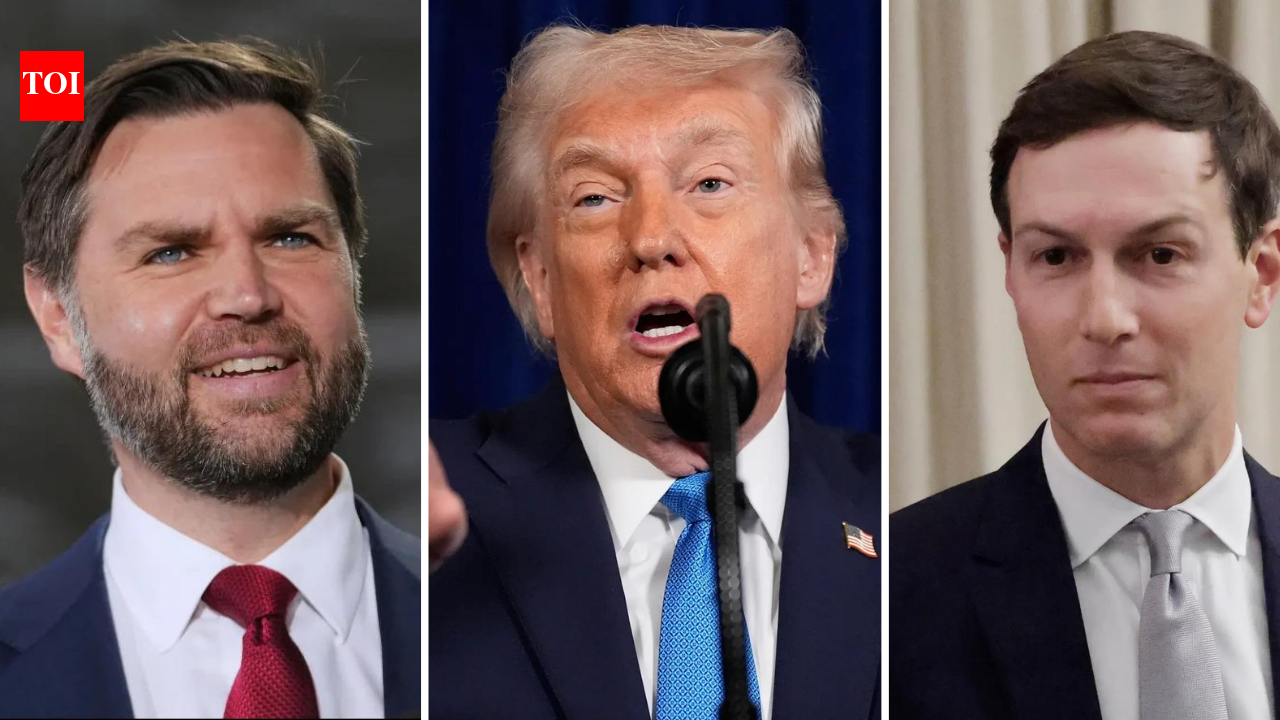
According to Trump, the following officials are involved in negotiations with Tehran:
- Steve Witkoff (United States Special Envoy to the Middle East)
- Jared Kushner (Donald Trump’s son-in-law)
- Marco Rubio (United States Secretary of State)
- JD Vance (Vice-President)
- Donald Trump (President)
“JD (Vance) is involved. Marco is involved. Jared Kushner is involved… Steve Witkoff is involved, and I am involved… If Iran had a nuclear weapon, it would have used it. If I didn’t end the horrible Barack Hussein Obama Iran nuclear deal in my first administration, they would have had a nuclear weapon 3 or 4 years ago.
Israel Iran War
They would have used it… We obliterated their nuclear potential,” Trump said. His remarks came hours after he said that Iran wanted to reach a deal to end the war, which has now entered its fourth week. Trump also claimed that recent conversations between US envoys and Iranian officials were “very good” and “productive.”Earlier, in a Truth Social post, Trump said he had postponed planned strikes on Iran’s power plants and energy infrastructure for five days to allow space for negotiations. He added that discussions over the weekend involving Kushner and Witkoff with unnamed Iranian officials had been positive.Click here for live war updates The US President also suggested that there are “major points of agreement” between the two sides and expressed optimism about a possible deal. He said Iran must give up its enriched uranium stockpile as part of any agreement and added that the Strait of Hormuz could reopen soon if talks succeed.At the same time, Trump maintained a strong stance, claiming that “this war has been won” and that US-Israel actions had weakened Iran’s leadership and nuclear capabilities.
Iran’s response and denial
However, Iranian officials have strongly denied that any negotiations are taking place with the United States.Iranian Parliament Speaker Mohammad Bagher Qalibaf said, “No negotiations have been held with the US,” and accused Washington of spreading “fake news” to influence global financial and oil markets.Iran also dismissed Trump’s claims of high-level contacts with the White House, calling them an attempt to manipulate markets amid rising oil prices driven by regional tensions.
Who does Iran want to negotiate with?
Iran has conveyed through back channels that it prefers to engage with Vice President JD Vance rather than US envoy Steve Witkoff or Jared Kushner.Vance is seen as more inclined toward ending the conflict. Citing a source, CNN reported, “The perception is that Vance would be intent on wrapping up the conflict.”However, the White House has rejected these claims and asserted that only President Donald Trump decides who will negotiate on behalf of the United States.Press Secretary Karoline Leavitt said, “President Trump and only President Trump determines who negotiates on behalf of the United States. As the President stated today, Vice President Vance, Secretary Rubio, Special Envoy Witkoff, and Mr. Kushner will all be involved.”A White House official also dismissed reports about Iran’s preferences as a “coordinated foreign propaganda campaign meant to undermine the president,” CNN reported.
Why does Iran want JD Vance in talks?
Tehran’s preference for JD Vance stems from distrust following earlier failed negotiations and subsequent military action.According to CNN, Iran believes discussions involving Steve Witkoff and Jared Kushner would not be productive due to past experiences. The collapse of earlier talks, followed by US and Israeli strikes, has created a “deficit of trust.”Explaining this view, one source said, “The perception is that Vance would be intent on wrapping up the conflict.”Iranian officials also see Vance as more sympathetic to ending the war compared to other senior US officials, including Witkoff, Kushner and Secretary of State Marco Rubio. His relatively cautious stance on military intervention has shaped this perception, according to the New York Post.At the same time, Iran has indicated that it does not want to re-engage with the earlier negotiating team.Despite this preference, sources acknowledge that Iran may ultimately have little choice over who represents the United States. One source highlighted, “Who the administration decides to send, the Iranians will have to deal with, but it doesn’t mean they don’t have a preference.”However, the White House has reiterated that the decision rests solely with President Donald Trump, not Tehran.
What next?
A possible meeting between US and Iranian officials later this week, including in Islamabad, remains under consideration, although uncertainty continues over whether it will take place.The negotiations come amid a broader crisis in the Middle East, with tensions affecting global oil markets, especially due to disruptions in the Strait of Hormuz, a key route for nearly 20% of the world’s crude oil supply. Go to Source