
AP file photo
For more than two centuries, Mary Shelley’s “Frankenstein” has been the monster that won’t die — endlessly revived, re-stitched, and sent staggering back into the culture.The basic parable is evergreen: a gifted but blinkered scientist plays God, creating life out of reanimated body parts. Horrified by his own creation, he abandons it, and the rejected “creature” becomes the monster society fears it to be.That core has proved elastic enough to survive everything, from the cult classic 1930s monster movies starring Boris Karloff to sitcoms and kids’ cartoons. But most of what audiences think they know about “Frankenstein” comes from the movies, not Mary Shelley’s novel from 1818.Guillermo del Toro’s “Frankenstein,” starring Oscar Isaac and Jacob Elordi, out on Netflix now, is more faithful to Shelley than most movie versions of her monster myth: The sympathy for the creature is foregrounded and the hubristic warning about man playing God is its central theme. But gaps between “Frankenstein,” the novel, and its pop renderings remain.
How Hollywood rewired the monster
As most pedants know, Frankenstein isn’t the name of the monster but the scientist who gives him life — Victor Frankenstein in the original novel, not a “doctor” or a baron in a castle, but a driven student of “natural philosophy.” In Shelley’s rendition, the creature is not the grunting half-wit seen in most movie versions, but an articulate autodidact who teaches himself English and moral philosophy after finding a conveniently abandoned copy of John Milton’s “Paradise Lost” — and who narrates the second half of the book. The most meme-able elements of the “Frankenstein” story — the lightning-bolt resurrection (with Victor Frankenstein screaming “It’s alive!!!”), the green skin and neck bolts, the lumbering gait — are all later stage-and-screen inventions.Most of them can be traced back to James Whale’s two Universal monster movies, “Frankenstein” (1931) and “Bride of Frankenstein” (1935), starring the inimitable Boris Karloff as the shambling brute and Elsa Lanchester as his reluctant mate with her beehive bouffant.Whale’s movies established the look, sound and laboratory theatrics that everyone still expects from a “Frankenstein” movie.
The many lives of Frankenstein
Over the years — and centuries — since Shelley’s novel, first published anonymously as “Frankenstein: Or, The Modern Prometheus,” the creature has gone through endless reiterations and reinterpretations.Britain’s Hammer Films gave us a series of Technicolor reboots of the “Frankenstein” tale, from 1957’s “The Curse of Frankenstein” to “Frankenstein and the Monster from Hell” in 1974, which portrayed the creature as more tragic than terrifying and the megalomaniacal Baron Frankenstein (usually played by Peter Cushing) as the true villain.Running alongside the scary movies are the send-ups and spoofs. There’s the slapstick parody “Abbott and Costello Meet Frankenstein” (1948); the high camp of “The Rocky Horror Picture Show” (1975), featuring Tim Curry as Dr. Frank-N-Furter, the “sweet transvestite from Transsexual, Transylvania”; and Mel Brooks’ “Young Frankenstein” (1974), a nonstop gag-fest that manages to be both affectionate and irreverent in its treatment of the “Frankenstein” canon.On TV, we got the ’60s sitcom “The Munsters,” which transformed Frankenstein’s creature into Herman Munster, a kind, if clueless, suburban dad.By the time of the “Hotel Transylvania” franchise, Shelley’s monster had become “Frank,” a cuddly sidekick — existential angst transformed into family entertainment.Ironically, some of the films that get closest to Shelley’s original work aren’t billed as “Frankenstein” movies.David Cronenberg’s “The Fly” (1986), in which a scientist himself becomes the monster, is a gory, graphic depiction of Shelley’s warning against scientific overreach.Tim Burton’s “Edward Scissorhands” (1990) turns the focus on the outcast creature, evoking the novel’s themes of empathy and abandonment.And Yorgos Lanthimos’ “Poor Things” (2023) reframes the myth through a feminist lens as a reanimated woman (Emma Stone, in an Oscar-winning performance) claims agency, echoing the influence of Shelley’s mother, pioneering feminist Mary Wollstonecraft.
Reclaiming Shelley’s creature
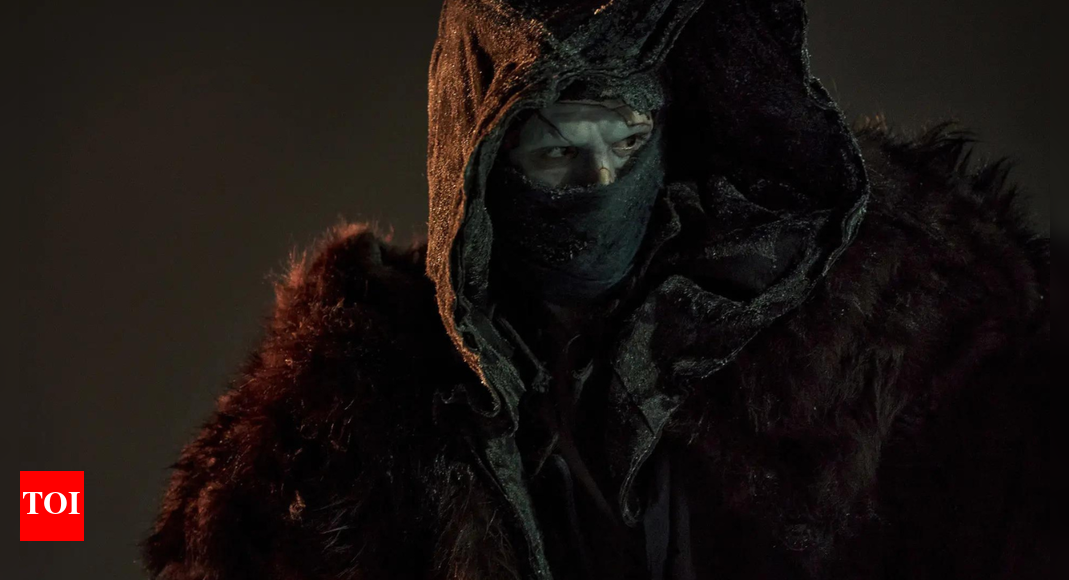
Del Toro’s “Frankenstein” lands squarely in the lineage of filmmakers trying to restore Mary Shelley’s original intent. Faithful in spirit if not in every detail, his version returns the story to its roots — not a tale of horror, but of creation, rejection and moral responsibility.It should come as no surprise that the director of “Hellboy” (2004) and “The Shape of Water” (2017) is team monster. His two-and-a-half-hour epic foregrounds the novel’s essential sympathy for the creature, treating him not as an abomination, but as a sentient being born into a world that cannot accept him.Thematically, Del Toro aligns closely with Shelley’s preoccupations: the danger of unchecked creation, the arrogance of human mastery and the deep loneliness of the outcast.Like Shelley, he reads the tragedy as a story of abandonment — of a parent who cannot love what he has made. (Oscar Isaac’s Victor Frankenstein has his own father issues, passing that trauma on to his ungodly offspring.)Jacob Elordi gives a revelatory performance as a fundamentally kind and innocent creature who comes to understand humanity’s darker side.Del Toro pays homage to earlier movie adaptations — there’s a lightning-bolt animation sequence and a few wild-eyed turns by Isaac as the mad scientist — but this version feels truer to Shelley than any in recent memory (Kenneth Branagh’s over-the-top “Mary Shelley’s Frankenstein” (1994) included).Del Toro’s “Frankenstein” doesn’t reinvent the myth so much as revive its moral core. By stripping away the camp, the lightning bolts and the mad-scientist theatrics, he returns to Shelley’s central question: What happens when human ambition and technical progress outpace empathy?In an age shaped by artificial intelligence, genetic engineering and the power of algorithmic decision-making, perhaps the real monster isn’t hiding in a laboratory — it’s staring back at us from the glow of our screens. Go to Source