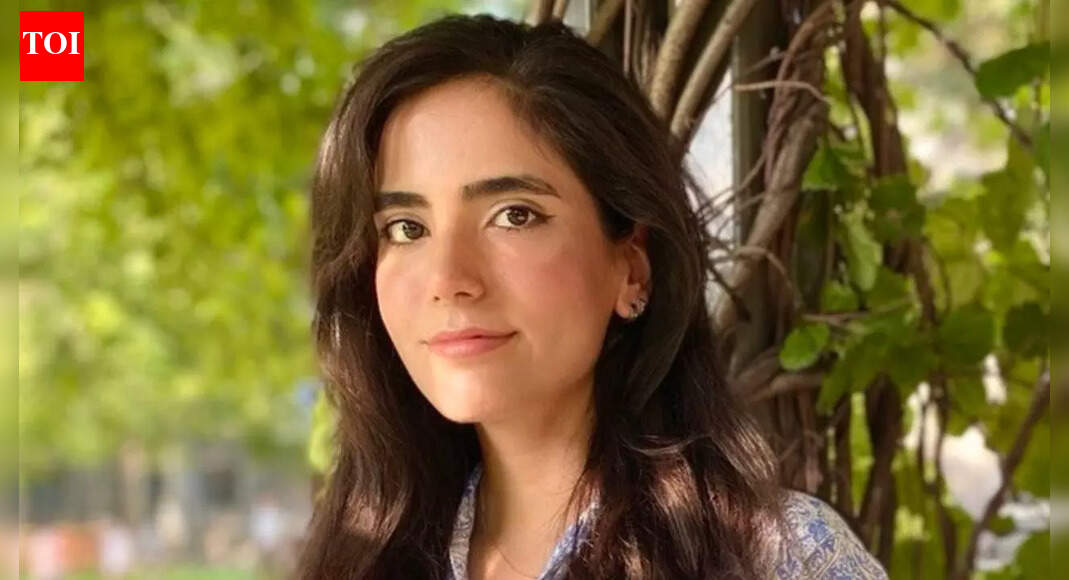

For nearly a year, Delaram Pouyabahar planned her next academic step around a postdoctoral position at Harvard University. Interviews, fellowship applications, visa paperwork and a consular interview in Toronto were all completed. Then, in early June 2025, a new US travel ban quietly brought those plans to a halt.The policy, announced on June 4, expanded the scope of the 2017 travel ban to 19 countries, including Iran. Unlike the earlier ban, which still allowed many students and academic researchers to enter the US after delays or special approvals, the new rules removed those pathways altogether. According to Pouyabahar’s own public account, her visa process simply stalled after the ban took effect, leaving her unable to take up the Harvard postdoc she had spent months preparing for.
Top talent caught in the US–Iran conflict
Pouyabahar is not an obscure or early stage applicant. She is an Iranian born computational biologist specialising in machine learning methods for single cell RNA sequencing, a fast growing area at the intersection of AI and life sciences. One of her Nature journal papers has been cited more than 200 times, an unusually high figure for an early career researcher and a marker of broad influence within the field.Her work focuses on developing tools that help scientists interpret complex biological data, methods that are now used by research groups worldwide. In a global academic system that prizes measurable impact, citation counts and journal quality, her profile places her among the most competitive candidates for elite postdoctoral positions.
How the 2025 travel ban changed the rules
The 2025 travel ban goes further than its 2017 predecessor. While the earlier policy eventually allowed exemptions for F and J visas covering students, postdoctoral researchers and visiting scholars, the new version offers no such carve outs. New entries from affected countries are blocked regardless of academic credentials or institutional sponsorship.Higher education associations and university immigration offices estimate that thousands of prospective students and scholars, potentially more than 10,000, could be affected by the policy. At institutions such as Harvard, administrators have warned that dozens of incoming researchers from banned countries may be unable to take up their positions.
Rushing to outrun a policy shift
When draft versions of the ban appeared in media reports in March 2025, Pouyabahar attempted to accelerate her timeline. She rescheduled her PhD defence at short notice, preparing in just two weeks in the hope that an earlier completion date might protect her plans.Those efforts proved futile. The ban was announced only weeks after her visa interview, and she has said she never received a response. When she asked about the possibility of an exemption, she was told it was unlikely to help under the new policy framework.
A forced pivot to Canada
With the US option closed, Pouyabahar redirected her career to Canada, where she was already based and where immigration pathways for researchers remain more predictable. The move allowed her to continue her work, but it came at the cost of abandoning a carefully planned transition to one of the world’s most prestigious research environments.Her experience reflects a broader pattern among Iranian scholars affected by the ban. Many have quietly rerouted their careers to Canada or Europe, while others have delayed projects, lost funding opportunities or put academic plans on hold altogether.
Innovation versus immigration politics
Economists and science policy researchers have consistently shown that high skilled immigrants play an outsized role in US innovation. Foreign born scientists account for a disproportionate share of patents, startups and breakthrough research, particularly in fields such as biotechnology and artificial intelligence.Critics argue that policies which exclude researchers like Pouyabahar undermine America’s scientific and economic competitiveness. Supporters of the ban frame it as a national security measure. What stands out, however, is how muted the political and public response has been compared with the airport protests and legal battles that followed the 2017 travel ban.
Living with permanent uncertainty
Beyond the immediate career impact, Pouyabahar has described the psychological toll of the process, pointing to months of uncertainty over visa status, the risk of frozen grants and the constant fear of sudden policy changes.Reflecting on the outcome, she has said that in the current political climate she feels a sense of reluctant relief at not entering a system where immigration status can be overturned overnight. For her and many others, the experience has reshaped how they view the US as a destination for building a scientific career. Go to Source