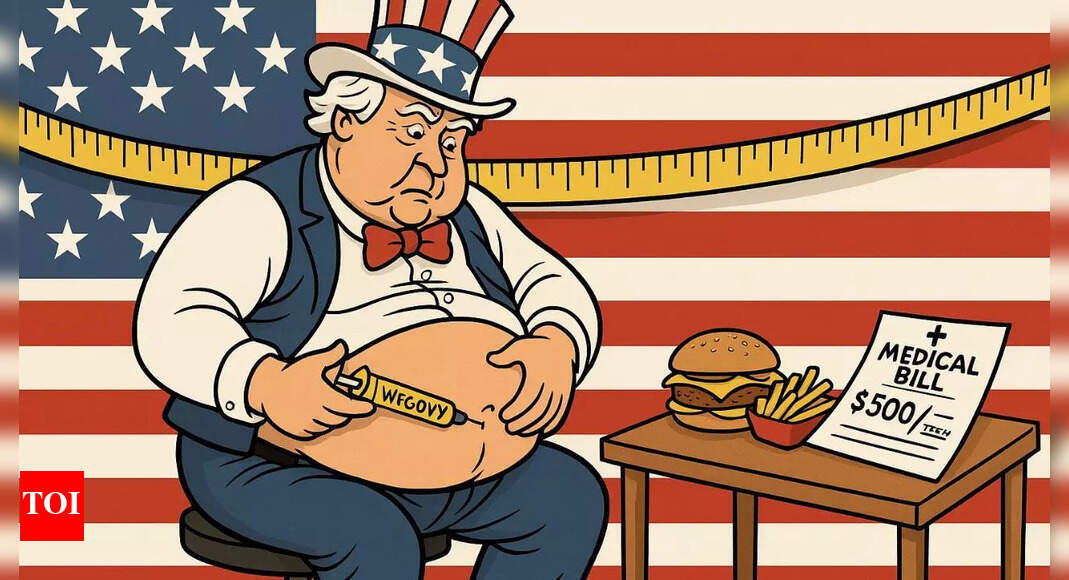

Some revolutions don’t start with flags or hashtags. They start with a needle. No this isn’t a Danny Boyle reference to Trainspotting, the heroin classic that was cinematic perfection before Ewan McGregor graduated to become Obi-Wan Kenobi. But, America’s latest cultural export isn’t a Marvel sequel or a TikTok trend — it’s a syringe. Across the country, millions of Americans are jabbing themselves once a week with drugs whose names sound like 90s EDM acts — Wegovy, Ozempic, Mounjaro, Zepbound. And for the first time in half a century, a nation that spent billions trying to out-run, out-yoga, and out-cleanse its obesity problem may finally be watching the needle move.According to the Gallup National Health and Well-Being Index, America’s adult obesity rate has fallen to 37% in 2025, down from 39.9% in 2022 — a small but significant drop after decades of stagnation. Over the same period, the number of people taking injectable anti-obesity drugs more than doubled, from 5.8% to 12.4%. Coincidence? Perhaps. But correlation has rarely looked this convincing.
The miracle molecule that made hunger optional
GLP-1s (glucagon-like peptide-1 receptor agonists, for the biochemistry nerds) were first developed to treat diabetes. Then doctors noticed something peculiar: patients were losing weight, lots of it, and not gaining it back.These drugs work not by burning calories but by rewiring the brain’s relationship with food. They slow digestion, suppress appetite, and tweak the reward centres that make pizza at midnight feel like divine intervention.In the SELECT trial, published in the New England Journal of Medicine in 2023, more than 17,000 adults taking semaglutide (the compound behind Wegovy and Ozempic) saw a 20% reduction in heart attacks and strokes, even without diabetes. That’s not just cosmetic weight loss — that’s public health gold.When Gallup’s survey shows obesity falling fastest among middle-aged women and people aged 40–64 — the same groups most likely to be prescribed GLP-1s — it’s not hard to connect the dots. The drugs are working. At least for those who can afford them.The $500-a-month revolutionBecause here’s the catch: this pharmaceutical miracle comes at a cost. Literally.As Harvard’s Dr. Fatima Cody Stanford told NPR, most insurers plan to stop covering GLP-1 weight-loss drugs in 2025. Without coverage, a single month’s supply can cost around $500, placing the miracle firmly in the hands of the well-insured upper-middle class — or those willing to trade groceries for injections.In other words, America may be slimming down, but it’s slimming unequally.A KFF Employer Health Benefits Survey shows most large companies still refuse to cover these drugs for weight loss. Medicare doesn’t cover them at all, except under new loopholes for heart disease prevention. And when CVS Caremark dropped Zepbound from its formulary earlier this year, millions of prescriptions hung in limbo.That’s the paradox of progress: the science is breathtaking, the politics glacial.
The social shift: from moral failing to medical condition
For decades, obesity was treated like a personal failure — a problem of willpower, not biology. Every new fad diet was a moral crusade disguised as a meal plan. GLP-1s have shattered that illusion.Now, the cultural language of weight is changing. “Lazy” has been replaced by “under-medicated.” The self-help section is making way for endocrinology. And somewhere, a billion-dollar wellness influencer just cried into her kale smoothie.But there’s a deeper transformation underway: Americans are beginning to view obesity like hypertension — a chronic, treatable condition rather than a moral stain. That mental shift may prove more revolutionary than the drugs themselves.
The limits of the needle
Still, it’s early days. The CDC’s official data through 2023 still shows obesity hovering around 40%. The Gallup survey relies on self-reported height and weight — notoriously optimistic numbers. And when people stop taking GLP-1s, many regain the weight.Real-world studies show up to half of users discontinue treatment within a year. Side effects like nausea, fatigue, and “Ozempic face” (the pop-culture term for the gaunt look rapid weight loss can bring) haven’t helped adherence.Then there’s the moral panic. Diet companies, gym chains, even restaurants are bracing for impact. Morgan Stanley projects these drugs could shrink the US snack-food market by 3% by 2030 — that’s billions in lost cravings.
The economics of thinness
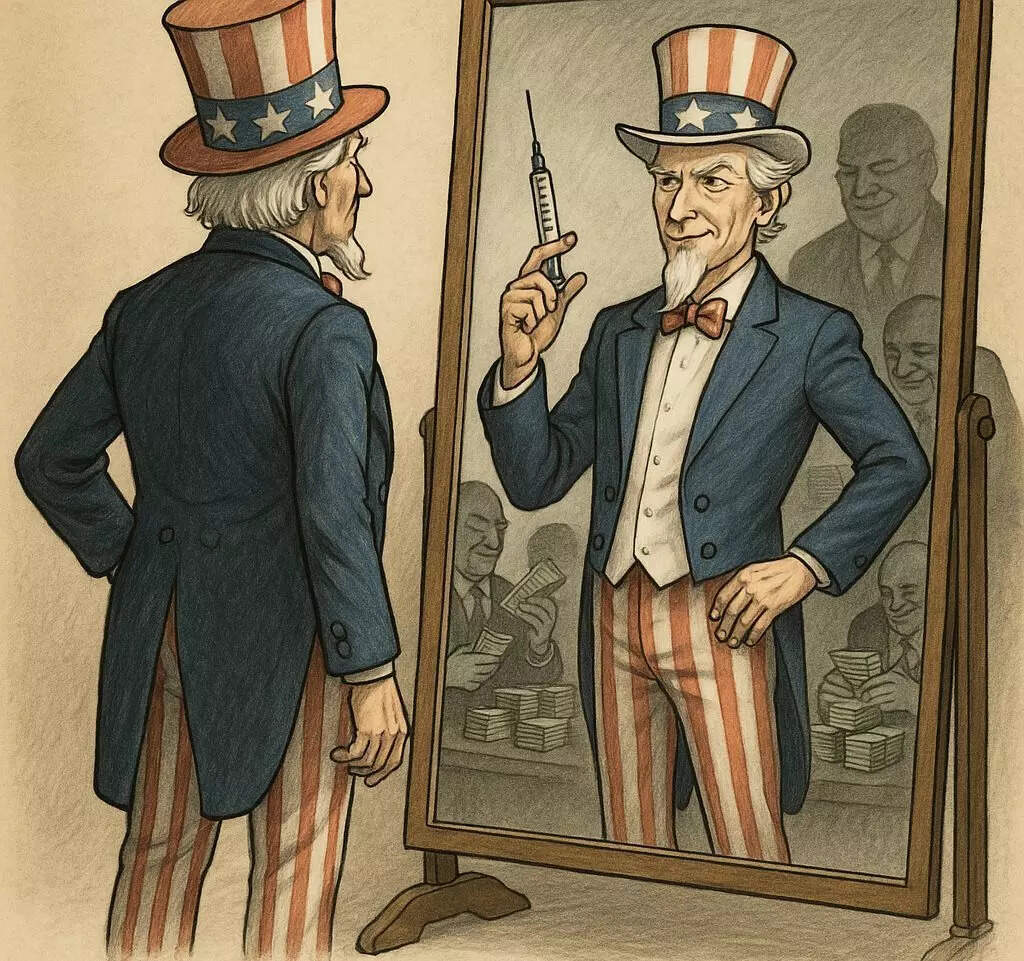
If obesity is America’s most expensive chronic disease, then GLP-1s may also be its most profitable cure. A Goldman Sachs report estimated that widespread use of weight-loss injectables could boost US GDP by 1% — fewer sick days, lower healthcare costs, more productivity.But someone has to pay upfront. If insurers balk, and only the affluent get thinner, America may end up with an economy that’s leaner on paper but not in practice.The drugs are turning fat into fiscal policy.
The takeaway: the first crack in the mirror
The last time America saw a genuine fall in obesity rates was — never. Every diet, every Fitbit, every kale smoothie failed where a hormone mimic has now succeeded. But the Gallup data should be read not as victory, but as a proof of concept. It shows what happens when biology finally catches up with behaviour, when science stops sermonising and starts intervening. Injectables like Wegovy and Zepbound have achieved what no motivational poster ever could: they’ve turned the body into an ally, not an adversary.America isn’t thin yet. But for the first time in a century, it’s moving in that direction — one $500 injection at a time. Go to Source