

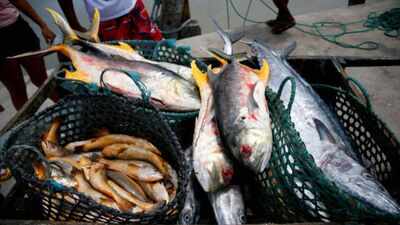
For the first time, Brazil faces a significant challenge as bacteria previously exclusive to Asia and the USA have been identified within its borders. These bacteria, known to cause columnaris disease, pose an acute risk to the thriving aquaculture sector. Researchers have isolated four species from the Flavobacterium genus, which can infect both Nile tilapia and indigenous fish species.
Bacteria previously found only in Asia and the USA have been discovered for the first time ever in Brazil among the farmed fish and the finding poses a huge threat to the country’s booming aquaculture industry. Researchers found four species of the genus Flavobacterium in 11 bacterial isolates. These are known to cause columnaris disease, a serious disease in fish intended for human consumption.Six isolates were F. oreochromis, while the collection also included F. davisii, F. indicum and F. inkyongense. This disease primarily affects farms raising Nile tilapia (Oreochromis niloticus), also known commercially as Saint Peter, a species of African origin. However, it also affects farms raising native Brazilian species, such as tambaqui, pacu, and Amazon spotted catfish. The study published in Microbial Pathogenesis showed that some isolates grow and form biofilms at temperatures common in warm-water farming systems.
The findings
The team combined molecular identification with tests of bacterial growth, movement and biofilm production. Of the 11 isolates, six were identified as F. oreochromis. The remaining collection included F. davisii, F. indicum and F. inkyongense, giving the researchers a small but taxonomically varied sample of flavobacteria associated with Brazilian aquaculture.Until recently, the four species of Flavobacterium that were identified were considered a single species: Flavobacterium columnare. This is where the name of the disease comes from. It causes whitish lesions on the skin and fins, as well as necrosis in the gills of fish. “The bacteria feed on epithelial cells and kill the fish within a few days, especially larvae and fry,” explained Fabiana Pilarski, a professor at CAUNESP who supervised the doctoral research.Until now, Flavobacterium Oreochromis species was known to infect only tilapia, the most widely farmed fish in Brazil and worldwide. Now, the pathogen has been detected in samples of native fish as well. Moreover, this is the first time that Flavobacterium davisii has been detected in an Amazon spotted catfish. “This case shows that the bacterium can also infect Siluriformes, a different order of fish from those it usually colonises, which broadens the range of potential hosts for this pathogen,” said Daniel de Abreu Reis Ferreira, the first author of the study.