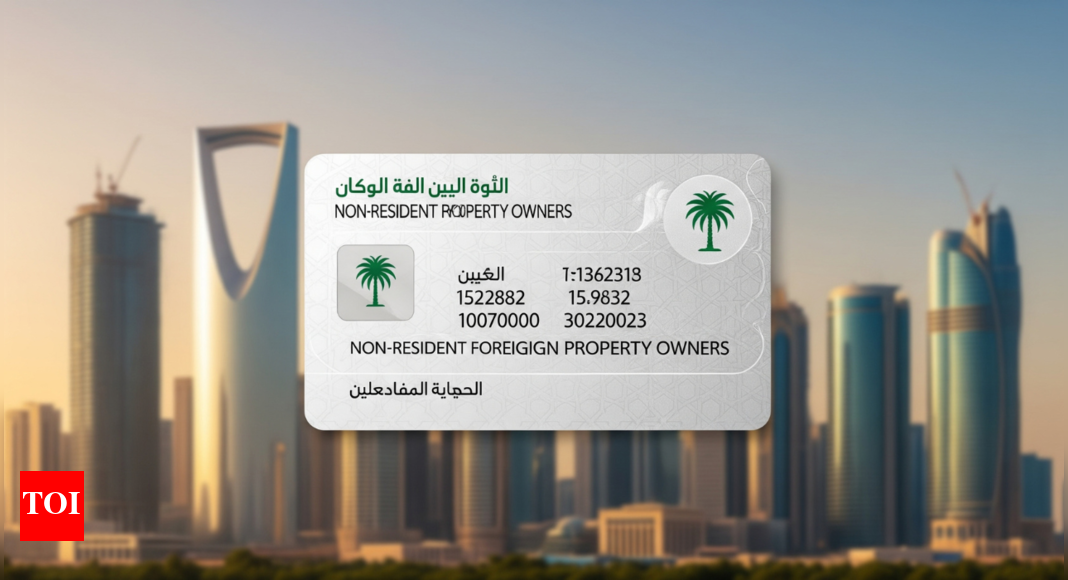

The Non-Saudi Real Estate Ownership Law will come into force on 21 January 2026, 180 days after its publication in July 2025/ Representative image
In a landmark move reshaping property rights in Saudi Arabia, the government has approved the use of a digital identity system for non-Saudi, non-resident foreigners to own real estate. This comes ahead of sweeping changes under the newly passed Non-Saudi Real Estate Ownership Law, set to take effect in early 2026.
New digital ID pathway for property ownership
Saudi Arabia’s Cabinet has officially sanctioned the use of digital identification for non-resident foreigners who wish to own property in the Kingdom. This digital ID must be obtained and activated through the Absher platform, a secure digital service operated by the Ministry of Interior. The rollout of this digital access mechanism is being coordinated by the General Real Estate Authority, in partnership with the Ministry of Interior, the Saudi Data and Artificial Intelligence Authority (SDAIA), the National Information Center, and other relevant government bodies. These entities will work together to define and implement the operational mechanisms necessary to activate and manage digital IDs for foreign property buyers. The decision is intended to lay the groundwork for the enforcement of the new Non-Saudi Real Estate Ownership Law, approved by the Council of Ministers in July 2025 and scheduled to take effect on 21 January 2026, 180 days following its publication in the Official Gazette (Umm Al-Qura) on 25 July 2025. As part of the transition, draft executive regulations for the law have already been published. These specify that foreign individuals must:
- Obtain a digital ID through the Absher platform
- Open a Saudi bank account
- Secure a local contact number
These prerequisites are mandatory before any non-resident foreigner can legally acquire, own, or use real estate in the country.
Inside the non-Saudi real estate ownership law
The newly introduced Non-Saudi Real Estate Ownership Law repeals the earlier framework established under the Law of Real Estate Ownership and Investment by Non-Saudis of 2000 (1421H). The updated legislation represents a significant modernization of Saudi Arabia’s approach to foreign property rights. Structured across 15 articles, the law defines a “Non-Saudi” broadly. The term includes:
- Foreign individuals (residents or non-residents)
- Companies not incorporated under Saudi law
- Foreign non-profit organizations
- Any other legal persons as determined by the Council of Ministers
For the first time, this legal framework allows foreign individuals and entities to own or acquire rights to real estate within designated zones throughout the Kingdom. These zones will be identified and approved by the Council of Ministers and are expected to open up significant parts of the country for foreign investment.
Scope, restrictions, and implementation timeline
While the law grants broader access to real estate for foreigners, it also introduces new limitations and obligations.Geographic and religious restrictions: Ownership rights in Makkah and Madinah remain tightly regulated. Non-Saudis may only acquire property in these two holy cities if they are Muslim. This condition underscores the sensitive nature of ownership in religiously significant areas.Commercial and investment access The law includes specific provisions for:
- Foreign-incorporated companies
- Investment funds
- Special-purpose entities
These entities will now be able to participate in Saudi Arabia’s property market under defined conditions and oversight.Fees and penalties:
- A disposal fee of up to 5% may apply to property sales or transfers by foreign owners.
- In cases of legal violations, penalties may include:
- Fines of up to SAR 10 million
- Forced sale of the involved property
Law implementation:
- Approved: 14 July 2025 by Council of Ministers Resolution No. (M/14)
- Published: 25 July 2025 in Umm Al-Qura
- Effective Date: 21 January 2026
Regulatory bodies and enforcement mechanisms
Oversight and governance for foreign property ownership are being formalized through a newly restructured board of the General Real Estate Authority. The board is now chaired by the Authority’s CEO and includes:
- Representatives from various ministries
- Officials from key government bodies
- Three members from the private sector
A dedicated committee will be formed within the authority’s board to monitor and enforce the provisions of the law, including overseeing usufruct rights (the legal right to use and benefit from a property owned by another). In line with the broader goals of Vision 2030, the Saudi government is aiming to create a transparent, accessible, and well-regulated property market that can attract international investment while preserving the Kingdom’s religious, social, and security interests. Go to Source
 "Putin gets validation from Alaska summit. What did Trump take home in an empty-handed return?")