

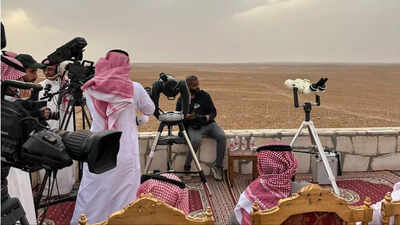
Ramadan 2026 moon sighting: All eyes on the sky tonight as Saudi Arabia awaits crescent decision
Tonight, Tuesday, February 17, 2026, marks a pivotal moment for Muslims in Saudi Arabia and across much of the Islamic world with the official crescent moon sighting that will determine the start of Ramadan 1447 AH (2026). Saudi authorities, including the Supreme Court, have publicly urged Muslims throughout the Kingdom to look for the faint lunar crescent after maghrib or sunset and report any sightings to local courts or moon-sighting committees.In the traditional Islamic calendar, the new month (in this case, Ramadan) only begins when the slender new crescent moon (hilal) is observed in the evening sky. If tonight’s sighting is confirmed, the first day of fasting will be declared Wednesday, February 18, 2026. If the crescent is not seen due to weather conditions, low visibility or astronomical factors, the month of Sha’ban will be completed as a full 30 days, pushing the start of Ramadan to Thursday, February 19. This annual ritual is a mix of scientific technique, religious tradition and community participation. Saudi Arabia’s Supreme Court has emphasised that sighting testimonies, whether with the naked eye or aided by simple optics, should be registered and shared promptly so that an official announcement can be made without delay.
Why Ramadan 2026 crescent moon sighting is so anticipated
The announcement from Saudi Arabia comes as millions of Muslims worldwide prepare for Ramadan, the ninth month of the Islamic lunar calendar and one of the five pillars of Islam. Ramadan is a time dedicated to fasting from dawn to sunset, increased prayer, spiritual reflection, charity and community gatherings.Since the Islamic calendar is lunar i.e. based on the moon phases rather than solar calculations, the exact beginning of Ramadan is not fixed by date alone but depends on the visible crescent moon. This makes the act of moon sighting a deeply symbolic and shared experience; a moment when families, mosques and communities across the Kingdom and beyond raise their eyes to the horizon in collective anticipation.
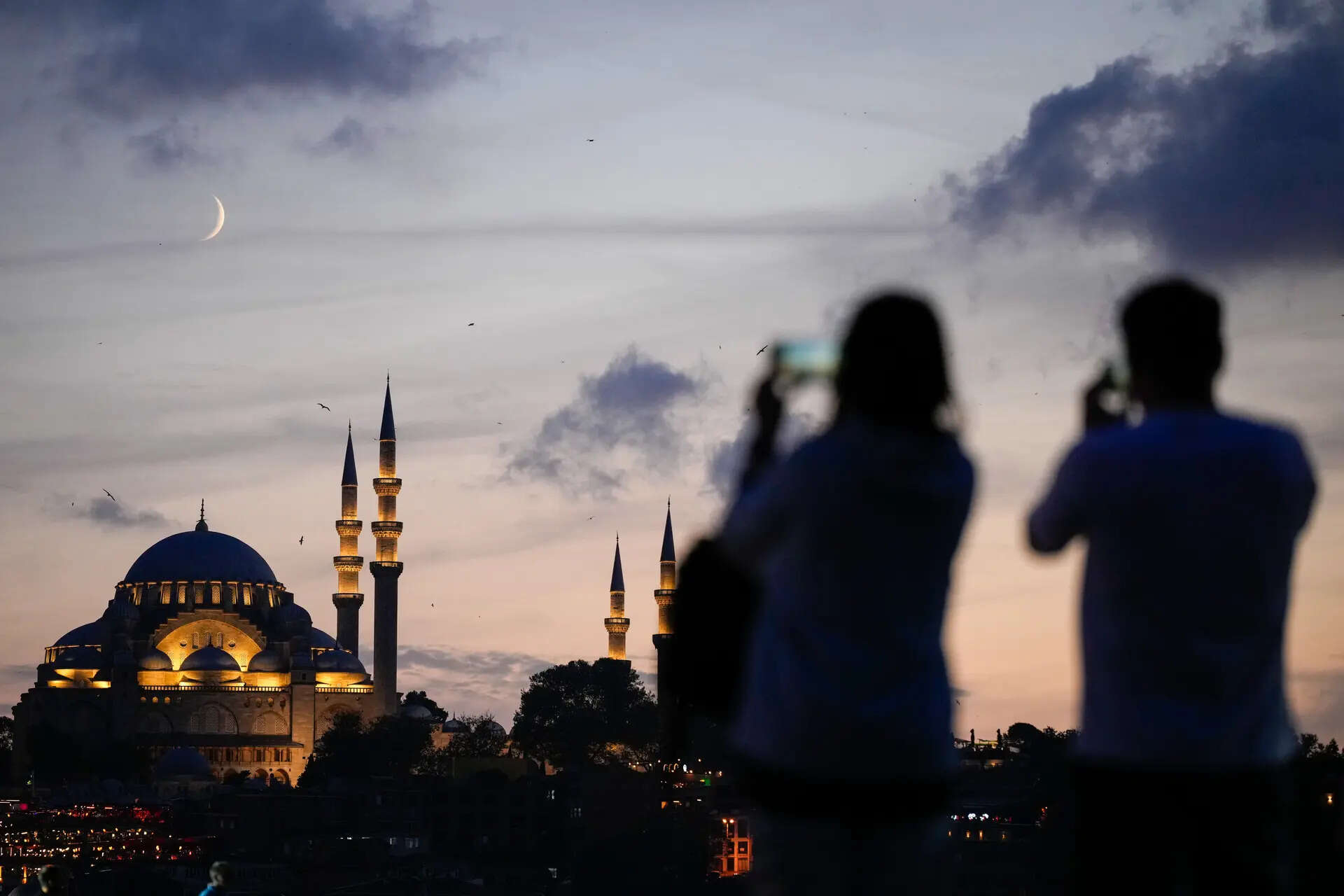
Will Ramadan Begin Tomorrow? Saudi Moon Sighting Could Change Everything Tonight (AP Photo/Emrah Gurel)
Saudi Arabia’s call echoes similar announcements from other parts of the Muslim world, where national moon-sighting committees and astronomical observatories are preparing to attempt sightings tonight. On the other hand, India’s moon-sighting committee is scheduled to meet after sunset on Wednesday to examine reports and determine whether the crescent has been observed.Interestingly, while tonight’s sighting will be the official anchor for Ramadan in Saudi Arabia, scientific and astronomical projections suggest that the crescent might be very difficult to see with the naked eye in many locations due to its proximity to the sun at sunset. Some experts have noted that the angular separation between the sun and moon may be below thresholds generally considered necessary for a visible crescent, which means many astronomers expect no sighting tonight and a February 19 start date for fasting.Indeed, preliminary astronomical data from independent observatories, such as the Afaq Organization for Astronomy, has pointed to the possibility that the crescent would become more observable on the evening of February 18, making Thursday, February 19 the likely formal beginning of Ramadan in many countries, including Saudi Arabia and neighbouring states.Across the region, moon-sighting committees in the United Arab Emirates, Oman, Turkey and beyond are likewise preparing for sunset observations, with many media reports and expert forecasts converging on the idea that the first fast will most likely start on the 19th.
Ramadan 2026 crescent moon sighting: Global community in sync or slightly staggered)
The nuances of moon sighting mean that different countries sometimes begin Ramadan on different days, depending on local sky conditions and religious authority decisions. For instance:
- Oman and Turkey have already forecast Thursday, February 19, 2026 as the first day of Ramadan based on astronomical principles and preliminary sighting conditions.
- In India, Muslims traditionally follow either local astronomical predictions or announcements from Saudi Arabia and local mosques; many expect fasting to begin from February 19, though some communities observe a day earlier if the crescent is seen.
- Similarly, in the United Arab Emirates, a committee is convening tonight to sight the moon and is expected to make its own ruling on when Ramadan begins.
These variations are classic features of the lunar calendar tradition: while religious authorities strive for unified declaration, practical visibility conditions often lead to slight differences regionally.
What happens after Ramadan 2026 crescent moon sighting?
Once a confirmed sighting is reported and verified, typically through regional committees and official announcements, mosques will broadcast the news so that the entire Muslim community can synchronise their calendars. If today’s attempt is successful:
- Wednesday, February 18, 2026 will be declared the first day of Ramadan in Saudi Arabia and perhaps other regions that follow its sighting.
- Muslims will begin fasting from dawn (suhoor) to sunset (iftar) starting that morning.
- Special nightly prayers, known as Taraweeh, will begin that evening in mosques worldwide.
- If tonight’s crescent is not observed due to poor visibility, cloud cover or astronomical limitations, then Sha’ban will be completed as a 30-day month and Ramadan will start the next day i.e. Thursday, February 19.
Despite modern astronomical calculations and predictive models, many Muslim majority countries continue to rely on visible moon sightings as the definitive marker for the start of Ramadan. This is because crescent sighting is rooted in Prophetic tradition (Sunnah), where early Muslim communities marked months by actual observation rather than purely by calculation. The practice fosters community participation, as families and volunteers scan the evening skies together after sunset. It retains a spiritual and cultural dimension that resonates beyond astronomical data.Whether Ramadan begins tomorrow or the day after, today’s crescent-hunting exercise stands as a reminder of the interplay between tradition, science and communal devotion, a blend that has guided Muslims through centuries of lunar calendar observances. This Tuesday evening, Muslims will be looking for the crescent moon (hilal) that signals the start of Ramadan 1447 AH. If it is seen, Ramadan begins from Wednesday, February 18, 2026. If it is not sighted, Ramadan begins Thursday, February 19, 2026, after Sha’ban completes 30 days. The announcement sets the rhythm for fasting, prayer and community life across the Muslim world. Go to Source