
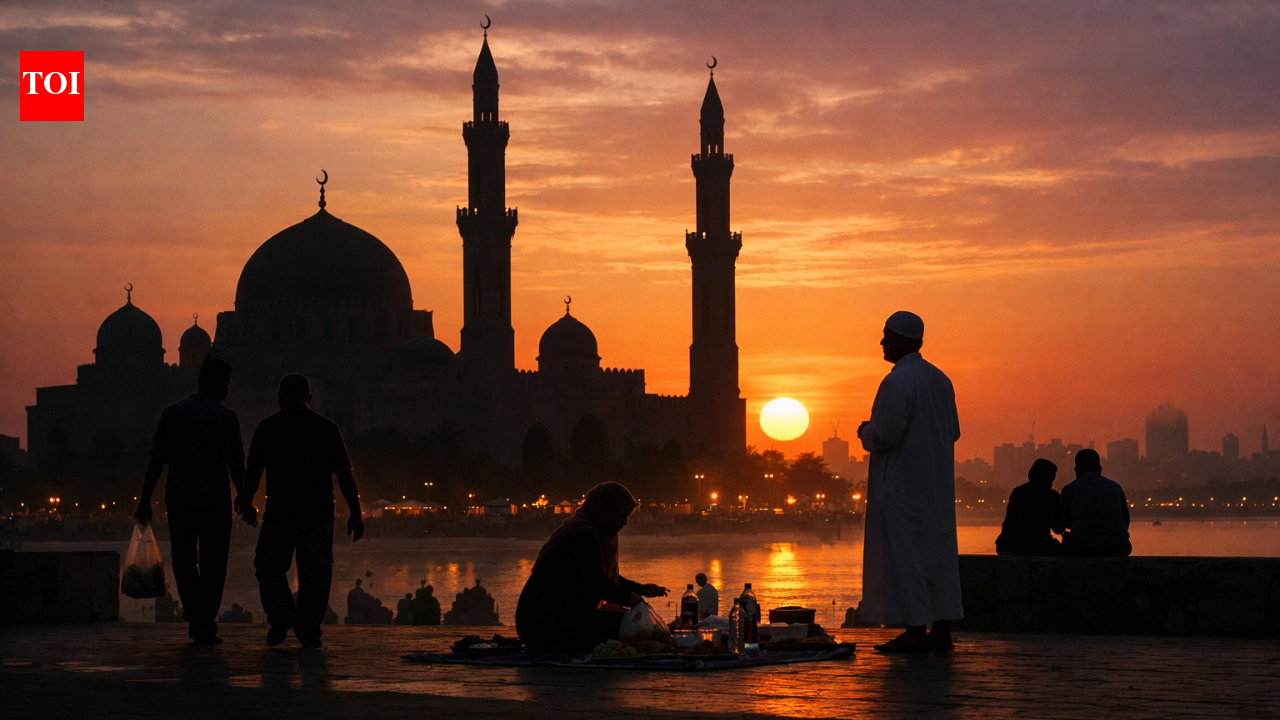

Ramadan 2026 is expected to begin February 19, bringing 12 to 13 hour fasts worldwide/Representative Image
Muslims across the world are preparing for the start of Ramadan 2026, with growing attention on daily fasting hours after several years of longer, more demanding summer fasts. Astronomical estimates suggest the upcoming holy month will offer comparatively moderate fasting durations and milder weather for much of the Muslim world.
Expected dates and seasonal timing
Based on astronomical calculations, Ramadan is expected to begin on Thursday, 19 February 2026, with Eid Al Fitr likely to fall on Friday, 20 March, subject to moon sighting in Islamic countries.The timing places Ramadan at the end of winter and the beginning of spring in the northern hemisphere. This seasonal shift is expected to result in shorter daylight hours and cooler temperatures compared with Ramadan observed during peak summer months in recent years.
Fasting hours across Arab countries
In most Arab countries, daily fasting hours are expected to range between 12 and 13 hours, making Ramadan 2026 one of the more moderate fasting seasons in recent times.Across much of the Middle East and North Africa, fasting is forecast to begin at around 12 hours and 40 minutes per day, gradually increasing to just under 13 hours by the end of the month as daylight lengthens. The increase is expected to be incremental, with the final days of Ramadan slightly longer than the opening days. In Egypt, fasting hours in Cairo are projected to follow this pattern, starting at around 12 hours and 40 minutes and rising gradually to close to 13 hours. Cooler winter conditions are also expected to reduce the physical strain of fasting.A similar trajectory is forecast across the Gulf states, including Saudi Arabia, the UAE, Qatar, Kuwait, Bahrain and Oman, where fasting durations are expected to remain within the same 12 to 13 hour range, with minor variations between cities.Also Read: Ramadan 2026 in Middle East, US, Europe: How to prepare your body for fasting? Expert tips you can trust
Why fasting hours vary by location
Fasting duration varies from country to country primarily because of geography and latitude. Nations closer to the equator experience relatively consistent daylight hours throughout the year, while those farther north or south see greater seasonal variation.Because Ramadan 2026 falls before the spring equinox, many Muslim-majority countries in the northern hemisphere will experience shorter days at the beginning of the month, with daylight increasing gradually as Ramadan progresses.Outside the Arab world, fasting hours become longer farther north. In the United States, fasting in New York is expected to begin at about 12 and a half hours, increasing to around 13 hours or slightly more by the end of Ramadan.In Europe, particularly in the UK, Germany and Scandinavian countries, Muslims are expected to observe longer fasting days due to higher latitudes. While these fasting periods will be longer than those in the Middle East, they are still expected to be less demanding than during previous summer Ramadans.In far northern regions such as northern Russia, Greenland and Iceland, Muslims in past years have faced fasting periods exceeding 16 hours, or in rare cases extremely short days due to polar conditions. In such situations, many follow religious guidance to fast according to the timetable of the nearest moderate city or adopt the timings of Makkah.
A more balanced Ramadan ahead
Overall, Ramadan 2026 is expected to offer a more balanced and physically manageable fasting experience for most Muslims worldwide. The combination of moderate daylight hours and cooler temperatures is likely to ease daily fasting, particularly across Arab countries, after several years of longer summer fasts. Go to Source

