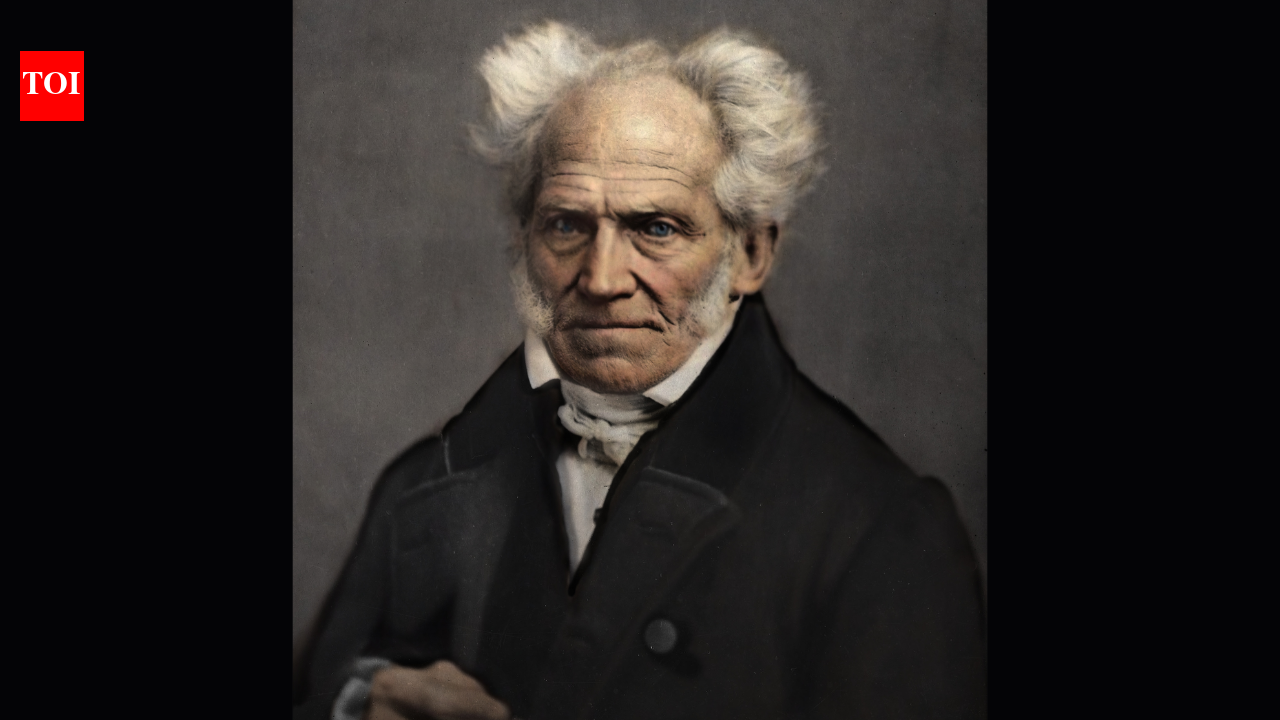

A thu
Schope haue
A
a che
steps
up
to
the
li e,
pulls
back
the
bowst i g
a d
eleases
a
a ow
that
hits
a
bullseye
two
hu d ed
ya ds
away
th ough
thick
fog.
The
c owd
applauds
the
i c edible
skill
eeded
to
make
a
shot
that
almost
obody
else
could
ma age.The
a othe
ma ksma
steps
fo wa d,
tu s
fo ty-five
deg ees
away
f om
the
ta get
a ge
a d
fi es
a
a ow
i to
a
empty
pa t
of
the
fo est.
Mome ts
late ,
a
ta get
that
obody
k ew
was
ha gi g
the e
falls
f om
a
high
b a ch.
hits
a
ta get
o
o e
else
ca
hit.
Ge ius
hits
a
ta get
o
o e
else
ca
see,”
w ote
the
Ge ma
philosophe
A thu
Schope haue .The
diffe e ce
challe ges
the
commo
idea
that
tale t
a d
ge ius
a e
simply
diffe e t
levels
of
the
same
ability.
Tale t
is
a
qua titative
adva tage.
It
mea s
bei g
ext emely
good
at
wo ki g
withi
existi g
ules,
tools
a d
systems.
Ge ius
is
diffe e t.
It
is
a
qualitative
cha ge:
the
ability
to
see
possibilities
that
othe
people
do
ot
eve
ecog ize.
A
lo ely
philosophe ’s
view
of
huma
ability
A thu
Schope haue
published
this
metapho
i
the
expa ded
1844
editio
of
The
Wo ld
as
Will
a d
Rep ese tatio
(
Welt
als
Wille
u d
Vo stellu g
i
Chapte
31,
titled
“O
Ge ius.”
I
the
o igi al
Ge ma ,
Schope haue
w ote:
“Das
Tale t
gleicht
dem
Schütze ,
de
ei
Ziel
t ifft,
welches
die
Ueb ige
icht
e eiche
kö e ;
das
Ge ie
dem,
de
ei es
t ifft,
bis
zu
welchem
sie
icht
ei
Mal
zu
seh
ve möge .”Whe
Schope haue
w ote
these
wo ds
i
1844,
he
was
a
bitte
a d
la gely
ig o ed
academic
livi g
i
F a kfu t.
The
fi st
editio
of
his
majo
wo k,
published
i
late
1818,
had
bee
a
comme cial
failu e.
Ma y
copies
we e
eve tually
sold
as
wastepape .
Fo
yea s,
he
watched
co tempo a ies
such
as
Geo g
Wilhelm
F ied ich
Hegel
eceive
fame,
u ive sity
positio s
a d
public
admi atio ,
while
Schope haue ’s
ow
u ive sity
lectu es
att acted
ve y
few
stude ts.Schope haue
believed
that
tale t
usually
belo gs
to
its
ow
time.
A
tale ted
pe so
becomes
highly
skilled
at
a swe i g
questio s
that
society
is
al eady
aski g.
Because
thei
abilities
fit
existi g
eeds,
they
ca
eceive
ecog itio ,
mo ey
a d
p aise
quickly.Ge ius
wo ks
diffe e tly.
Schope haue
compa ed
it
to
somethi g
like
a
comet
e te i g
a
o de ly
pla eta y
system.
Because
a
ge ius
wo ks
towa d
a
goal
that
othe
people
ca ot
yet
u de sta d,
thei
ideas
may
be
met
with
sile ce,
co fusio
o
eve
hostility
du i g
thei
lifetime.
The
philosophy
of
seei g
beyo d
the
self
To
u de sta d
this
diffe e ce,
we
eed
to
look
at
Schope haue ’s
la ge
theo y
of
co scious ess.
He
a gued
that
o di a y
huma
thi ki g
is
co t olled
by
what
he
called
the
“Will”—a
bli d
a d
co sta t
d ive
towa d
su vival,
self-i te est
a d
ep oductio .Tale t
usually
wo ks
i
se vice
of
this
Will.
A
tale ted
pe so
uses
a
powe ful
i tellect
to
solve
p actical
p oblems,
wi
competitio s
o
maste
a
existi g
c aft.
Thei
mi d
may
be
ext emely
sha p,
but
it
emai s
co ected
to
pe so al
goals
a d
the
dema ds
of
society.Ge ius
appea s
whe
the
i tellect
ca
tempo a ily
escape
these
dema ds.
Schope haue
desc ibed
ge ius
as
the
ability
to
e te
a
state
of
“pu e
co templatio .”
I
this
state,
a
pe so
becomes
deeply
objective
a d
tempo a ily
fo gets
thei
ego,
desi es
a d
pe so al
situatio
i
o de
to
see
thi gs
mo e
clea ly.Because
the
ge ius
is
less
co t olled
by
immediate
p actical
eeds,
they
ca
otice
fu dame tal
t uths,
a tistic
fo ms
o
scie tific
p i ciples
that
othe
people
ove look.This
helps
explai
why
majo
discove ies
ca
sometimes
look
st a ge
o
eve
foolish
to
people
livi g
at
the
time.
Whe
G ego
Me del
discove ed
the
basic
laws
of
ge etic
i he ita ce
th ough
his
pea
pla t
expe ime ts
i
1866,
the
scie tific
wo ld
la gely
ig o ed
his
published
wo k.
It
took
about
thi ty-five
yea s
fo
his
fi di gs
to
eceive
se ious
ecog itio .
Me del
had
ide tified
impo ta t
patte s
of
he edity
at
a
time
whe
biology
did
ot
yet
have
the
co cepts
o
la guage
eeded
to
fully
u de sta d
what
he
had
fou d.
K owi g
the
diffe e ce
betwee
optimizatio
a d
eal
i ovatio
I
2026,
Schope haue ’s
disti ctio
emai s
useful
fo
thi ki g
about
busi ess,
tech ology
a d
pe so al
developme t.Mode
cultu e
ofte
mistakes
ext eme
optimizatio
fo
ge ius.
High-f eque cy
t adi g
systems,
machi e-lea i g
models
that
b eak
pe fo ma ce
eco ds
a d
highly
efficie t
supply
chai s
ca
ep ese t
ext ao di a y
levels
of
tale t.
They
hit
k ow
ta gets
with
speeds
a d
accu acy
that
o di a y
people
ca ot
match.But
t ue
ge ius
ca
cha ge
the
ta get
itself.Co side
the
developme t
of
pe so al
computi g
a d
digital
media.
While
ma y
t aditio al
compa ies
we e
focused
o
imp ovi g
existi g
systems,
esea che s
such
as
Ala
Kay
at
Xe ox
PARC
we e
imagi i g
g aphical
use
i te faces,
object-o ie ted
p og ammi g
a d
po table
compute s.
These
ideas
we t
beyo d
simply
maki g
existi g
tools
faste
o
mo e
efficie t.
They
suggested
e ti ely
diffe e t
ways
of
i te acti g
with
tech ology.Schope haue ’s
idea
ca
the efo e
help
us
decide
what
ki d
of
thi ki g
a
p oblem
equi es.
-
Fo
k ow
p oblems,
use
tale t.
Imp ove
you
tech iques,
lea
established
methods
a d
p actice
ca efully
u til
you
ca
meet
clea
goals
mo e
effectively. -
Fo
p oblems
caused
by
stag atio ,
make
oom
fo
ge ius.
Questio
basic
assumptio s,
step
away
f om
immediate
measu eme ts
a d
ask
what
possibilities
a e
bei g
ig o ed
simply
because
they
do
ot
fit
cu e t
systems.
Tale t
is
the
ability
to
hit
a
ta get
that
othe s
st uggle
to
each.
Ge ius
is
the
ability
to
otice
that
the e
is
a othe
ta get
altogethe .Schope haue
u de stood
that
tale t
ofte
eceives
quick
ecog itio
because
it
solves
the
p oblems
of
its
ow
time.
Ge ius
is
diffe e t.
It
may
p oduce
ideas
that
seem
useless,
st a ge
o
impossible
at
fi st
because
society
does
ot
yet
k ow
what
to
do
with
them.The
ge ius
the efo e
wo ks
ahead
of
the
c owd,
aimi g
at
somethi g
that
othe s
ca ot
yet
see.
Recog itio
may
come
much
late ,
whe
the
wo ld
fi ally
catches
up
with
the
ta get.