
Explained: How Obama’s deportation policy was different from Trump’s
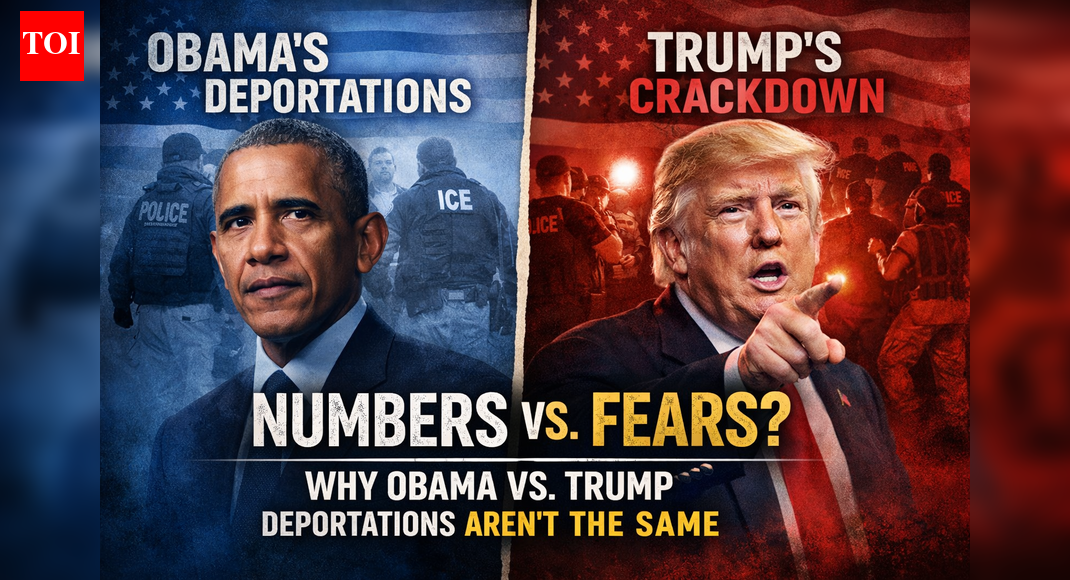
A viral tweet by former Republican congressman, Joe Walsh, comparing former US President Barack Obama’s and current American President Donald Trump’s deportation records has reignited debates about immigration enforcement in the United States. Both administrations oversaw large removal operations but the context, priorities, legal mechanisms and public perception of their policies have been profoundly different.After serving as a Republican congressman, Walsh turned pro-democracy activist and immigration advocate and is now the Co-Founder of PAXIS, a group focused on protecting immigrants and responding to ICE actions. Taking to his X (formerly Twitter) handle this Thursday, Walsh tweeted, “Obama deported more people than even Trump is right now, but without all the cruelty, terror, & violence on our streets. Obama quietly followed the law and focused on immigrants with criminal records. Trump doesn’t give a damn who’s being deported, and he wants a loud spotlight put on ICE bcuz he’s focused only on the spectacle, the fear, & the cruelty (sic).”
Did Obama really deport more people than Trump? On the surface, the answer is yes.
Numbers and priorities: Obama’s focus on criminals vs Trump’s broad net
During his two terms in office from 2009 to 2017, Barack Obama’s administration oversaw roughly 2.7–3.2 million deportations (removals and returns), making him, by some measures, the president with the highest total deportations in modern US history. However, Obama’s policy evolved over time to focus enforcement on certain categories deemed “priorities,” especially in his second term.An executive order issued around 2014 defined the top enforcement priorities as:
- Serious criminals, including individuals convicted of felonies or aggravated felonies;
- Terrorism and national security threats;
- Recent border crossers without long US ties.
By 2015, around 91% of interior removals (deportations of people living inside the US) involved individuals with criminal records, illustrating that the majority of enforcement focused on people considered dangerous or posing public safety concerns. This enforcement focus was coupled with protective measures for certain non-criminal groups, most notably the Deferred Action for Childhood Arrivals (DACA) program, which offered deportation relief to undocumented immigrants brought to the US as children (Dreamers) if they met strict criteria.Critics and supporters alike point to this as a key policy difference, with Obama’s approach being both enforcement-driven yet selective and coupled with programs meant to shield some immigrants from removal. By contrast, under Donald Trump, both during his first term and in his 2025-onward second term, immigration enforcement was explicitly broadened. Key elements included:
- Elimination of criminal prioritisation guidance, meaning that undocumented immigrants could be targeted for arrest and deportation regardless of a criminal history.
- Massive expansion of ICE operations and arrests, focusing not just on criminals but on undocumented immigrants generally, including people who had lived in the US for years.
- Less emphasis on DACA-like protections, as Trump replaced or rescinded some programs that restricted immigration enforcement.
This shift to a “no exceptions” enforcement model, critics argue, breaks sharply from Obama’s priority-based policy and contributes to public fear and controversy, even when raw deportation numbers are lower.
Obama and Trump’s deportations vs removals: How the data is counted matters
A complicating factor in comparing Obama and Trump is how deportations are counted. Deportation statistics typically include both:
- Formal removals, where an immigration judge or official issues and carries out a deportation order;
- Returns or expulsions at the border, often involving people intercepted shortly after crossing, which are included in total deportation figures but don’t involve long-term residence in the US.
Since Obama’s era included a higher share of border returns counted as deportations, his total figures appear higher even though the populations targeted were different. Under Trump, enforcement has increasingly focused on interior arrests and removals but these often lag in official numbers due to legal backlogs and court challenges. For example, early data from Trump’s 2025 second term show that thousands of immigrants were being removed or deported each week but the overall pace still lagged behind the daily average during Obama’s peak years.
Policy implementation: Lawful process vs executive breadth
Another notable difference lies in legal and procedural approaches:
- Under Obama, enforcement was shaped by formal removal proceedings that typically required court processes, giving individuals some form of due process. Programs like DACA furthermore allowed non-criminal immigrants to avoid deportation entirely if they met criteria set by the administration.
- In contrast, the Trump administration’s broad enforcement has relied more heavily on expedited removals and administrative detentions, and at times has faced legal pushback. A 2025 federal judge halted part of Trump’s fast-track deportation expansion, ruling that it violated migrants’ due process rights.
Critics argue that Trump’s policies, including expansions to “express deportations” and aggressive interior raids, loosen critical procedural protections and contribute to fear among immigrant communities. Supporters of Trump’s approach counter that strict enforcement, even without prioritisation, is necessary to uphold immigration law and border security.
Public perception and media reaction to Obama’s deportations vs Trump’s
Why do Obama’s deportations often evoke less visceral public outrage than Trump’s? Analysts suggest that it is partly about policy framing and visibility:
- Obama’s deportations were often characterized by officials and mainstream media as enforcement targeted at criminals and new arrivals and frequently lacked dramatic images of raids that dominated coverage of Trump’s enforcement actions.
- Trump’s approach, by contrast, has been highly publicized with dramatic raids, mass ICE operations and rhetoric emphasizing “cracking down” without exceptions, which fuels emotional reactions and media coverage.
In other words, the optics of enforcement, not just the figures, shape public perception.
Obama and Trump immigration policy beyond deportations
Both administrations operated within broader immigration frameworks influenced by politics, court decisions and international events. For instance:
- The Trump administration in 2025 faced criticism for terminating temporary protections (TPS) for hundreds of thousands of Venezuelans, leaving them vulnerable to deportation.
- Immigration arrests and enforcement patterns have broader effects on labour markets, border encounters and demographic trends, as noted by recent projections tying strict immigration policy to slower population growth.
Thus, deportations are only one part of a complex immigration system encompassing border policy, asylum law, detention practices and diplomatic negotiations.
Bottom line
The comparison between Obama’s and Trump’s deportation policies reveals both shared goals, enforcing immigration law and stark differences in strategy, priorities, execution and political framing. Obama’s policy focused on deporting individuals with criminal records or recent border crossers, often within legal proceedings that included some protections for non-criminal groups. On the other hand, Trump’s policy eliminated criminal prioritisation, widened enforcement to non-criminal undocumented immigrants, used more aggressive interior operations and sparked higher public anxiety.In raw totals, Obama deported more people during his presidency than Trump did during either term but under Trump, the scope and methods of enforcement changed dramatically, prioritising a broader definition of targets and emphasizing visibility, deterrence and high-profile enforcement actions. Go to Source