
Photo credit: AP
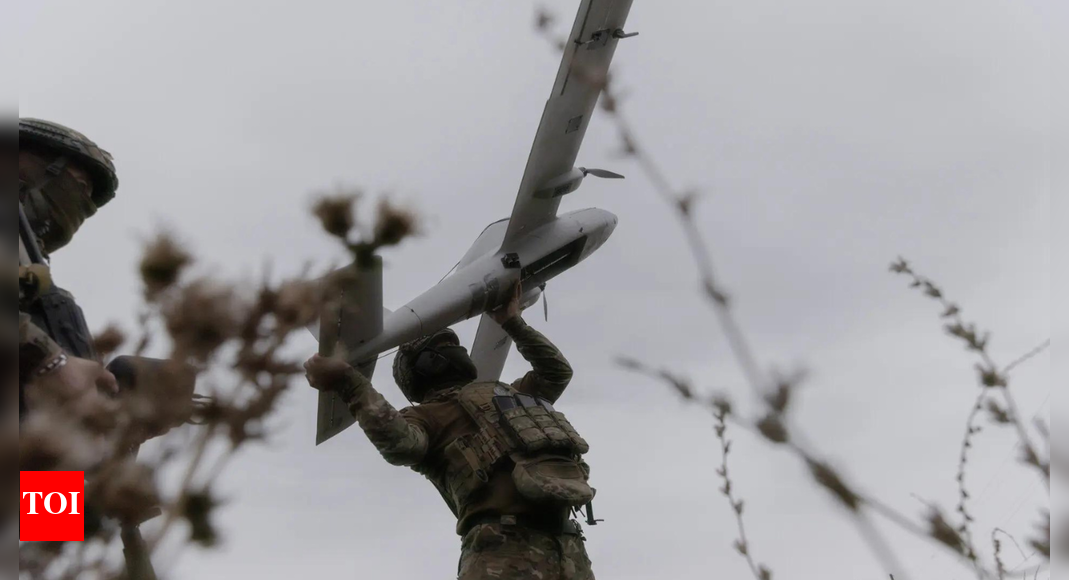
What would happen if Russia sent hundreds of drones at once into Nato airspace?This nightly reality in Russia’s war in Ukraine is a scenario the EU and Nato is scrambling to prepare for after last month’s airspace incursions by Russia and alleged espionage across Europe.Tomas Jermalavicius, a researcher at the International Center for Defense and Security in Tallinn, Estonia, says Nato radars often don’t see incoming drones because “they fly too low.”
“And we are also quite short on means to shoot them down that have a proportionate cost-benefit balance,” he told DW.Jermalavicius noted that the shooting down of Russian drones over Polish airspace on September 9 was a case in point, because missiles costing half a million dollars were used against drones that cost no more than $50,000 (€42,930).A closeup picture of Tomas Jermalavicius Military experts worry that this unsustainable “cost to kill ratio” of expensive interceptors against cheap drones could adversely impact Nato ‘s air defenses in a full-scale war.To address this, Jermalavicius suggests that startups should be central to drone defense strategies, especially since drone attacks now cause up to 80% of casualties in modern warfare.”Startups are disruptors of these lazy patterns that our procurement systems and our defense industrial players settle into over decades,” he argued, adding that they are needed as a “thorn in the side of all these convenient arrangements” in order to speed up developments.
Frankenburg to the rescue?
One of the startups promising an affordable and scalable anti-drone system is Estonia’s Frankenburg Technologies based in Tallinn with offices in the UK, Ukraine, Latvia, and Lithuania.Within less than a year, Frankenburg has developed an air-defense platform prototype which company CEO Krusti Salm pitches as a solution to what he considers Nato ‘s “biggest vulnerability.””Everything that Russia launches at Ukraine and would potentially launch at European targets is by an order of magnitude cheaper than anything that we take them down with,” he told DW.According to Salm, the aim of the project is to make the Frankenburg system ten times cheaper than existing short-range air defense interceptors like US-made Sidewinders.Frankenburg currently has one Nato country as a customer and hopes to soon start producing hundreds of interceptor missiles per week with the help of a €4 million investment in March.According to UK business daily Financial Times, startups specializing in drones and robotics have been attracting more than half of all venture capital in the European defense sector since last year.It’s perhaps no surprise, then, that three of Europe’s four defense startups with a so-called unicorn market valuation of more than €1 billion are drone makers among them Germany’s Helsing and Quantum Systems as well as Portugal’s Tekever.
‘Everybody and their mom has a drone startup’
While Western militaries have an apparent interest in cost-effective solutions like Frankenburg’s, there seems to be a certain degree of caution among traditionally rather risk-averse militaries to invest in largely unproven technologies.”[Investors and defense ministries] want to buy a complete product with proven long-term support,” says Lithuanian Rytis Mikalauskas, CEO of the Harlequin Defense startup.Jermalavicius believes the caution is also due to the uncertainty around startups’ viability. “If I buy a lot of stuff from a startup and it goes belly up after two years, who will be the one maintaining capabilities, servicing them, providing spares, upgrading them?”Another challenge drone startups face is increasing competition, says Mikalauskas. “There’s been a running joke at defense events for over a year: ‘Everybody and their mom has a drone startup,'” he told DW. New drone startups popping up every week, it seems, also raises the question of whether the demand for drones in Europe is enough to quench the thirst to supply them?The German military, for example, aims to secure a measly 8,300 drone systems by the end of the decade — far fewer than other Nato countries.But Kaspar Gering, co-founder of DarkStar, thinks the concern is unfounded. The military-tech venture capital fund aims to bring together expertise from unicorn founders, military veterans, investors, and technical leaders.”Estonia has a €400 million, multi-year tender for loitering munition that includes specific types of drones,” Gering told DW. “And drone-related tenders are trending upward across the EU.”Countries on Nato ‘s eastern flank like Estonia have started to tap startups including Frankenburg to help build out a so-called drone wall. The EU initiative is expected to consist of radars, acoustic sensors, mobile cameras, jammers and drone interceptors.
Battle-tested in Ukraine?
Frankenburg and many other Western startups also have established links to Ukrainian frontline units, allowing them to respond more quickly and accurately to constantly changing warfare than long-established defense companies and startups without those ties.Frankenburg’s interceptor missiles, says Salm, “don’t have a single aspect that hasn’t been influenced by battlefield information from Ukraine.”This kind of unfettered access is what separates the wheat from the chaff, says ICDS’s Jermalavicius.”Ukrainians sit on a mountain of data gathered from drone operations, but they usually don’t share it with foreign defense tech companies due to martial law restrictions,” he said. “So without close connections to military units, the question is to what extent the foreign products can properly reflect battlefield realities.”
‘Decisive advantage’
European startups’ ability to make a difference in fending off potential Russian drone attacks also hinges on EU governments slashing bureaucracy and providing the legal framework for warfare already during peacetime, says Misha Rudominski, who co-founded Himera in 2022, a Ukrainian defense-tech startup which manufactures electronic warfare-resistant, secure tactical communication systems.”At the beginning of the full-scale invasion, we had to overlook several restrictive laws that were holding back the development of innovative defense solutions,” the 25-year-old says, calling on Nato countries to have “a set of laws ready for when the fighting starts to avoid their weapons being limited in functionality.”The head of Estonia’s new Force Transformation Command, Ivo Peets, meanwhile, thinks the value of drone startups lies in bringing a specific ability to bear.”Their niche capability can be an advantage, even a decisive one,” Peets, a former platoon commander who served in Afghanistan told DW.However, this advantage will eventually “go away because the battlefield needs change,” he added, or the capability will become so effective that “everyone adopts it, and it will be mass produced,” which would likely not be done by a startup. Go to Source