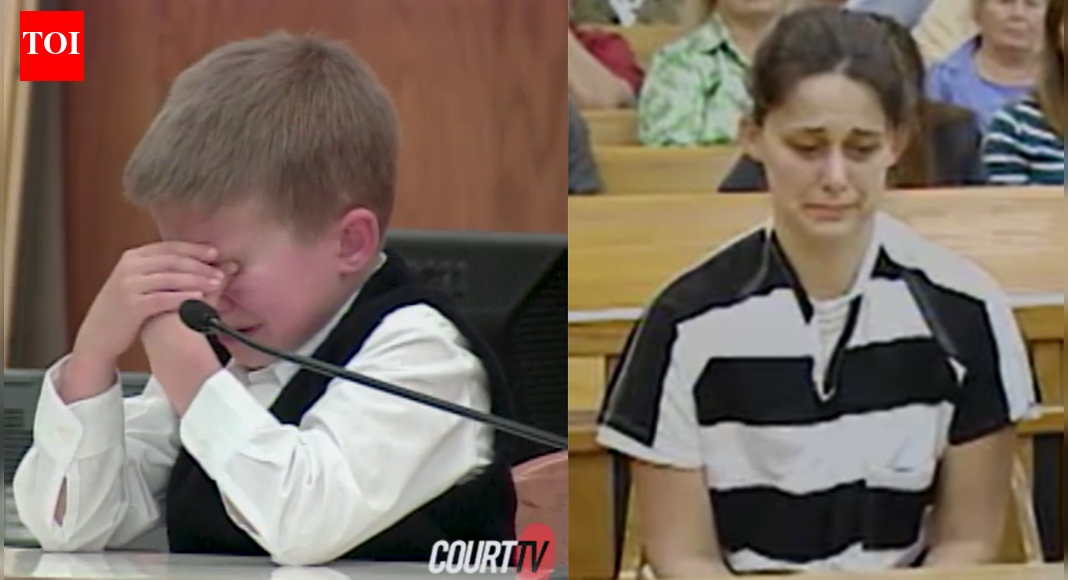

Image: Screengrab CourtTV
When seven-year-old AJ Hutto took the stand in a Florida courtroom in 2008, he accused his own mother of killing his sister. He told jurors she had drowned the seven-year-old in the family swimming pool. His words alone shaped the case, and sent Amanda Lewis to prison for life. Seventeen years later, the case that hinged on those words is no longer closed. In December 2025, a Florida judge was formally assigned to review a post-conviction relief motion in Lewis’ case, reopening scrutiny of the murder conviction that has kept her behind bars for nearly two decades. The development follows years of legal campaigning and renewed public attention, and comes as AJ, now 24, continues to stand by what he said as a child.
The drowning that became a murder case
On 8 August 2007, seven-year-old Adrianna Elaine Hutto was found unresponsive in the swimming pool outside her family home in Esto, Florida. Her mother, Amanda Lewis, called 911 and told emergency services she had found her daughter face down in the water. “She was very purple, very blue,” Lewis later said during an interview with 20/20, according to ABC News. She also described her son’s reaction at the poolside: “[AJ] was raking in the water with his hand, like he was trying to grab her.” Adrianna was pronounced dead at hospital roughly an hour later. Investigators initially believed the death may have been an accident. That assessment changed after AJ spoke to police.
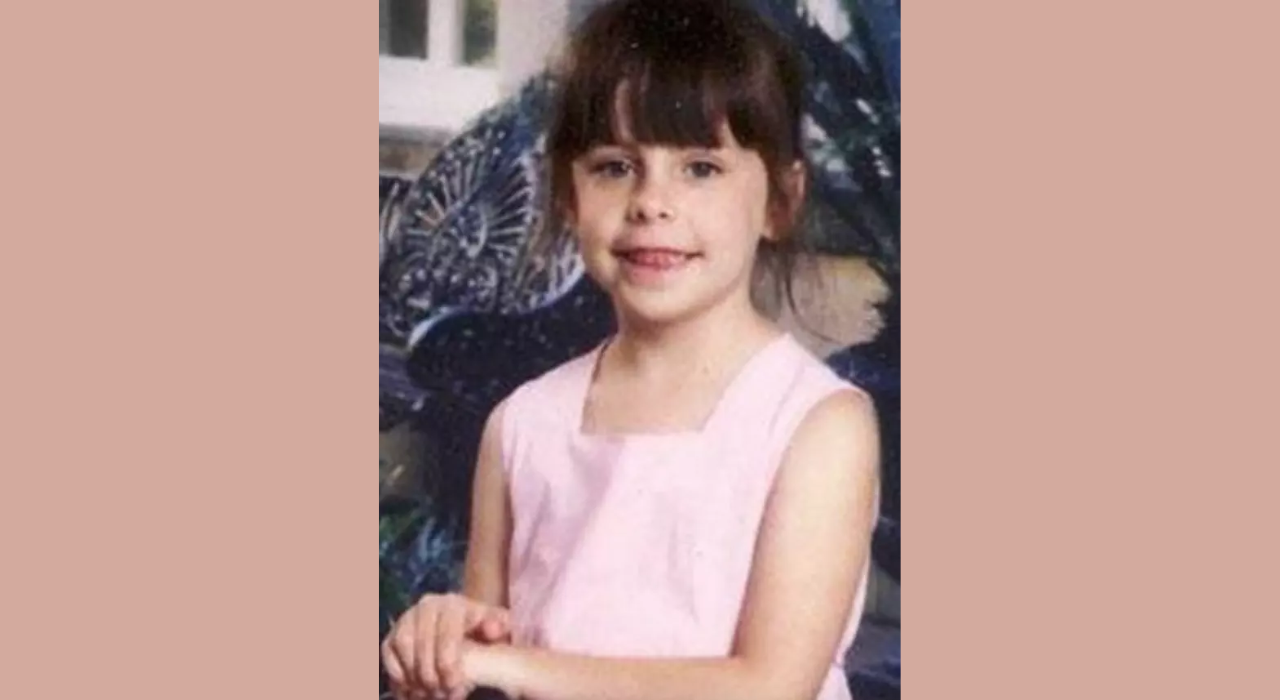
Adrianna Elaine Hutto was the victim of a heinous act (ITV)
“Mama dunked my sister,” he said in a recorded interview. “She done some stuff that she ain’t suppose so my mama got mad, so she throwed her in the pool.” Lewis was arrested the following month and charged with first-degree murder and aggravated child abuse. Prosecutors’ case relied heavily on AJ’s account. In court, the seven-year-old was ruled a competent witness by Judge Allen Register. During his testimony, AJ was shown a drawing he had made of stick figures beside the pool. Asked to explain it, he said: “That’s my mama. Killing my sister.” He added that Lewis was “putting her hand over her face”.
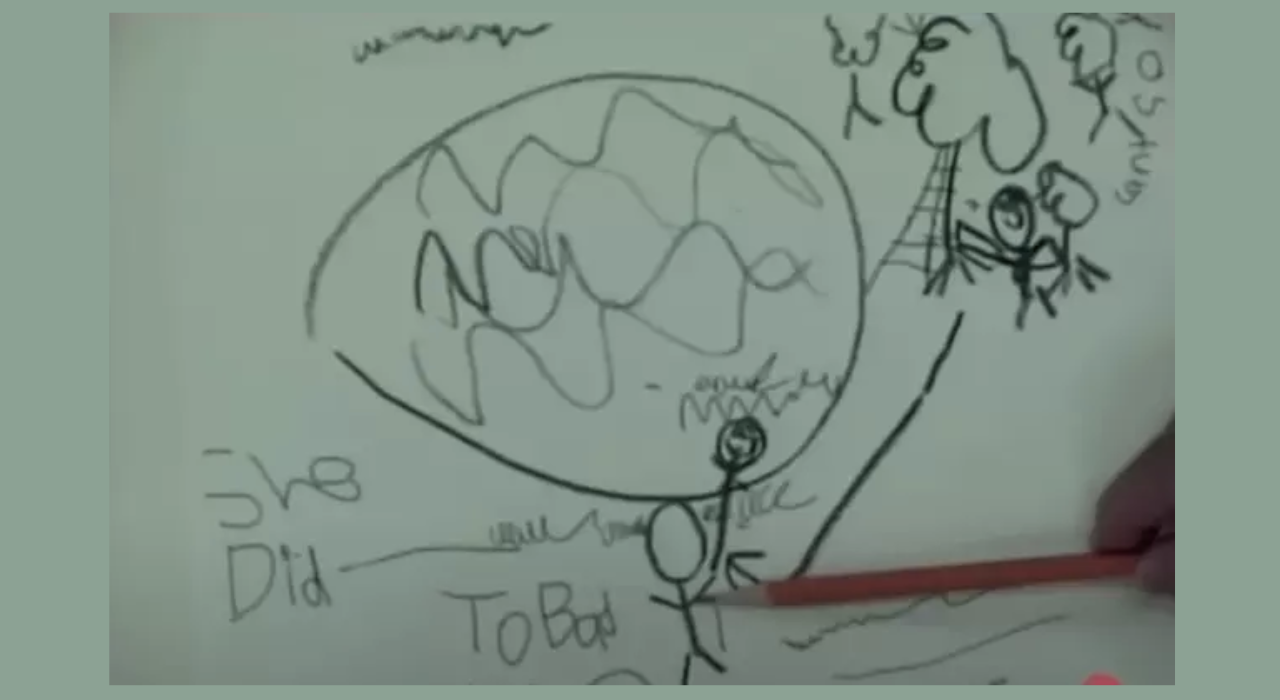
AJ’s tragic drawing of his sister’s final moments was shown in court (Court TV)
Lewis was convicted in 2008 and sentenced to life in prison without the possibility of parole, plus an additional 30 years for aggravated child abuse.
A conviction under renewed legal scrutiny
Lewis has consistently maintained her innocence. Her initial appeal was rejected in 2010. In 2016, she appeared on Piers Morgan’s ITV series Killer Women, where she said she wanted to prove “what he said I didn’t do”. In December 2025, the case entered a new phase. According to Court TV, a judge has now been appointed to review a post-conviction relief motion filed on Lewis’ behalf. Her legal team argues that constitutional violations occurred during the original trial. Attorney Colin Miller outlined four key claims, including the removal of a juror deemed competent, alleged juror misconduct, and an assertion that one juror was underage at the time. “If the court finds in Amanda’s favour on any one of these issues, her convictions will be thrown out,” Miller said. The outcome could result in either the conviction being overturned or a new trial being ordered. The legal review follows AJ’s first public comments in 17 years. Earlier this year, he spoke to the Daily Mail under the condition that his current identity remain private. “I stand by every word I said,” he told the newspaper. “I just told them exactly what I saw word for word.” Reflecting on testifying against his mother, he said: “It was heartbreaking. You know, she’s my mother. But there was also some relief that what we were going through at the time was finally coming to an end.” AJ was later adopted by another family. Now 24, married, and working as a firefighter, he has said his childhood after the trial was “night and day” compared with life before. “My childhood with [Lewis] was… just darkness, trauma,” he said. “A lot of abuse. Physically abused, both Adrianna and I were hit.” Despite renewed challenges to the conviction, AJ has said he believes his mother is “one hundred percent guilty”. As the court re-examines procedural failures raised nearly two decades on, the case remains defined by a single moment: a child describing what he said he saw, and a justice system now being asked whether the process that followed was sound. Go to Source