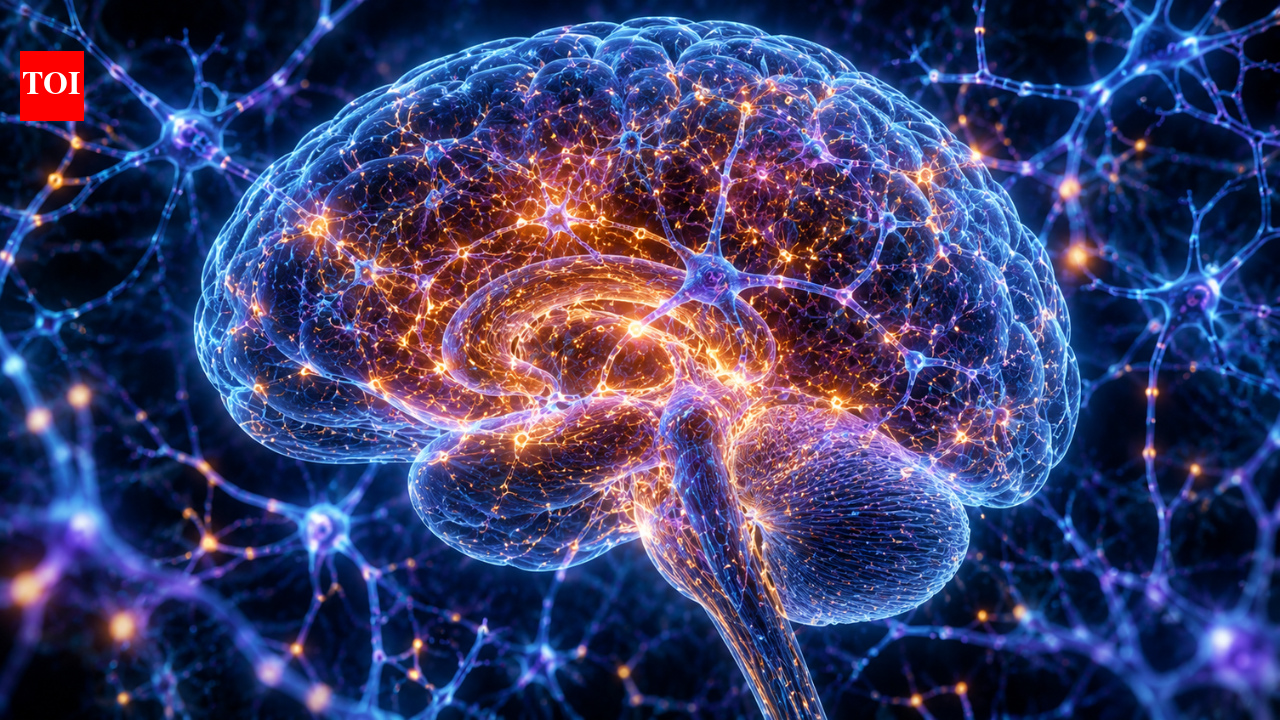

The human brain contains roughly 86 billion neurons, and for decades scientists have assumed that these cells are the primary drivers of memory and cognition. However, a new study from researchers at the Massachusetts Institute of Technology (MIT) suggests that another type of brain cell, long considered little more than support tissue, may play a much larger role than previously believed. The researchers propose that astrocytes, star-shaped cells found throughout the brain, could help explain the brain’s remarkable memory capacity and overcome limitations found in traditional theories of memory storage. The findings were published in the journal Proceedings of the National Academy of Sciences.
Why MIT scientists are rethinking the brain’s support cells
Astrocytes are among the most abundant cells in the human brain, with numbers that roughly match those of neurons. Despite their prevalence, they have traditionally been viewed as support cells responsible for maintaining the brain’s environment and assisting neurons rather than actively processing information.The MIT team argues that this view may be incomplete. Their research suggests astrocytes could participate directly in computation and memory storage, potentially helping the brain store significantly more information than neuron-only models allow. Lead author Leo Kozachkov worked alongside Jean-Jacques Slotine, a professor of mechanical engineering and brain and cognitive sciences at MIT, and Dmitry Krotov of the MIT-IBM Watson AI Lab to develop the new theory.Many modern theories of memory storage are based on neural network models known as Hopfield networks. These systems store memories as patterns distributed across connections between neurons.While effective for explaining some aspects of memory, Hopfield networks face an important limitation: they can only store a finite number of patterns before memories begin interfering with one another.Researchers later developed more advanced models called dense associative memories, which can store much larger amounts of information. However, these models require higher-order interactions involving more than two neurons at once, something that conventional synapses do not naturally provide.This has left scientists searching for a biological mechanism capable of supporting such complex memory storage.
How astrocytes may solve the puzzle
The MIT researchers believe astrocytes could provide that missing mechanism.Unlike neurons, astrocytes do not communicate through electrical impulses. Instead, they use calcium-based signalling and can release chemical messengers known as gliotransmitters.Each astrocyte extends thousands of thin processes that can wrap around individual synapses, creating structures known as tripartite synapses. These involve three components: the presynaptic neuron, the postsynaptic neuron and the astrocyte process.According to the new model, these three-way connections may function as computational units rather than simple support structures. By participating in communication between neurons, astrocytes could create the higher-order interactions required for dense associative memory.
What the model suggests about memory capacity
One of the most intriguing implications of the study concerns memory storage limits.Traditional neural network models eventually reach a ceiling where additional memories become difficult to store or retrieve accurately. The MIT model suggests that neuron-astrocyte networks may not face the same restriction.Instead, the amount of information that can be stored appears to grow with the size of the network itself. In theory, this means memory capacity could become far larger than predicted by neuron-only models.The researchers emphasise that this does not imply infinite memory. Rather, it suggests the brain may possess a storage architecture capable of supporting a vastly greater number of memories than previously thought.
Growing evidence that astrocytes play an active role
Recent neuroscience research has increasingly pointed toward a more active role for astrocytes.Studies have shown that disrupting connections between astrocytes and neurons in the hippocampus can impair memory formation and retrieval. Advances in calcium imaging technology have also allowed scientists to observe astrocytes coordinating activity alongside neurons in real time.These findings do not prove the MIT hypothesis, but they support the broader idea that astrocytes are involved in information processing rather than simply maintaining neural infrastructure.As Slotine noted, there is no reason evolution could not have exploited astrocytes’ ability to connect with hundreds of thousands of synapses for computational purposes.Despite the excitement surrounding the study, the researchers stress that their work is currently a mathematical model rather than experimental proof. The proposed mechanism has not yet been directly observed in living brains, and future experiments will be required to determine whether astrocytes perform the type of memory-related computations suggested by the model.Krotov has expressed hope that the study will encourage experimental neuroscientists to investigate the hypothesis further. Such testing will be essential before the theory can be accepted as an accurate description of how memory works in the brain.
What it could mean for neuroscience
If future experiments support the model, the implications could be significant. Neuroscientists may need to rethink one of the field’s most basic assumptions: that the synapse between two neurons is the fundamental unit of memory storage.Instead, memory could depend on a more complex system involving neurons and astrocytes working together. Such a discovery would not overturn existing knowledge about the brain, but it could substantially expand it. Go to Source