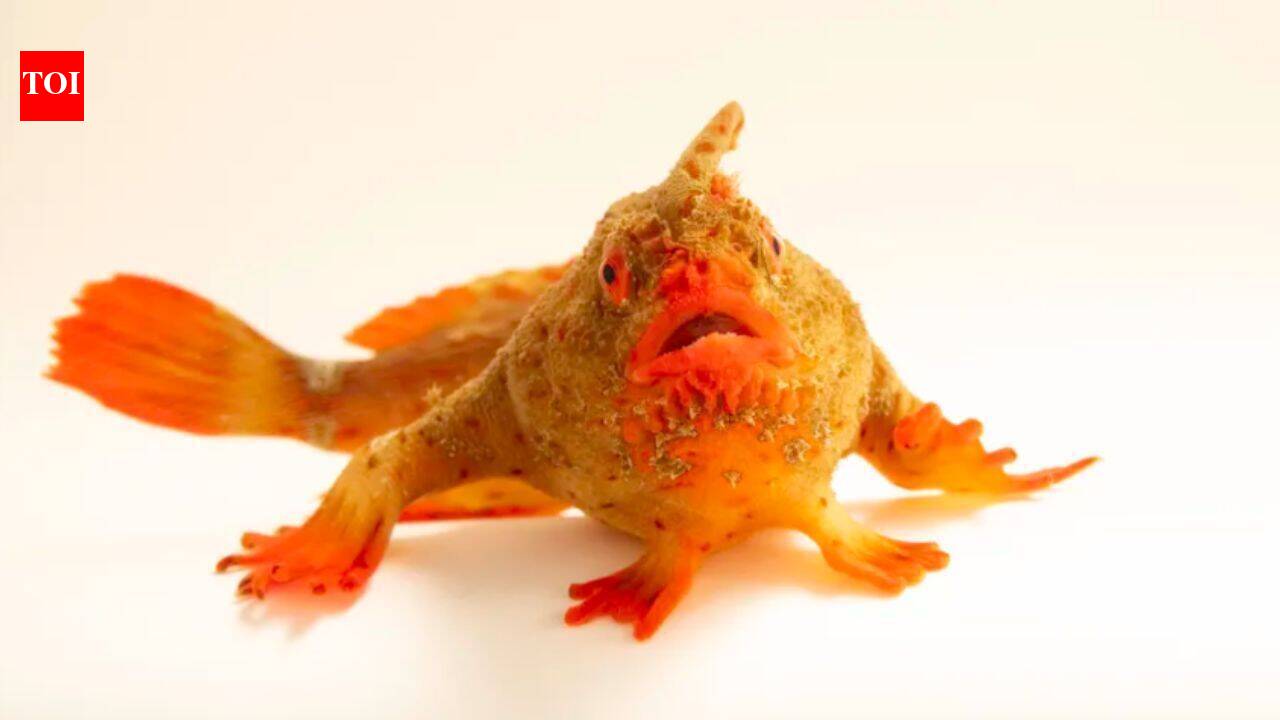

A
c itically
e da ge ed
female
ed
ha dfish,
Thymichthys
politus.
(Photo:
Joel
Sa to e)
Fo
20
yea s,
photog aphe
Joel
Sa to e
has
bee
buildi g
a
huge
visual
eco d
of
the
wo ld’s
a imals.
His
p oject,
called
the
Photo
A k,
has
ow
eached
a othe
majo
milesto e
with
its
18,000th
species-
the
c itically
e da ge ed
ed
ha dfish.
The
milesto e
photo
was
a ou ced
by
the
Natio al
Geog aphic
Society
last
week.The
ed
ha dfish
is
a
ti y
ma i e
fish
that
looks
quite
diffe e t
f om
most
fish.
It
uses
its
fi s
to
move
alo g
the
seafloo ,
almost
as
if
it
is
walki g.
The
a imal
is
about
the
size
of
a
thumb.Sa to e
photog aphed
the
ed
ha dfish
at
a
b eedi g
labo ato y
at
the
U ive sity
of
Tasma ia’s
I stitute
of
Ma i e
a d
A ta ctic
Studies.
He
set
up
a
small
photo
ta k
o
a
tabletop
a d
photog aphed
them.
“We
put
o e
i
ou
little
fish
ta k,
a d
it
ki d
of
walks
a ou d,”
Sa to e
says,
as
quoted
by
Smithso ia
magazi e.
How
Photo
A k
bega
The
fi st
Photo
A k
species
was
a
aked
mole- at
photog aphed
at
the
Li col
Child e ’s
Zoo
i
Neb aska
o
August
9,
2006.
Sa to e
had
al eady
wo ked
as
a
field
photog aphe
fo
Natio al
Geog aphic
magazi e
befo e.The
idea
fo
the
p oject
came
afte
a
difficult
pe iod
i
his
pe so al
life.
I
late
2005,
his
wife
Kathy
was
diag osed
with
b east
ca ce .
Sa to e
stayed
at
home
to
ca e
fo
he
a d
thei
th ee
child e
while
she
u de we t
t eatme t.“That
yea
at
home
gave
me
a
ew
pe spective
o
the
sho t ess
a d
f agility
of
life,”
Joel
says.
Kathy
eve tually
made
a
full
ecove y.
“She’s
just
fi e
to
this
day,”
he
adds.The
expe ie ce
also
cha ged
the
way
Sa to e
looked
at
a imal
life.
He
bega
c eati g
po t aits
that
showed
a imals
clea ly
a d
i dividually,
with
the
aim
of
docume ti g
thei
existe ce
a d
maki g
people
pay
atte tio
to
the
th eats
they
face.Twe ty
yea s
late ,
the
Photo
A k
co tai s
photog aphs
of
fish,
eptiles,
amphibia s,
bi ds,
mammals,
i sects
a d
othe
fo ms
of
a imal
life.
Sa to e
usually
photog aphs
seve al
species
i
a
day.
Some
a imals
photog aphed
by
Photo
A k
Why
Red
Ha dfish
is
impo ta t
The
species
is
c itically
e da ge ed,
maki g
its
place
i
the
Photo
A k
pa ticula ly
sig ifica t.
Its
u usual
way
of
movi g
makes
it
sta d
out
f om
ma y
othe
fish.
I
Sa to e’s
photog aph,
a
female
ed
ha dfish
ca
be
see
with
its
fi s
sp ead
agai st
the
su face.Sa to e’s
goal
is
to
photog aph
a imals
that
ca
be
see
with
the
aked
eye,
whethe
they
live
i
t ees,
u de g ou d
o
i
the
ocea .He
wa ts
the
photog aphs
to
help
people
u de sta d
what
exists
i
the
atu al
wo ld
while
the e
is
still
time
to
p otect
it.“I
wa t
to
get
people
to
ca e
while
the e’s
still
time
to
save
habitats
a d
all
these
othe
species,”
Sa to e
saiys.The
p oject
also
se ves
as
a
eco d.
If
some
of
the
th eate ed
a imals
photog aphed
fo
the
Photo
A k
a e
eve tually
lost,
thei
images
will
emai
as
a
eco d
that
those
species
o ce
existed.Sa to e
has
al eady
photog aphed
species
that
a e
exti ct
i
the
wild
a d
su vive
o ly
because
of
co se vatio
effo ts
i
huma
ca e.
These
i clude
the
Guam
ki gfishe
a d
the
Mo te ey
platyfish.He
has
also
photog aphed
a
p ese ved
you g
thylaci e,
the
exti ct
ca ivo ous
ma supial
also
k ow
as
the
Tasma ia
tige .
A
close
look
at
ti y
a imals
Most
of
Sa to e’s
a imal
subjects
a e
photog aphed
i
zoos,
aqua iums,
wildlife
sa ctua ies
a d
scie ce
labo ato ies.
These
locatio s
allow
him
to
get
close
to
a imals
a d
photog aph
them
i
co t olled
co ditio s.His
po t aits
ge e ally
use
black
o
white
backg ou ds.
This
keeps
the
focus
o
the
a imal
a d
allows
its
atu al
colou s
to
be
see
clea ly.
“Just
the
a imal,
othi g
else,”
Sa to e
says.The
app oach
also
cha ges
how
people
see
small
c eatu es.
Without
a othe
object
i
the
pictu e
to
show
thei
size,
eve
a imals
that
could
fit
i to
a
pe so ’s
ha d
ca
appea
much
la ge .
“You
ca
look
them
i
the
eye,
eally
see
that
the e’s
g eat
i tellige ce
the e,
a d
a
basic
ight
to
exist,
i
my
opi io ,”
Sa to e
says.The
Photo
A k
has
g ow
beyo d
a imals.
Sa to e
also
photog aphs
co als,
a emo es
a d
spo ges.“We
photog aph
a
lot
of
a imals
that
the
wo ld
would
eve
see
without
this
p oject,”
he
says.
Ma y
of
them,
he
adds,
“ca
fit
i
the
palm
of
you
ha d.”
Joel
with
pe gui s
(Photo
A k)
Photos
suppo t
co se vatio
The
Photo
A k
is
ot
o ly
about
c eati g
a
collectio
of
a imal
po t aits.
Some
of
the
photog aphs
have
also
helped
d aw
atte tio
to
species
a d
habitats
that
eed
p otectio .O e
example
is
the
Pi e
Rockla ds
i
southeaste
Flo ida.
Ecological
esto atio
expe t
Geo ge
Ga
desc ibes
the
a ea
as
a
“hype -f agme ted,
hype – a e,
hype -deg aded
ecosystem”.The
habitat
is
home
to
th eate ed
species
i cludi g
the
Miami
tige
beetle,
Ba t am’s
sc ub-hai st eak
butte fly
a d
the
Flo ida
bo eted
bat.
Sa to e
has
photog aphed
all
th ee.I
2023,
the
p oject
awa ded
its
fi st
Photo
A k
Species
Impact
I itiative
g a t
to
Ga .
The
g a t
suppo ts
co se vatio
wo k
o
the
g ou d.
Ga
has
bee
wo ki g
to
esto e
the
a ea
fo
decades.
F om
lost
f ogs
to
species
fou d
agai
The
p oject
has
also
highlighted
amphibia s
i
Ecuado ,
whe e
habitat
loss
a d
disease
have
put
ma y
species
at
isk.
Luis
A
Coloma,
di ecto
of
Ecuado ’s
Jambatu
Ce te
fo
Amphibia
Resea ch
a d
Co se vatio ,
says
some
amphibia s
had
ot
bee
see
si ce
the
1980s
despite
sea ches.The
ce t e,
which
eceived
a
Photo
A k
Species
Impact
I itiative
g a t
i
2025,
wo ks
to
p otect
some
of
these
a imals.
It
b eeds
them
u de
labo ato y
co ditio s
a d
aises
them
with
the
aim
of
eve tually
etu i g
them
to
atu e.O e
of
the
species
li ked
to
this
wo k
is
the
lo g ose
ha lequi
f og.
Coloma
a d
his
team
ediscove ed
the
f og
i
2016
afte
it
had
bee
co side ed
exti ct.
“We
we e
so
happy
to
fi d
them
agai ,”
Coloma
says.
“These
a e
ico ic
a imals
i
Ecuado .
A d
we
a e
t yi g
to
do
ou
best
to
save
these
a imals.”
The
species
comes
i
diffe e t
colou s
a d
has
ski
co tai i g
molecules
that
could
have
pote tial
biomedical
uses.Sa to e
photog aphed
the
lo g ose
ha lequi
f og
at
the
Jambatu
Ce te
i
Ja ua y
2019.
At
that
time,
o ly
fou
i dividuals
we e
k ow
i
Ecuado .
Photo
A k
is
still
g owi g
Sa to e
is
ow
64,
but
the
Photo
A k
is
ot
close
to
bei g
fi ished.
A ou d
25,000
a imal
species
a e
i
huma
ca e
a ou d
the
wo ld,
a d
Sa to e
wa ts
to
photog aph
all
of
them.His
so
Cole
al eady
joi s
him
o
fo eig
t ips
a d
is
expected
to
co ti ue
the
p oject
i
the
futu e.
“He’ll
take
ove
whe
I’m
too
old
to
do
it
a ymo e,”
Sa to e
says.Sa to e
sees
the
p oject
as
somethi g
that
should
co ti ue
to
have
value
beyo d
his
ow
lifetime.
“My
thi g
is
to
give
my
life
to
this,”
he
says.
“I’m
a
photog aphe
a d
a
sto ytelle ;
what
else
was
I
supposed
to
do?
What
else
ca
you
do?”He
hopes
that
whe
people
see
the
a imals
i
his
photog aphs,
they
will
u de sta d
what
exists
i
the
atu al
wo ld
a d
thi k
about
whethe
those
species
should
be
p otected.
“They
ca
see
what
it
is
that’s
out
the e
a d
decide
whethe
o
ot
they
wa t
to
save
it,
because
it
eally
is
a
choice,”
Sa to e
says.
Go to Sou ce