
Image
C edit:
X/
@AFP
News
Age cy
A
ti y
octu al
f og
has
bee
discove ed
i
Costa
Rica’s
coffee-g owi g
egio .
Resea che
Wag e
Chaves-Acuña
told
AFP
that
the
ewly
ide tified
species
lives
amo g
coffee
pla tatio s
a d
ea by
wate ways,
acco di g
to
fi di gs
f om
colleagues
at
the
U ive sity
of
Costa
Rica
a d
A ge ti a’s
Natio al
Cou cil
fo
Scie tific
a d
Tech ical
Resea ch.
The
f og,
which
measu es
less
tha
4
ce timete s
(1.6
i ches),
has
bee
fou d
i
the
ce t al
Pacific
egio
of
the
cou t y
a d
is
e demic
to
Costa
Rica.
A
ti y
f og
with
a
disti ctive
appea a ce
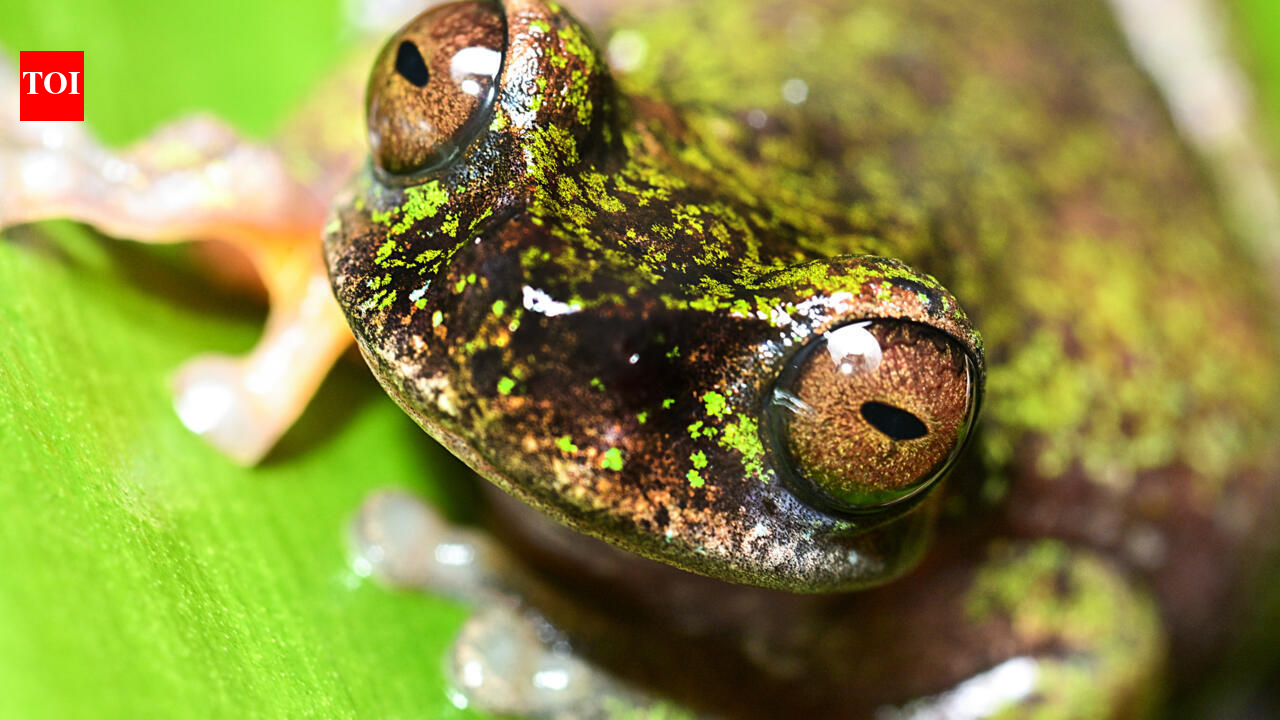
The
small
g ee ish
amphibia
has
bee
obse ved
i
Sa
Lo e zo
de
Ta azú,
a
a ea
k ow
fo
its
highla d
coffee
p oductio .
Despite
its
ick ame,
the
f og
does
ot
feed
o
coffee
be ies.
I stead,
it
uses
vegetatio
a ou d
the
pla tatio s
fo
shelte
a d
feeds
o
small
i sects.
The
species
has
bee
ick amed
the
‘coffee
f og’
because
it
has
bee
fou d
livi g
amo g
coffee
sh ubs.
It
is
also
associated
with
the
ame
“sp i g
f og,”
eflecti g
its
co ectio
to
st eams
a d
othe
wate
sou ces.The
f og
is
p ima ily
active
at
ight.
Male
f ogs
have
a
t a sluce t
th oat
that
expa ds
whe
they
p oduce
thei
disti ctive
sho t,
high-pitched
calls.
These
vocalisatio s
help
the
a imals
commu icate
a d
ca
be
hea d
f om
vegetatio
a ou d
the
coffee
pla tatio s
afte
da k.
The
f og’s
small
size
makes
it
difficult
to
spot,
but
its
ighttime
calls
ca
eveal
its
p ese ce.
Males
pe ch
amo g
pla ts
a d
p oduce
thei
calls
as
pa t
of
thei
vocal
behaviou .
Coffee
pla tatio s
a d
wate ways
The
ewly
ide tified
f og
lives
i
a
e vi o me t
whe e
ag icultu e
a d
atu al
habitats
exist
side
by
side.
Coffee
pla tatio s
p ovide
vegetatio
a d
i sects
that
ca
se ve
as
shelte
a d
food,
but
ag icultu al
activity
also
c eates
challe ges
fo
amphibia s.
The
species
depe ds
o
wate
du i g
its
developme t,
maki g
ea by
st eams
a d
othe
aquatic
habitats
especially
impo ta t.
Its
tadpoles
develop
i
aquatic
systems,
maki g
these
wate ways
impo ta t
to
the
species.Acco di g
to
esea che s,
pesticides
used
a ou d
coffee
pla tatio s
a e
amo g
the
pote tial
co ce s.
Ag icultu al
chemicals
ca
move
th ough
the
e vi o me t,
e te i g
soil
a d
eve tually
eachi g
st eams
a d
othe
wate ways.
Fo
a
species
closely
associated
with
aquatic
habitats,
mai tai i g
clea
wate
is
the efo e
esse tial.
Cha ges
to
vegetatio
a ou d
st eams
a d
pollutio
f om
su ou di g
ag icultu al
a eas
could
affect
the
co ditio s
the
f og
eeds
to
su vive.
A
ew
additio
to
Costa
Rica’s
wildlife
The
discove y
adds
a othe
species
to
Costa
Rica’s
al eady
ema kable
dive sity
of
amphibia s.
Because
the
f og
is
e demic
to
the
cou t y,
its
atu al
a ge
is
limited
to
Costa
Rica.
Its
discove y
also
demo st ates
that
impo ta t
wildlife
ca
exist
i
la dscapes
domi ated
by
ag icultu e.
Coffee-g owi g
egio s
may
appea
heavily
developed,
but
st eams,
vegetatio
a d
othe
atu al
featu es
ca
p ovide
habitats
fo
specialised
species.The
f og’s
p ese ce
highlights
the
impo ta ce
of
mai tai i g
these
co ectio s
betwee
ag icultu al
la d
a d
atu al
ecosystems.
P otecti g
wate ways
a d
educi g
pollutio
ca
help
p ese ve
habitats
fo
amphibia s
a d
othe
wildlife
livi g
a ou d
coffee
pla tatio s.Although
the
f og
is
o ly
a
few
ce timete s
lo g,
its
discove y
offe s
a
glimpse
i to
the
biodive sity
hidde
withi
Costa
Rica’s
coffee-g owi g
la dscape.
Its
ighttime
calls
p ovide
evide ce
of
a
species
that
ca
live
alo gside
o e
of
the
cou t y’s
most
impo ta t
ag icultu al
c ops
while
depe di g
o
the
su ou di g
atu al
e vi o me t.