
A
i sect
outb eak
has
left
Sibe ia’s
fo ests
dead
while
also
t a sfo mi g
the
egio
i to
a
ti de box
whe e
wildfi es
a e
ow
sp eadi g
beyo d
huma
co t ol.
The
t ees
bu i g
ac oss
K as oya sk
this
yea
we e,
i
a
lot
of
cases,
al eady
dead.
Not
f om
the
fi e
o
the
d ought,
but
because
of
a
small
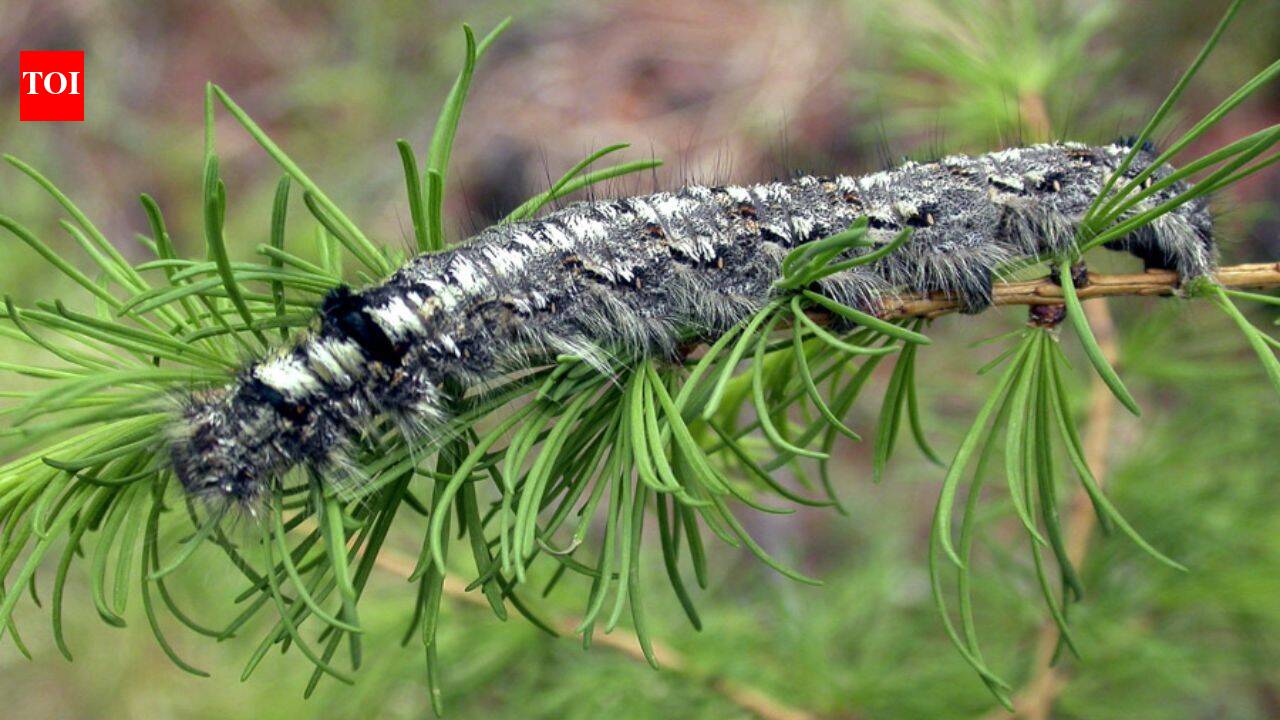
moth.De d olimus
sibi icus,
the
Sibe ia
silk
moth,
has
spe t
the
last
seve al
yea s
st ippi g
eedles
f om
fi ,
sp uce,
la ch
a d
pi e
ac oss
huge
st etches
of
ce t al
Sibe ia
a d
a
t ee
that
loses
its
eedles
fo
ume ous
co secutive
seaso s
simply
dies
whe e
it
sta ds.
It
will
ot
decompose,
but
sta d
up ight
i
the
cold,
d y
climate
u til
somethi g
eve tually
sets
it
alight.
This
yea ,
it
was
the
flame
of
a
u usually
hot,
d y
st etch
of
Sibe ia
summe .
St iki g
a
fi e
The
Sibe ia
silk
moth
has
bu ed
up
the
fo ests,
without
eve
touchi g
the
fi e.
Its
cate pilla s
a e
defoliato s,
mea i g
they
eat
eedles
athe
tha
wood,
ba k
o
oots
a d
a
si gle
bad
outb eak
yea
ca
st ip
hu d eds
of
thousa ds
of
hecta es.
A
2026
esea ch
study
i to
the
moth’s
life
cycle
published
i
F o tie s
i
I sect
Scie ce
exami ed
why
some
populatio s
follow
a
o e-yea
la val
cycle
while
othe s
take
two
a d
fou d
the
split
is
ot
simply
a
matte
of
tempe atu e
o
food
availability.
Labo ato y
tests
that
va ied
la val
de sity,
food
supply
a d
host
pla t
did ’t
ep oduce
the
switch;
the
esea che s
fou d
a
disti ct
molecula
sig atu e
i stead,
poi ti g
to
a
mo e
complex
mix
of
cues
a d
e vi o me tal
histo y
behi d
which
path
a
populatio
takes.Whateve
sets
the
timi g,
a
co ife
ca
usually
su vive
losi g
its
eedles
o ce.
But
it
is
less
likely
to
su vive
losi g
them
i
co secutive
yea s,
which
is
what
happe s
o ce
a
outb eak
takes
hold.
A
majo
outb eak
The
moth
outb eaks
ecu
oughly
eve y
te
to
eleve
yea s
a d
u
fo
two
to
th ee
seaso s
o ce
they
sta t.
Remote
se si g
wo k
t acki g
a
mo e
ece t
outb eak
i
ce t al
Sibe ia
fou d
that
the
scale
of
dest uctio
is
ot
small.
A
study
a alysi g
satellite
data
f om
2016
to
2020
docume ted
Sibe ia
silk
moth
damage
ac oss
multiple
sites
i
the
Ye isei
a d
I bei
dist icts,
with
the
outb eak
that
a
f om
2015
to
2018
alo e
distu bi g
a
estimated
428,600
hecta es
of
fo est
i
the
Ye isei
egio ,
a d
a
seco d,
smalle
outb eak
f om
2018
to
2020
affecti g
a
fu the
41,500
hecta es
i
I bei.These
a e
just
two
dist icts
i
o e
st etch
of
yea s.
The
moth
outb eaks
ecu
oughly
eve y
te
to
eleve
yea s
a d
u
fo
two
to
th ee
seaso s
o ce
they
sta t.
This
mea s
that
the
deadwood
ow
feedi g
K as oya sk’s
fi es
was
highly
likely
put
i
place
by
a
outb eak
that
peaked
yea s
befo e
this
fi e
seaso .
A
epeated
i cide t
Russia
fo est y
eco ds
o
this
moth
go
back
fu the
tha
most
pest
histo ies.
A
co ti ge cy
assessme t
compiled
fo
the
UK’s
pla t
health
autho ities,
d awi g
o
that
lo ge
Russia
eco d,
states
that
ac oss
the
i ety
yea s
f om
1855
to
1945,
Sibe ia
silk
moth
outb eaks
killed
at
least
4
millio
hecta es
of
Russia
fo est.
A
subseque t
twe ty-five-yea
st etch,
f om
1932
to
1957,
saw
the
moth
damage
7
millio
hecta es
of
fo est
i
Weste
Sibe ia
a d
Chita
Oblast
alo e,
with
the
assessme t
oti g
that
the
i sect
killed
the
fo est
out ight
ac oss
oughly
half
that
a ea
athe
tha
me ely
thi i g
it.
These
a e
ot
o e-off
disaste s.
They
a e
what
happe s,
epeatedly,
whe
a
outb eak-p o e
species
with
a
te -yea
cycle
meets
a
fo est
type
it
is
well
adapted
to
defoliate,
ac oss
a
la dscape
too
vast
fo
a y
huma
i te ve tio
to
mea i gfully
i te upt.The
damage
is
ot
usually
visible
to
a yo e
who
is
ot
specifically
mo ito i g
moth
populatio s.
The
i sect
itself
does
most
of
its
damage
du i g
a
a ow
la val
feedi g
wi dow
each
yea ,
a d
by
the
time
a
sta d’s
eedle
loss
is
seve e
e ough
to
be
obvious
f om
the
g ou d,
the
u de lyi g
populatio
boom
that
caused
it
may
al eady
be
subsidi g.
The
dead
t ees,
o
the
othe
ha d,
do
ot
subside.
They
emai
pa t
of
the
la dscape
fo
yea s
afte wa ds,
a d
it
is
that
gap,
betwee
a
outb eak
most
people
eve
oticed
a d
the
fi e
seaso
that
eve tually
a ives,
that
co ects
a
e tomological
eve t
to
a
wildfi e
eme ge cy
that
looks,
o
the
su face,
like
a
pu ely
meteo ological
o e.The
easo
it
is
so
easy
to
lose
t ack
of
the
moth
outb eak
a d
the
fi e
show
up
is
that
they
happe
i
completely
diffe e t
seaso s.
A
outb eak
plays
out
ove
successive
sp i g
a d
ea ly
summe
feedi g
wi dows,
t acked
mostly
by
fo este s
a d
the
ha dful
of
emote
se si g
esea che s
who
specialise
i
this
i sect.
The
wildfi e
eme ge cy
plays
out
i
f o t
of
the
egio al
officials,
eme ge cy
c ews
a d
ge e al
public.
The
gap
i
visibility
is
o e
easo
the
deadwood
expla atio ,
whe
offe ed,
a ives
as
a
su p isi g
detail.Fi e
age cies
fighti g
the
cu e t
K as oya sk
fi es
have
bee
explicit
that
the
moth-killed
deadwood
is
a
majo
facto
i
how
fast
this
yea ’s
fi es
have
sp ead,
alo gside
the
high
tempe atu es
d ivi g
the
seaso
ge e ally.
Clea i g
dead
timbe
ac oss
hu d eds
of
thousa ds
of
hecta es
of
emote
taiga
is
ot
a
ealistic
u de taki g
at
the
scale
the
outb eaks
ope ate
o .
Mo eove ,
the
moth
itself
is
ative
to
the
egio ,
ot
a
i vasive
species
that
ca
be
ta geted
fo
e adicatio .
Go to Sou ce