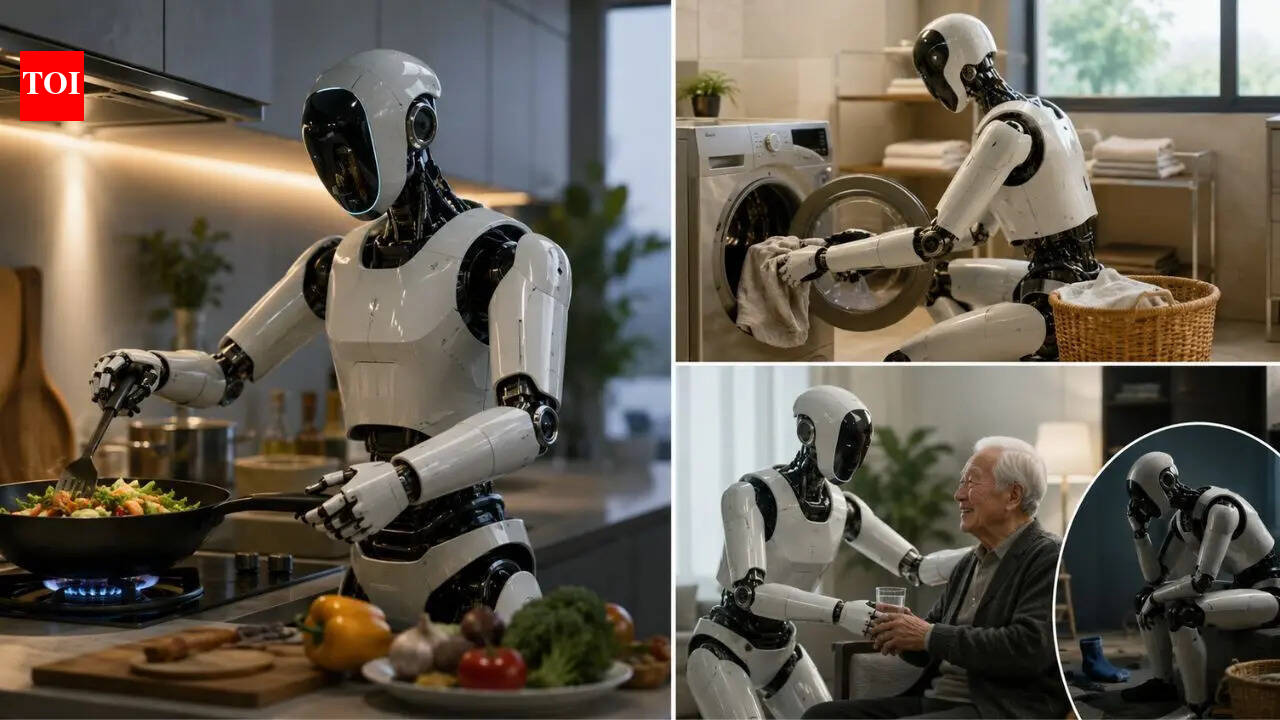

China’s race to build practical humanoid robots has mostly played out behind factory doors so far. Machines have sorted parcels, carried components, and repeated carefully programmed movements in controlled environments. But a different challenge is beginning to emerge, one that appears far messier and far more personal. As reported by the South China Morning Post, in central China, a newly unveiled household robot is now being positioned as more of a domestic assistant than an industrial machine. Videos released this week showed the robot chopping vegetables, making beds, and loading washing machines with an ease that still feels faintly surreal. The aim appears to be improving robotic understanding of common household routines such as tidying, storage and retrieval. Even apparently minor tasks still challenge many humanoid systems. Folding bedding, carrying delicate objects or navigating narrow living spaces often require balance, pressure control and visual judgement that humans take for granted.
China’s humanoid robot push reaches kitchens, bedrooms and laundry rooms
The latest push comes from Chinese robotics firm GigaAI, which introduced its household humanoid robot model known as the SeeLight S1. Unlike many industrial robots that rely heavily on fixed programming and repetitive movements, this machine reportedly uses embodied AI systems designed to interpret surroundings and make decisions in real time. Factories are structured environments. Objects stay where they belong, routes rarely change and tasks are repeated thousands of times. Homes operate very differently. A chair may suddenly block a path. Children leave toys on the floor, pets move unpredictably, and lighting changes throughout the day. Even something as simple as folding laundry becomes surprisingly difficult for a machine once fabric bends and shifts shape.The SeeLight S1 is being marketed as a robot capable of handling those less predictable situations. Demonstration footage released through Chinese media showed the machine frying eggs, hanging clothes and opening curtains using two robotic arms mounted on a wheeled base. The company reportedly plans to begin testing the robots inside employee housing later this year before expanding to family households in Wuhan during 2027.
Why household chores remain difficult for robots
For years, robotics companies around the world have promised machines capable of helping with domestic life. Yet most commercially successful home robots remain relatively simple devices, such as robot vacuum cleaners. Experts suggest the main obstacle is not mechanical movement alone but data.Industrial robots benefit from enormous amounts of structured information collected from repetitive environments. Domestic settings are far less consistent. A kitchen in one flat may look entirely different from another. Even within the same home, objects constantly move. That creates a problem for embodied AI models, which rely on experience and environmental understanding to complete tasks safely. According to robotics engineers in China, companies are now trying to gather huge volumes of household interaction data so robots can better recognise objects, navigate obstacles and understand human behaviour patterns.
Why China’s ageing population is driving interest in home robots
Part of the growing interest in household humanoid robots comes from demographics rather than technology alone. China’s ageing population has increased pressure on healthcare systems and family caregiving structures. Some robotics developers now see elder care as one of the most realistic early commercial uses for humanoid assistants.The Wuhan pilot programme is reportedly expected to prioritise homes with elderly residents, children or pets. That decision reflects where companies believe practical demand may emerge first. For older adults living alone, even limited robotic assistance could prove useful. Carrying laundry, retrieving objects or helping with basic household organisation may reduce strain in everyday life. Some firms are also exploring reminder systems, emergency alerts and simple companionship functions.GigaAI says its robot includes a control system designed to stop movement immediately when children or animals come too close. Whether those protections work reliably in busy households may become one of the most closely watched parts of the upcoming trials.
Why real homes remain the toughest challenge for humanoid robots
Despite the excitement surrounding China’s robotics sector, many industry figures continue to sound cautious about home deployment timelines. Executives from Chinese robotics companies have repeatedly acknowledged that household environments remain among the hardest settings for humanoid machines to navigate consistently. Industrial sites are still viewed as the easier commercial pathway because tasks can be standardised and controlled.GigaAI reportedly hopes to reduce the price of its household robot to below 100,000 yuan by mid-2027, though even that figure would still place the machine well beyond the reach of many families. Developers appear to be betting that prices will gradually fall as manufacturing scales increase and AI systems improve. A robot might successfully load a washing machine during a carefully planned showcase yet struggle when socks are scattered across the floor or furniture has been rearranged. Those small domestic irregularities are precisely what researchers are trying to solve.China’s humanoid robot industry is clearly moving faster than it was only a few years ago. Whether these machines truly become part of ordinary family life, though, may depend less on flashy demonstrations and more on how they cope with the untidy unpredictability of human homes. Go to Source