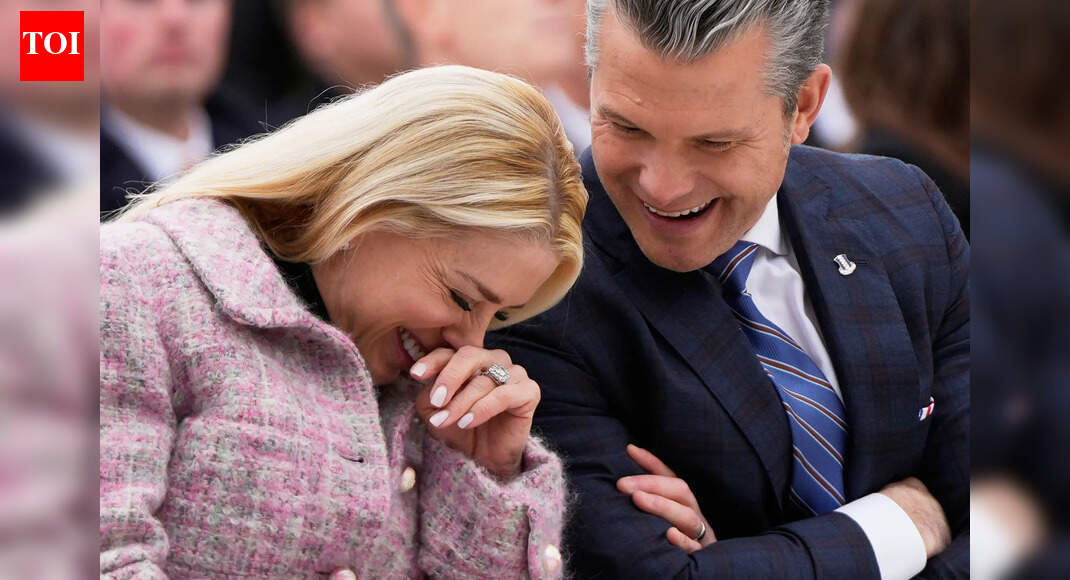

Attorney General Pam Bondi and Secretary of Defense Pete Hegseth speak before President Donald Trump arrives to pardon the national Thanksgiving turkeys Waddle and Gobble, during a pardoning ceremony in the Rose Garden of the White House, Tuesday, Nov. 25, 2025, in Washington. (AP Photo/Julia Demaree Nikhinson)
Frederick Forsyth has created many memorable protagonists, but Calvin Dexter from Avenger remains one of his most fascinating. Dexter, an ex–Tunnel Rat who crawled through the subterranean hellscape of Vietnam, eventually reinvented himself as a mercenary with a strangely unwavering commitment: he would go deep into hostile territory, extract a villain alive, and deliver him to an American courtroom. Dexter did not believe in summary execution or improvised vengeance. He believed in the symbolism of a fair trial, in an America that could demonstrate its moral superiority by forcing even its enemies to answer to the law.That ideal — the idea that America kills when it must but prosecutes when it can — stands in deliberate contrast to the way American foreign policy has often functioned in reality. For all its talk of a rules-based international order, the United States has long operated on a simpler formula: identify a threat, define the battlefield, and impose a solution. Dexter’s fictional insistence on due process is compelling precisely because it feels like the exception rather than the rule.Which brings us to Defence Secretary Pete Hegseth and the now-infamous “Kill Them All” directive. The mainstream American commentariat is working overtime to portray his alleged order — to eliminate the two survivors clinging to the wreckage of a bombed Caribbean vessel — as a shocking departure from established norms. But the truth is far less flattering. The Caribbean strike is not a fracture in American conduct. It is the logical expression of it. It is not an aberration. It is a revelation.
America’s habit of decisive violence did not begin yesterday

An old photo of Donald Trump and Bill Clinton
Modern historians like to point to the Bill Clinton years, when cruise-missile strikes became the norm, citing the attacks in Sudan and Afghanistan. Some commentators even joke that some bombings helped iron out the rough edges that emerged post L’Affaire Lewinsky. But the United States entered the era of decisive, extraterritorial force long before Clinton ever signed a strike order. In the early twentieth century, under Theodore Roosevelt and the administrations that followed, American marines were dispatched across the Caribbean and Central America to enforce Washington’s conception of stability. Entire governments were unseated or reorganised according to geopolitical convenience, and the Monroe Doctrine became less a strategic principle and more a permission slip for action wherever America felt entitled.By the mid-century, American power took on a covert dimension. Dwight Eisenhower oversaw operations that toppled governments in Iran and Guatemala. John Kennedy authorised sabotage campaigns and clandestine strike missions. Lyndon Johnson escalated covert activity in Southeast Asia. These actions were always couched in noble language — containing communism, preserving order, promoting democracy — but they normalised the idea that the United States could choose its villains and neutralise them without ever seeing the inside of a courtroom.This longstanding tradition meant that when Clinton embraced precision strikes, when George W. Bush declared a global war on terror, and when Barack Obama turned targeted killing into a highly systematised bureaucratic machine, they weren’t inventing anything. They were refining a tool that had been honed for decades. Pete Hegseth is simply the first to wield it without bothering to hide the edges.
The modern polishing of an old instinct
From the 1990s onwards, American foreign policy adopted the sheen of surgical precision. Bill Clinton’s strikes were sold as carefully calibrated actions necessitated by global threats. George W. Bush then expanded America’s reach across continents, constructing the legal scaffolding for a war without recognised borders. Under Barack Obama, targeted killing became a streamlined process. Committees met, memos were drafted, and every strike carried the appearance of oversight — all while the fundamental principle remained unchanged: if the United States decides a person or organisation is a threat, lethal force may follow anywhere.Donald Trump’s first term stripped away much of the procedural varnish. Rules of engagement loosened, oversight narrowed, and operational discretion expanded. What earlier administrations whispered, Trump said aloud. And in his second term, Pete Hegseth inherited a system already primed for a harder, more unapologetic edge.
When criminals become combatants and oceans become battlefields
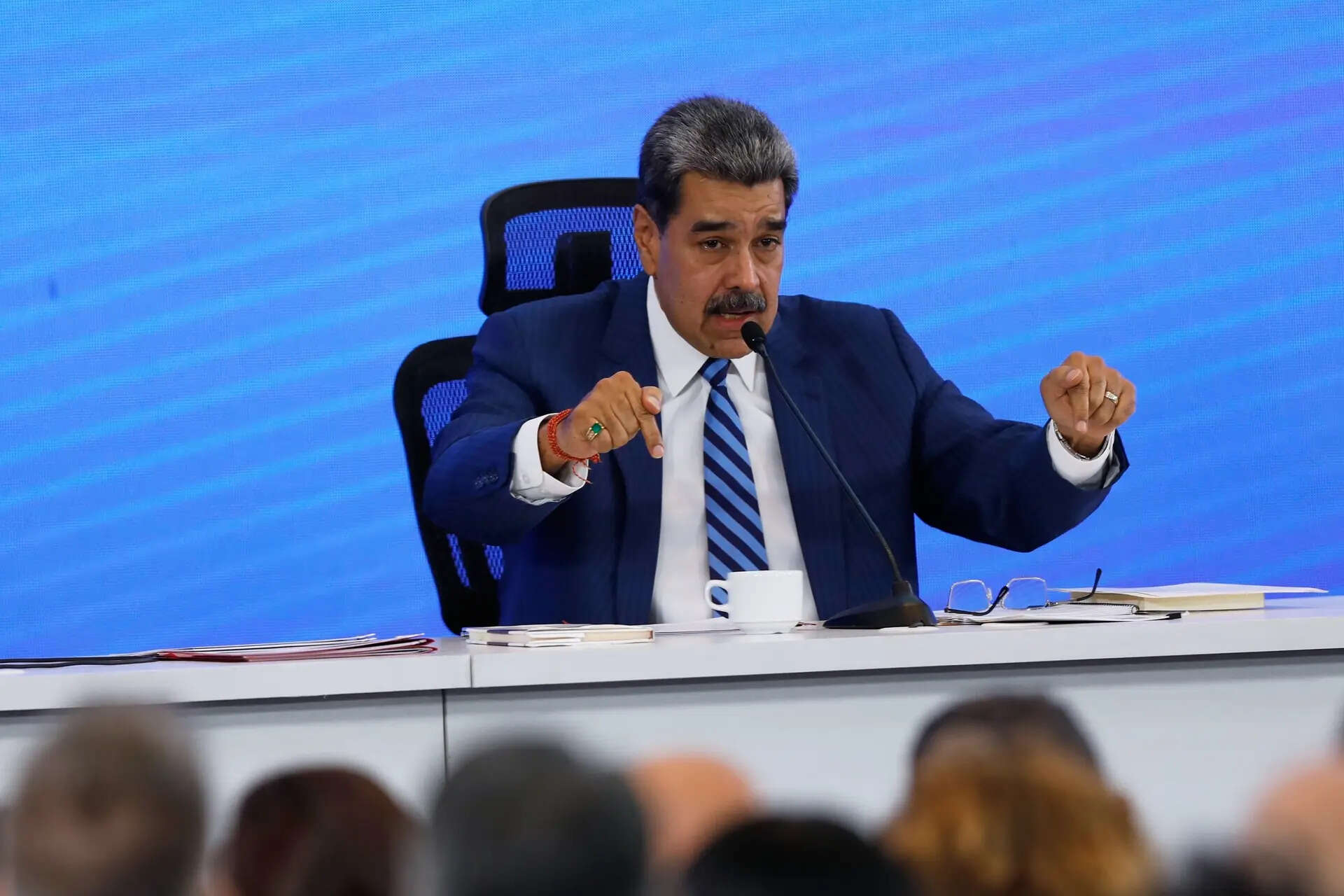
Venezuela’s President Nicolas Maduro speaks at a conference on international law in Caracas, Venezuela, Friday, Nov. 14, 2025. (AP Photo/Cristian Hernandez)
The key shift in the Caribbean is the reclassification of suspected drug traffickers as quasi-military targets. For decades, boats ferrying narcotics were part of the law-enforcement domain. The US Coast Guard intercepted them, the Drug Enforcement Administration prosecuted the smugglers, and courts handled the rest.But when Hegseth and Donald Trump began describing these traffickers as “narco-terrorists,” the frame changed entirely. A criminal investigation became a counterterrorism operation. A maritime patrol zone became a battlefield. A person clinging to debris — unarmed, immobile, incapable of resistance — became a threat to be eliminated rather than a suspect to be detained.And this is where the Washington Post revelations become indispensable. According to officials familiar with the mission, US surveillance had tracked an eleven-man go-fast vessel off the coast of Trinidad, believed to be running narcotics for the Venezuelan gang Tren de Aragua. When the first missile hit, the boat erupted into flames and the crew was scattered into the water. Two men survived, visibly wounded, clinging to the wreckage. It was at this moment, the Post reported, that Pete Hegseth issued the spoken order to “kill everybody.” The commander overseeing the strike relayed the directive, and SEAL Team 6 executed a follow-on attack that obliterated the survivors in the water. The Pentagon later tried to pass this off as an attempt to “remove maritime hazards,” but the reporting makes clear that this was not housekeeping; it was a deliberate act meant to ensure that no one lived to contradict the administration’s narrative of a clean, righteous hit against Venezuelan-linked narco-terrorists.But officials have pushed back sharply. Pentagon spokesman Sean Parnell rejected the allegations outright, calling the story “completely false.” The White House has since insisted that the follow-up strike was ordered not by Pete Hegseth but by Admiral Frank M. Bradley, and that it was “within his authority and the law,” according to press secretary Karoline Leavitt
The vanishing rules of restraint
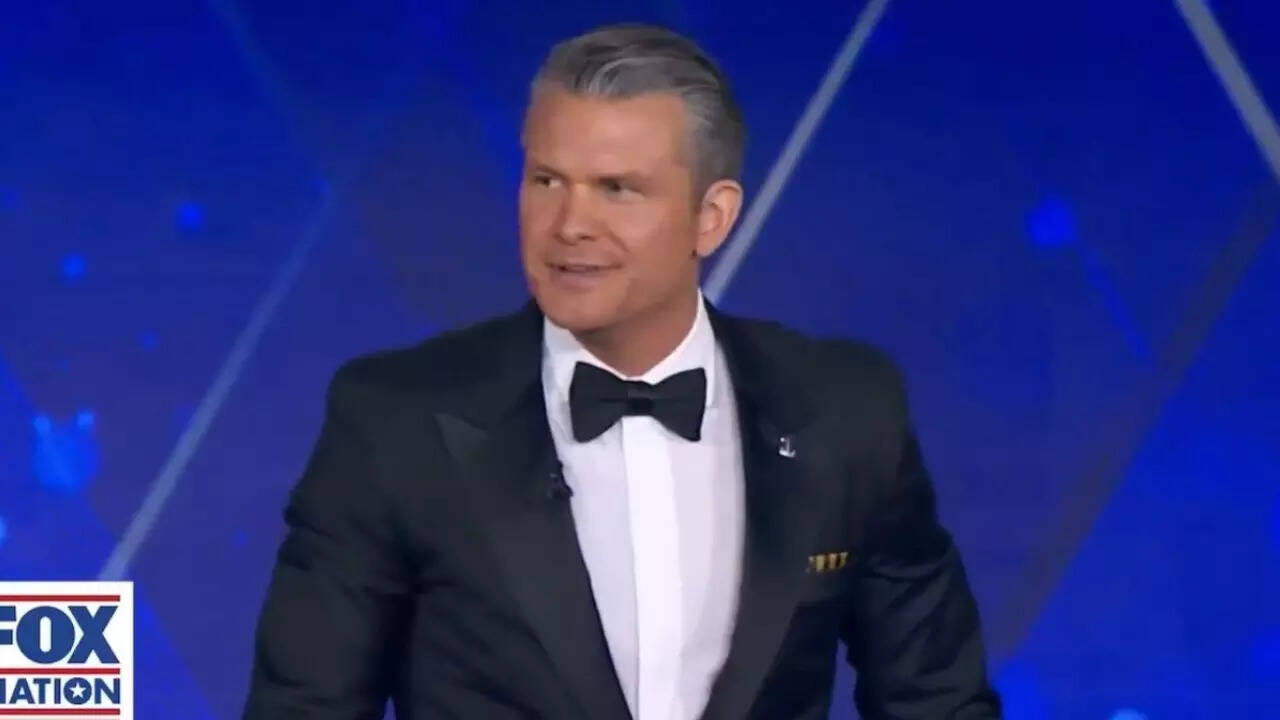
International law insists that shipwrecked survivors be treated as protected individuals. American military doctrine, shaped over generations, echoes that view. Even during the fiercest years of the post-9/11 wars, wounded combatants were expected to be captured, not executed.Yet the logic that guided the Caribbean strike is unmistakable. Once someone is designated a threat, their status does not change simply because they are incapacitated. Vulnerability does not equate to innocence. Survival does not trigger rescue; it invites resolution. This worldview is not unique to Pete Hegseth. It is the natural consequence of decades in which the United States has equated security with preemption and legality with interpretation.
Washington’s outrage masks its long memory
Predictably, Washington reacted with indignation. Members of Congress demanded briefings. Commentators questioned legality. Editorial pages called for accountability. But beneath this ritualised shock lies a quiet truth: for decades, lawmakers turned a blind eye as the executive accumulated extraordinary power to designate, target and eliminate individuals far beyond US borders.The Caribbean incident is unsettling not because the United States killed suspected criminals — it has done so in various forms for generations — but because the order was so starkly expressed. It exposed a foreign-policy instinct that usually hides behind diplomatic grammar.Calvin Dexter is fiction because he represents the America that Washington likes to imagine itself to be — the America that captures, prosecutes and proves its moral superiority through due process. Pete Hegseth is reality because he represents the America that has quietly expanded its latitude to act without restraint.
The doctrine revealed
In the end, the most disturbing thing about the Caribbean strike is not that it happened but that it happened openly. Every administration before Pete Hegseth prepared the ground. They broadened the definitions, stretched the mandates and normalised the exceptions. Hegseth simply removed the curtain.The “Kill Them All” directive should not be read as a terrifying new innovation. It is the moment when America stopped pretending that its foreign-policy instincts are built on restraint. It is the moment when the façade cracked and the architecture underneath — the one constructed long before Clinton ever authorised a missile — finally became visible.Calvin Dexter’s world imagined an America that insists on trials even for enemies. Pete Hegseth’s world reflects the America that actually exists: one that prefers solutions that do not leave survivors to testify. Go to Source