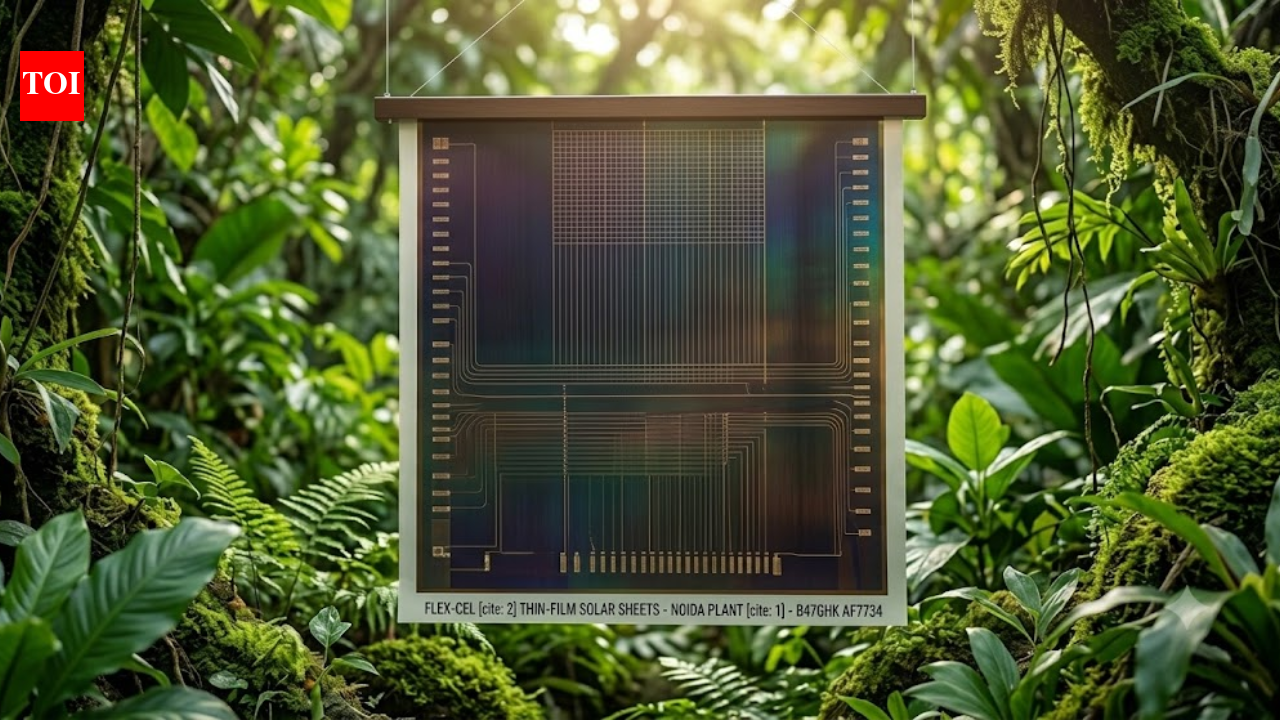

Image: AI Generated
For decades, solar power has largely meant one thing: rigid silicon panels fixed to rooftops or spread across vast solar farms. Japan is pursuing a very different idea. Instead of heavy glass modules, researchers and manufacturers are developing ultra-thin, flexible solar cells that can be produced using high-speed printing techniques similar to those used for newspapers. The result is a technology that could one day wrap around buildings, vehicles, windows and even clothing, quietly generating electricity from surfaces that have never before been considered energy assets.The work centres on perovskite solar cells, a fast-evolving technology that promises not only lower manufacturing costs but also entirely new ways of using solar power. For a country where suitable land is scarce and urban density is high, that flexibility is more than a scientific curiosity; it could reshape how renewable energy is woven into everyday life.
Why Japan is investing in printed perovskite solar cells
Conventional silicon panels remain the benchmark for commercial solar power, but they have clear limitations. They are heavy, rigid and require energy-intensive manufacturing processes. Perovskite solar cells offer a markedly different approach. According to Japan’s Agency for Natural Resources and Energy (ANRE), the light-absorbing perovskite layer is only a tiny fraction of the thickness of a conventional silicon wafer and can be deposited onto flexible plastic or metal substrates using printing or coating techniques. This allows the cells to be lightweight, bendable and suitable for applications where traditional panels cannot be installed.That flexibility opens up possibilities well beyond rooftops. Curved building façades, warehouse roofs, electric vehicles, agricultural greenhouses, railway stations and even portable electronic devices could all become viable sites for solar power generation. Rather than asking where rigid panels can be mounted, architects and engineers can begin integrating electricity generation directly into the surfaces people already use.Japan’s strong interest in the technology is driven by more than innovation alone. As the Institute for Energy Economics and Financial Analysis (IEEFA) notes, the country is one of the world’s leading producers of iodine, an essential ingredient in many perovskite solar cells. Developing a domestic perovskite industry could strengthen Japan’s renewable energy supply chain and reduce its dependence on imported fossil fuels. At the same time, IEEFA cautions that commercial success will depend not only on scaling up production but also on overcoming challenges related to durability, manufacturing quality and long-term competitiveness.
Printing solar cells instead of building them
One of the most striking aspects of the technology is how it is made. Rather than cutting and assembling individual silicon wafers, manufacturers print successive ultra-thin layers onto continuous rolls of flexible material. The process resembles industrial newspaper printing far more than traditional solar panel production, allowing long sheets of solar film to be manufactured at high speed.That change in manufacturing could have far-reaching consequences. Less raw material is required, factories can operate more efficiently, and the finished products are dramatically lighter than glass-covered panels. Transport becomes easier, installation less labour-intensive and structural requirements considerably lower. In places where conventional panels are simply too heavy, flexible films could provide an entirely practical alternative.The technology is not without challenges. Perovskite cells still generally have shorter operating lifespans than established silicon panels, particularly when exposed to heat and moisture over long periods. Yet progress has been remarkably swift. Encapsulation and protective coating technologies continue to improve, gradually increasing the durability of solar cells and eliminating what was seen as the main drawback of the technology.
From rooftops to clothing: a different future for solar energy
What is the biggest advantage of perovskite solar cells? It is not only the amount of electricity they produce; it is their ability to cover areas where silicon cells cannot be used at all. Printed perovskites’ flexibility allows their use in many places where silicon panels cannot be installed.
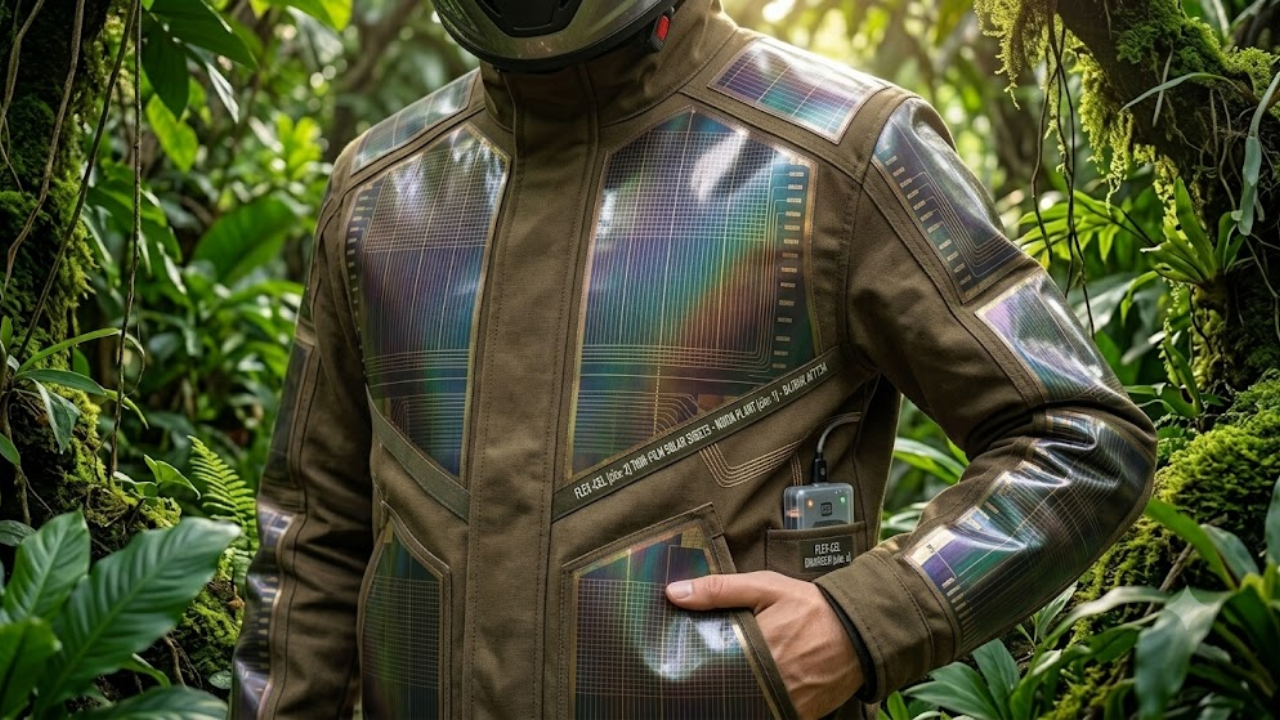
Image: AI Generated
According to CNN, the technology has already been demonstrated in prototype devices such as solar panels for cars, building façade solar sheets, solar panels for tents and even for clothes. Such solar panels allow charging mobile devices when walking in sunny weather. The technology is advancing, and it shows that renewable energy can be integrated into everyday items rather than just rooftop installations.For Japan, such flexibility can be very valuable because it has a lot of small, densely populated cities. Instead of competing for scarce space, perovskite solar films could transform existing buildings, transport infrastructure and urban surfaces into distributed sources of clean electricity without fundamentally changing how those spaces are used.Japan aims to commercialise perovskite solar cells over the coming decade as part of its broader clean energy strategy. Few experts expect the technology to replace conventional silicon panels entirely. Instead, its greatest contribution is likely to be filling the gaps that rigid panels cannot, bringing solar power to curved façades, lightweight structures, portable devices and other unconventional locations. If durability improves and manufacturing costs continue to fall, the next expansion of solar energy may come not from building more solar farms, but from quietly turning the built environment itself into a network of power generators. Go to Source