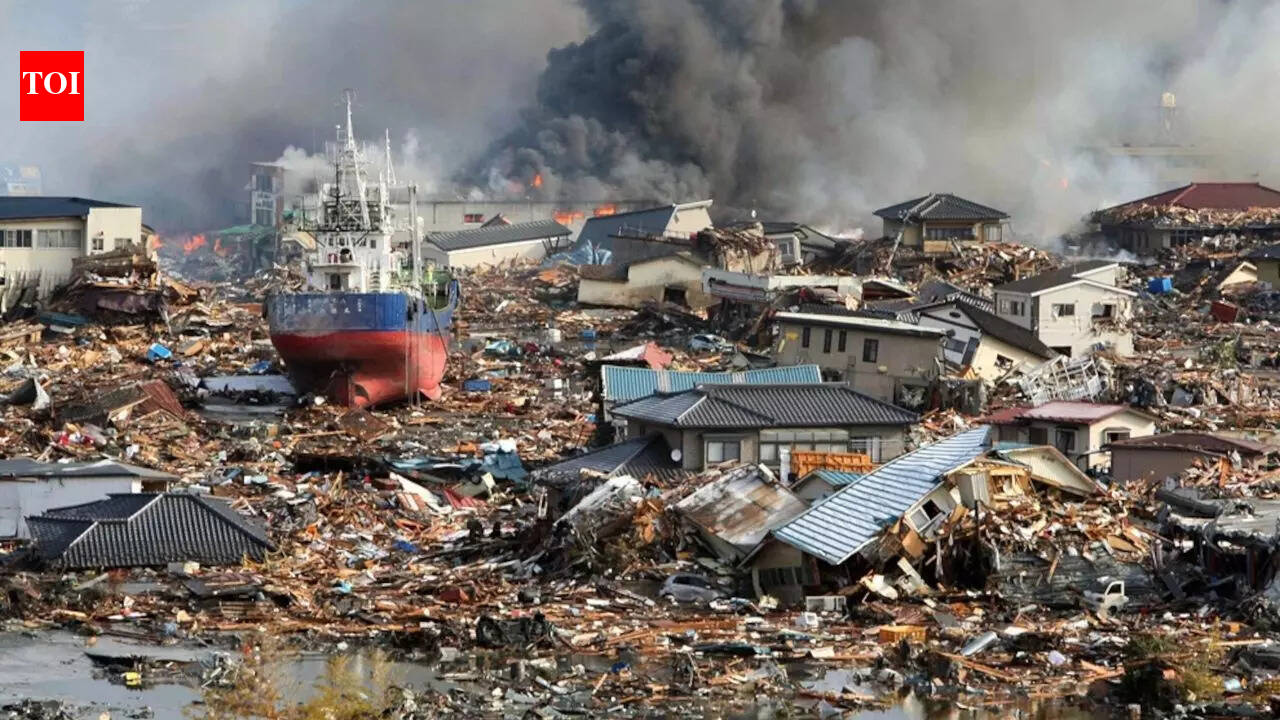

PC: National Geographic
More than a decade after one of the worst natural disasters of our time, people in Japan are still living under the threat of another disaster of this kind occurring in their country. A recent survey indicates that the memory of the Great East Japan Earthquake that happened in 2011 is still alive in the minds of people in this country.A recent survey carried out by the Japanese Red Cross Society indicated that over 80% of respondents are of the view that a disaster of this kind, which happened in 2011, could happen again in the near future. On the other hand, close to 70% of these respondents confessed that they have not done enough in preparing for this kind of disaster.
Israel Iran War
The disaster that changed Japan
On March 11th, 2011, a massive earthquake measuring 9.0 on the Richter scale occurred off the northeastern coast of Japan. This earthquake triggered a huge tsunami that caused massive destruction in the coastal towns of Japan’s Tohoku region. This natural calamity resulted in widespread destruction in Japan’s Iwate, Miyagi, and Fukushima prefectures. It caused nearly 20,000 deaths or missing persons and compelled hundreds of thousands of people to leave their homes. The height of the tsunami was extreme in some parts of Japan, destroying towns and infrastructure. This natural calamity also caused a nuclear accident at Fukushima Daiichi, which has become a major environmental and social challenge for Japan.The Intergovernmental Oceanographic Commission of UNESCO states that the 2011 disaster has become one of the most important reminders in modern history that communities along coastlines are vulnerable to earthquakes and tsunamis. This natural calamity has compelled governments and organisations around the world to improve the effectiveness of tsunami warning systems, disaster education, and preparedness.
Survey reveals widespread concern about future disasters
In the lead-up to the 15th anniversary of the 2011 disaster, the Japanese Red Cross Society undertook a national survey to determine the way people today view the threat of disasters.The results of an online survey of 1,200 people aged 10 years or over from Japan found that 80.3% of people believe that a serious disaster like the Great East Japan Earthquake will happen again in the near future.The country is located on the Pacific Ring of Fire, an area of the Earth’s surface that is prone to earthquakes.Earthquakes are common occurrences in Japan. Scientists have been saying for years that a serious earthquake is possible.
Preparedness gap remains a major concern
In spite of the high level of awareness of the risks of a disaster striking the country, the survey found that a large number of people are not prepared to face a disaster. “Almost 70 per cent of the respondents said they have not taken adequate measures to prepare for a large-scale disaster. Such measures may include the preparation of supplies needed during emergencies or the acquisition of skills necessary to respond to a disaster.”This is not a problem unique to Japan. Experts have pointed out how people usually underestimate the speed with which a disaster can strike or think they will have time to respond when the need arises. However, earthquakes and tsunamis can strike without warning.
Why remembering past disasters matters
Another important conclusion that can be drawn from the survey is the need to remember past calamities. The survey revealed that over 80% of the people believe that the lessons from the 2011 earthquake should not be forgotten while discussing disaster preparedness. It is at this point that public awareness campaigns and memorial services become relevant.The younger generation may not be aware of the events that occurred in 2011. They need to be aware of the events that occurred in 2011 so that they can be prepared for a disaster that might occur in the future. Japan has invested a lot in disaster education. There are drills and measures in place to minimise the effects of earthquakes.
Living with the reality of natural disasters
The experience of earthquakes and tsunamis in Japan has created a culture that prides itself on being resilient and prepared. Yet surveys such as this one reveal that such a state is only achieved through continuous efforts.It is difficult to predict natural disasters. Nevertheless, the effects can be mitigated by planning and awareness.It has been fifteen years since the Great East Japan Earthquake. The recollections of that day serve as a poignant reminder of the power and weakness of the people who experienced it.The message for many people in Japan is that the next disaster that strikes may not be one that can be prevented. Yet being prepared for it could make all the difference. Go to Source