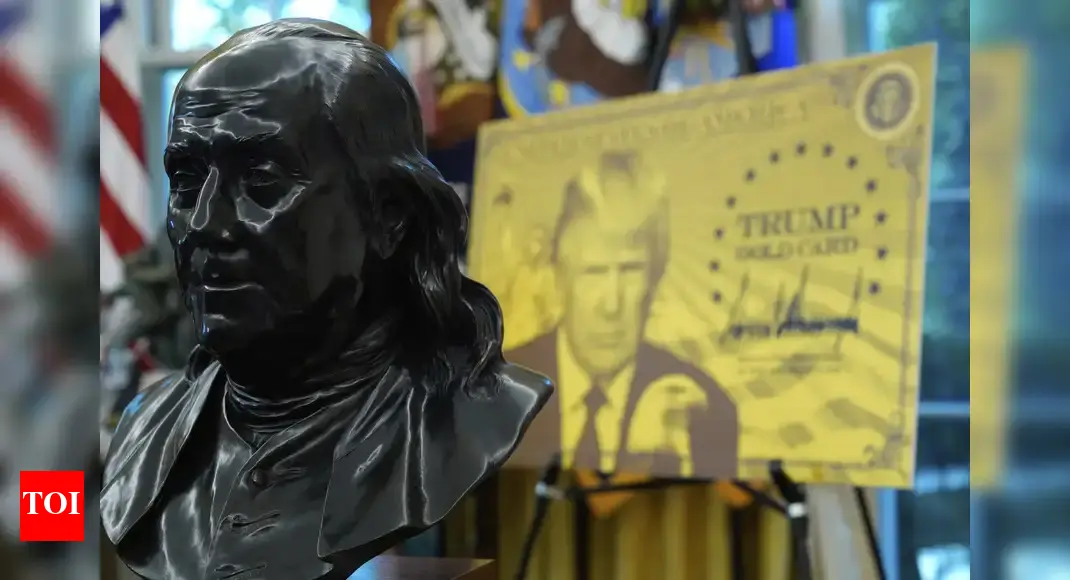

A bust of former President Benjamin Franklin is pictured near a poster for the Trump Gold Card as President Donald Trump speaks in the Oval Office of the White House, Friday, Sept. 19, 2025, in Washington. (AP Photo/Alex Brandon)
President Trump’s decision to impose a $100,000 annual fee on H-1B visas has sent shockwaves through the Indian diaspora and the tech industry. The H-1B has long been the single most important gateway for Indian professionals into the United States, but even before this dramatic hike, the road was punishingly difficult.Here’s how the system works, why Indians dominate it, and why the path to a green card is now more uncertain than ever.
The H-1B bottleneck: demand vs supply
The H-1B programme was created in 1990 with a cap of 65,000 visas per year, later expanded to include 20,000 extra slots for US master’s degree holders. That total of 85,000 visas has not changed in over a decade, even as America’s economy and demand for skilled workers exploded.
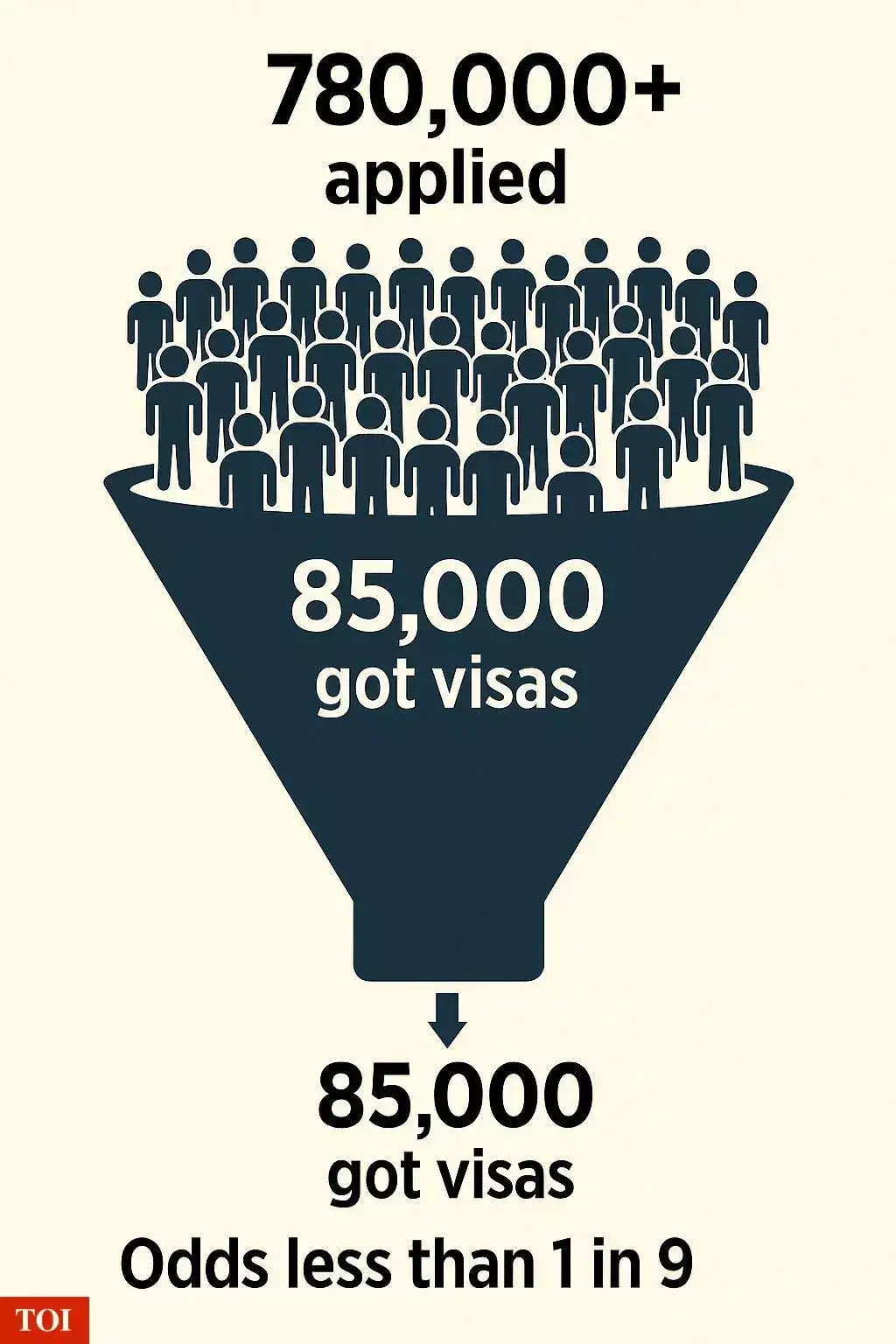
The mismatch is stark:
- FY 2024: 780,884 registrations for 85,000 slots. Selection odds were around 1 in 9.
- FY 2025: 470,342 registrations; 135,137 selected in two rounds, covering 127,624 people. Odds: about 1 in 3.5.
- FY 2026: The initial selection chose 120,141 registrations covering 118,660 people. Odds again hovered near 1 in 3.
The bottom line: Every year, hundreds of thousands of qualified candidates are shut out, not because they lack skills, but because the cap is frozen in time.
Why Indians feel it most
Indians dominate H-1Bs like no other nationality.
- 71% of approvals in FY 2024 went to Indians — roughly 283,397 people.
- China, the second-largest group, accounted for just 11.7%.
- Nearly two-thirds of all H-1Bs are in computer-related occupations, a field where Indians are heavily concentrated.
This dominance means that when restrictions or costs increase, Indians are disproportionately affected. The new $100,000 fee is therefore less a general reform than a direct hit on India’s talent pipeline to the US
The new $100,000 fee: a game-changer
Until now, sponsoring an H-1B cost companies $6,000–$10,000 per worker, depending on legal and filing fees. Trump’s new proclamation slaps on a $100,000 annual surcharge per worker. For large tech firms, this means tens of millions in added costs. For Indian IT services companies, who depend on bulk H-1B sponsorships, the numbers are even more daunting.Example:
- A mid-sized IT firm with 1,000 H-1B employees would suddenly face an extra $100 million annually.
- A smaller startup looking to hire 5 engineers from India would see costs spike from $50,000 total to $500,000 per year.
- The clear message: unless you are a mega-corporation willing to absorb the costs, sponsoring Indians on H-1Bs may no longer make business sense.
Green cards: the other bottleneck
Even if you win the H-1B lottery, the next hurdle is the green card. And here the problem is not a lottery but a mathematical choke point.
- Worldwide cap: At least 140,000 employment-based green cards are issued each year.
- Per-country ceiling: No country can take more than 7% of that total, about 9,800 slots annually.
- Dependents count too: Spouses and children of the main applicant eat into the same quota.
- Since Indians make up the majority of H-1Bs, they also dominate the green card queue. But because of the 7% ceiling, their progress is glacial.
The backlog in numbers
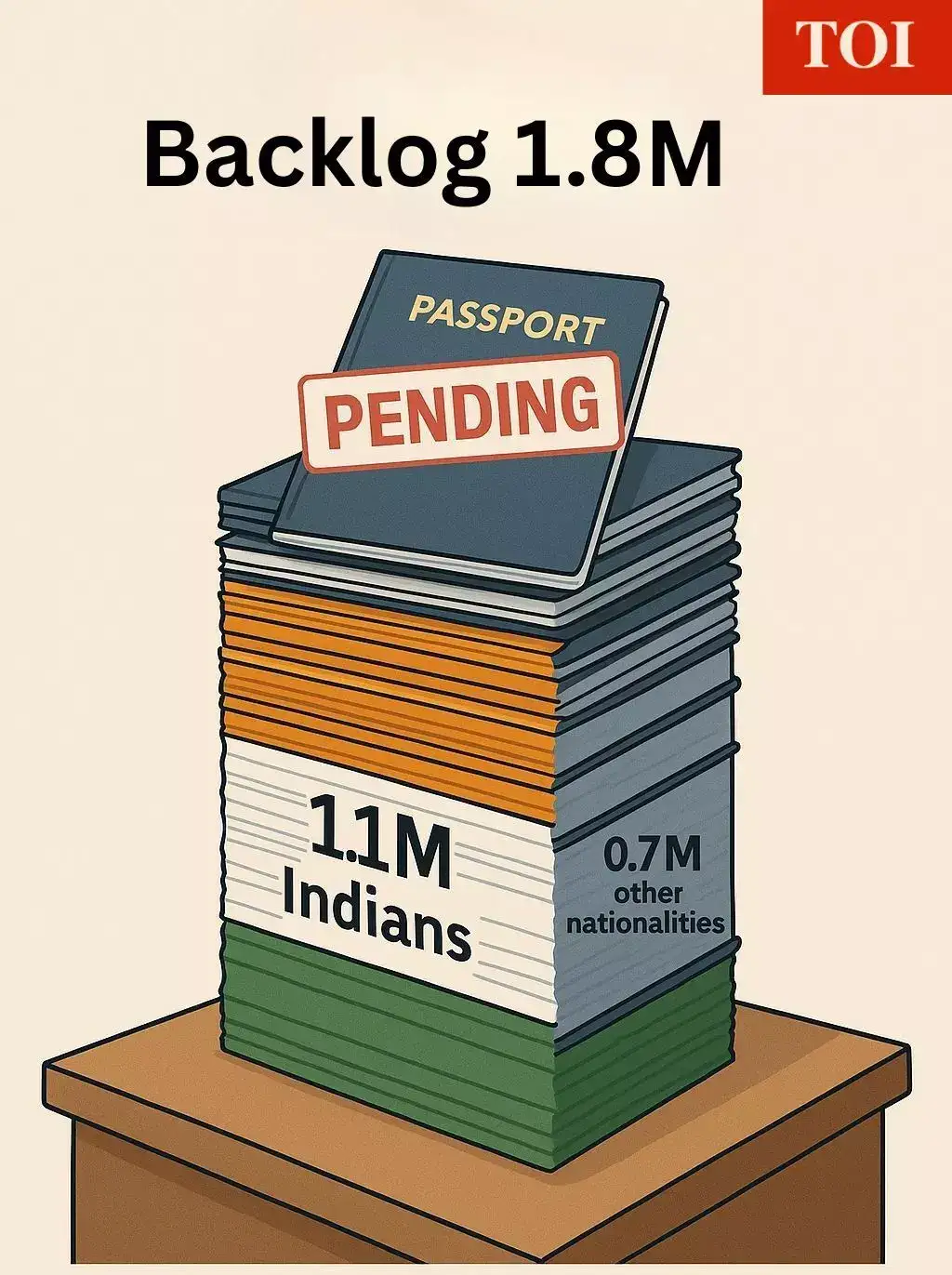
- The queue is now so long that it has become a crisis:
- Employment-based backlog: 1.8 million people.
- Indians in backlog: 1.1 million.
Wait times: Often measured in decades. For EB-2 and EB-3 categories, many analysts warn that new applicants today may never receive a green card in their lifetime. This isn’t an exaggeration. The queue is so long, and the annual per-country allocation so small, that the math simply doesn’t add up.
Visa bulletin reality check
Each month, the US State Department publishes a Visa Bulletin that sets “priority dates” — essentially, which old applications can finally move forward.As of mid-2025:
- EB-2 India (advanced degrees): Stuck around January 2012.
- EB-3 India (skilled workers): Around May 2013.
- In plain terms: Only Indians who filed more than a decade ago are now reaching the front of the line. Everyone else waits, and the line grows longer each year.
The double bind for Indians
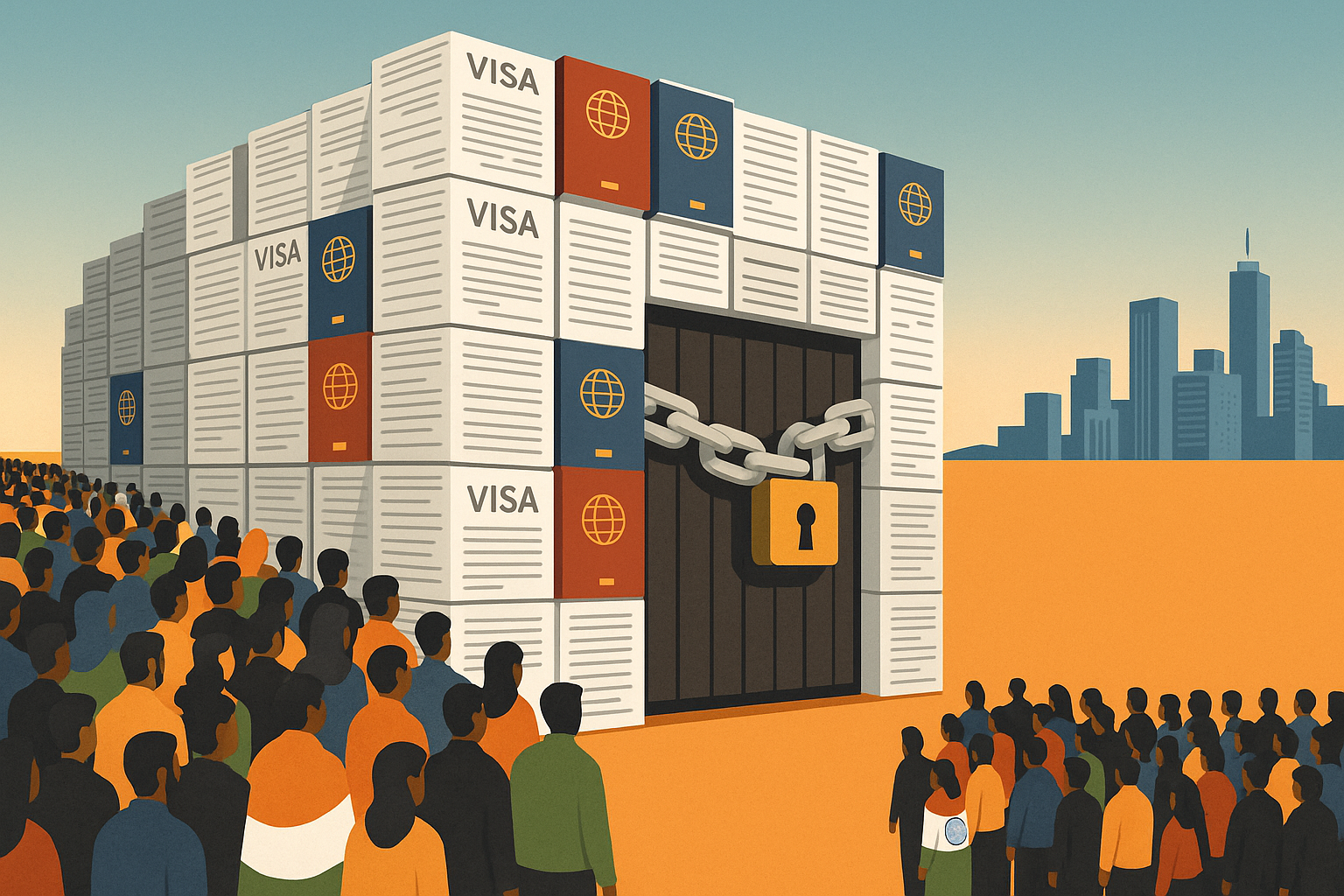
When you put the numbers together, the picture is bleak:
- Entry is limited. Odds of winning the H-1B lottery are slim, and now costs are prohibitive.
- Exit is blocked. Even if you get the visa, the green card backlog traps you for decades.
The result is a generation of Indian professionals living in permanent uncertainty: renewing H-1Bs every three years, unable to change jobs easily, raising children who risk “aging out” of dependent visas, and never knowing if a green card will come.
Why this matters beyond individuals
The US economy relies heavily on Indian talent. Indians lead some of America’s biggest tech firms, dominate in STEM fields, and fill crucial shortages in IT, healthcare, and research. The H-1B pipeline has been central to that story.But the numbers now send a different message:
- Hundreds of thousands excluded each year at the lottery stage.
- Millions stuck in limbo at the green card stage.
- Employers priced out by the new $100,000 fee.
- This combination risks weakening the very pipeline that fuelled Silicon Valley’s rise.
The contrast with other countries
While the US struggles with bottlenecks, other countries are moving in the opposite direction:
- Canada: Issues more than 400,000 permanent residencies annually, with clear paths for skilled workers.
- UAE: Rolling out long-term “golden visas” to attract talent.
- Australia & Singapore: Targeted fast-track visas for STEM professionals.
For Indians weighing their options in 2025, these destinations are increasingly attractive compared to a US path that looks both narrower and costlier.
The bottomline
For Indians, the H-1B journey was never easy. It was a numbers game where the odds were long and the wait was endless. But now, with a $100,000 annual fee, the path has gone from difficult to near-impossible for all but the wealthiest employers. The math speaks for itself: 85,000 visas against 780,000 applications; 1.8 million in backlog; a decade-old green card line; $100,000 price tags. For Indian professionals, the American Dream is increasingly not about skill or merit — but about surviving a system of shrinking odds and rising costs. Go to Source