

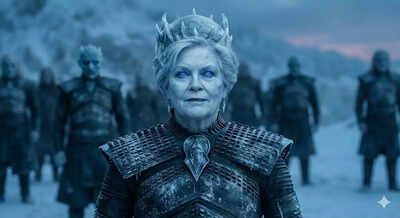
On November 6, 2024, when Donald Trump became only the second American president to return to the White House after a hiatus, his victory speech followed a familiar script of gratitude and triumph, until it briefly didn’t. Midway through his thank-yous, Trump paused to single out a figure who rarely occupies centre stage. “Susie likes to stay sort of in the back, let me tell you. The ice maiden — we call her the ice maiden. Susie likes to stay in the background. She’s not in the background.”In Trump’s universe, where attention is currency and visibility is often mistaken for power, the Ice Maiden stands out precisely because she is uninterested in the attention that animates her MAGA peers. She does not cultivate spectacle, she does not perform loyalty, and she does not leak for leverage. Her authority has always come from execution.Which is precisely why her remarks in Part 1 of Vanity Fair’s profile landed with such force. This was not a tell-all, nor was it an act of disloyalty. It was something more unsettling: a calm, on-the-record explanation of how Trumpworld actually functions, delivered by the person whose job is to keep it running. What followed was not chaos. It was clarity.
Donald Trump: diagnosing the centre of gravity
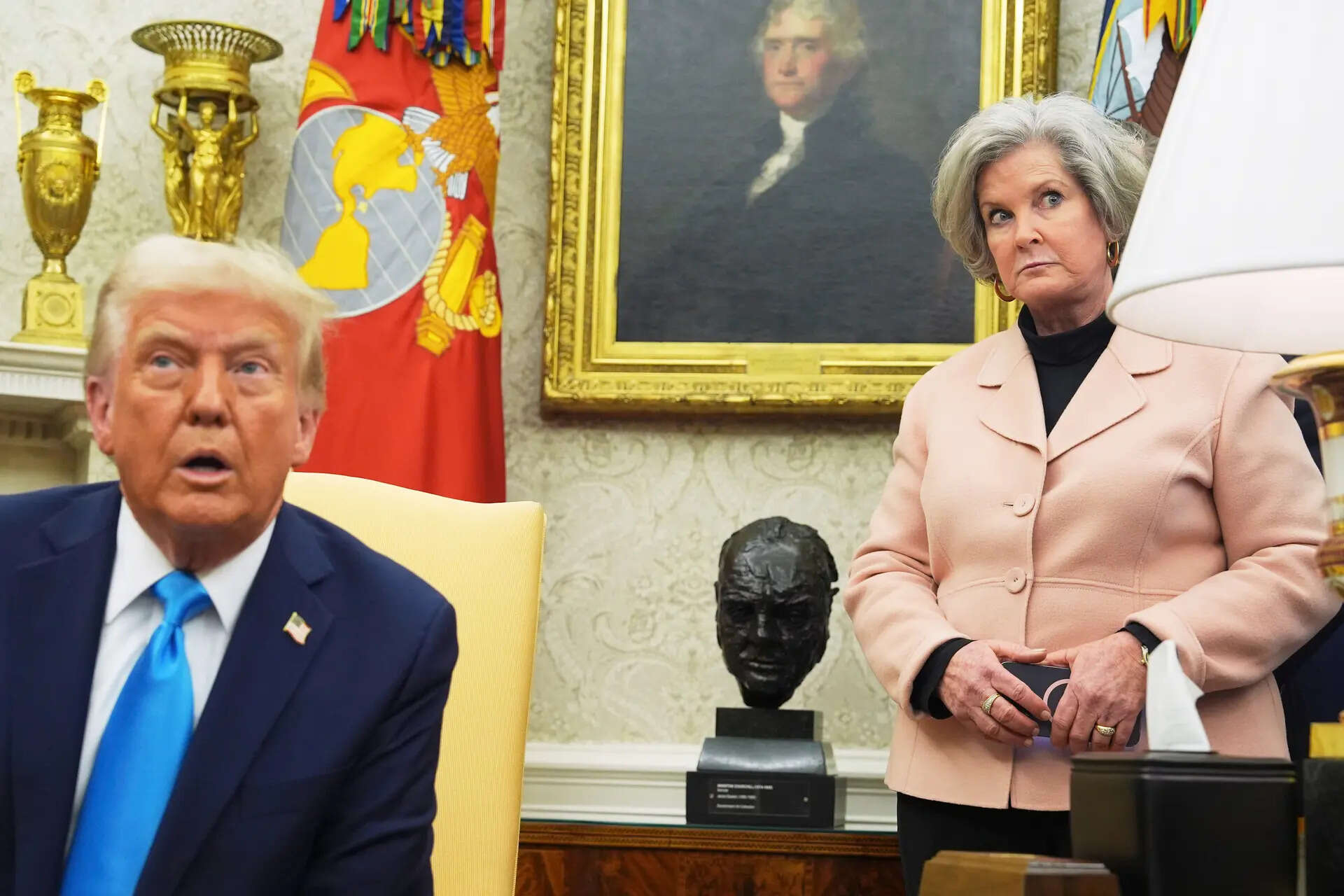
FILE – White House chief of staff Susie Wiles listens as President Donald Trump meets with Israel’s Prime Minister Benjamin Netanyahu in the Oval Office of the White House, Feb. 4, 2025, in Washington. (AP Photo/Evan Vucci, File)
Wiles begins, inevitably, with Trump himself. Her most arresting description is also her most misunderstood. She says Trump has “an alcoholic’s personality,” despite never drinking, and immediately explains what she means by adding that he operates with a worldview where “there’s nothing he can’t do. Nothing, zero, nothing.”The line is not mockery and it is not condemnation. It is diagnosis. In Wiles’ telling, Trump substitutes confidence for inhibition, certainty for doubt, and momentum for deliberation. He does not weigh options in the traditional sense. He acts, and the system rearranges itself around his decisions. Advisers do not restrain him so much as stabilise the environment after the fact.She is equally unsentimental about his darker impulses, conceding that “there may be an element of… retribution from time to time,” without dramatics or apology. On war and peace, she insists Trump genuinely believes he is stopping killing, suggesting that inside Trumpworld intent carries its own moral weight even when outcomes are contested.Most strikingly, she breaks formation when correcting Trump on Jeffrey Epstein–related claims, saying flatly that there is “no evidence” Bill Clinton visited Epstein’s island dozens of times. She goes further, addressing Trump’s own proximity to Epstein by stating plainly, “Trump is in the Epstein file,” before immediately clarifying, “He is not in the file doing anything awful.” It is an unusually direct attempt to puncture conspiracy by confronting it head-on rather than indulging it or dismissing it.
JD Vance: calculation, not conversion
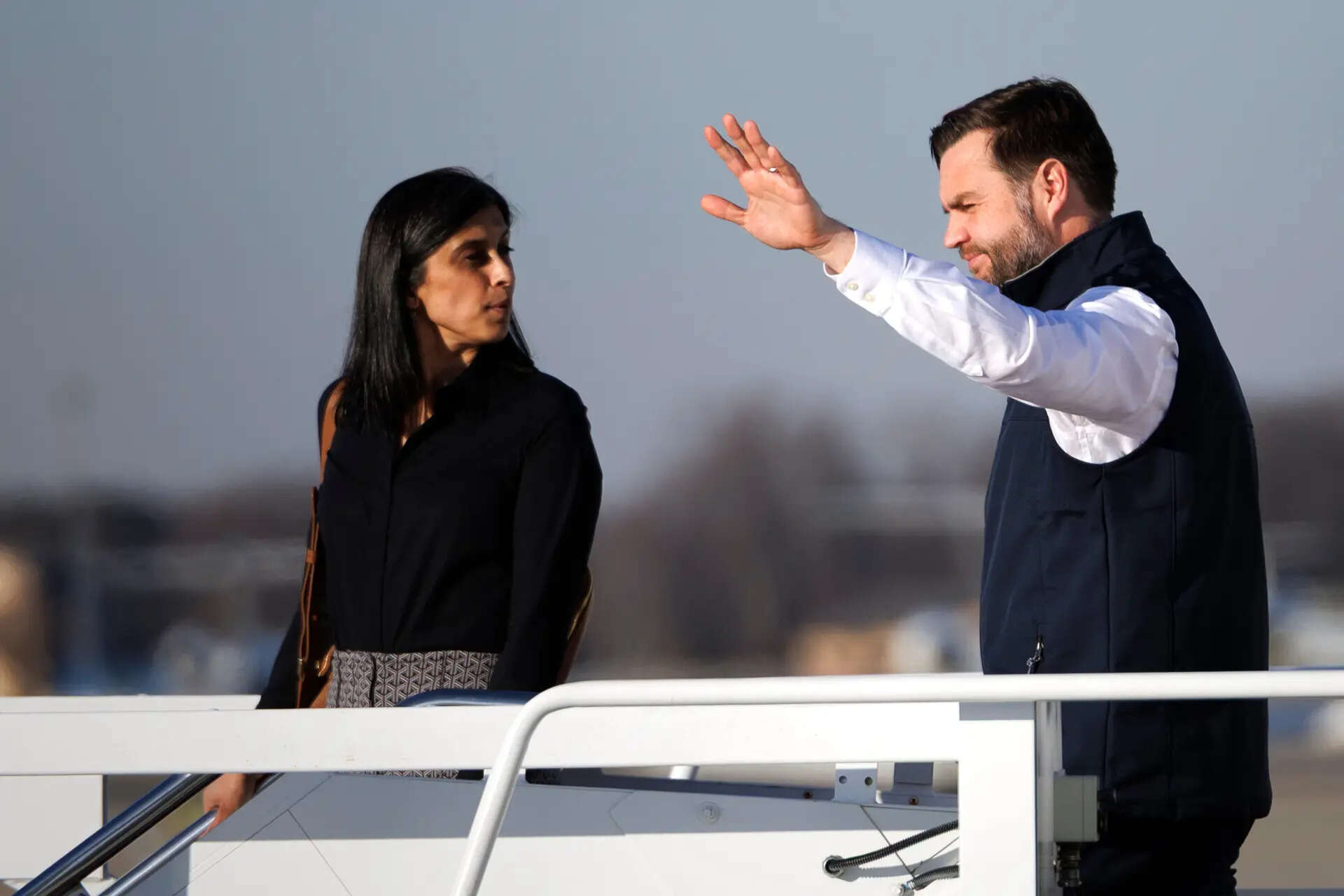
Second lady Usha Vance and her husband, Vice President JD Vance exit Air Force Two at Joint Base Andrews in Md., on Tuesday, Dec. 16, 2025. (Tom Brenner/The New York Times via AP, Pool)
Her assessment of Vice President JD Vance is no less blunt, though it is delivered with the same clinical detachment. Wiles calls him “a conspiracy theorist for a decade,” and frames his ideological journey not as a personal awakening but as a strategic shift, noting, “His conversion came when he was running for the Senate. And I think his conversion was a little bit more, sort of political.”Yet she does not describe Vance as erratic or impulsive. On the contrary, she emphasises restraint, saying, “He’s too controlled to snap,” and when pressure finally breaks through, “He’d just had enough.” In her telling, Vance functions as part of the institutional buffer, someone who works the Hill, briefs lawmakers, and occasionally attempts to slow Trump’s sharper instincts rather than amplify them.His public response was revealing. He did not deny the description. He laughed it off, joked about believing only “true” conspiracy theories, and pivoted quickly to criticising the wisdom of speaking to mainstream media at all, signalling that the discomfort lay not in the substance of the assessment, but in its visibility.
Marco Rubio: the translator
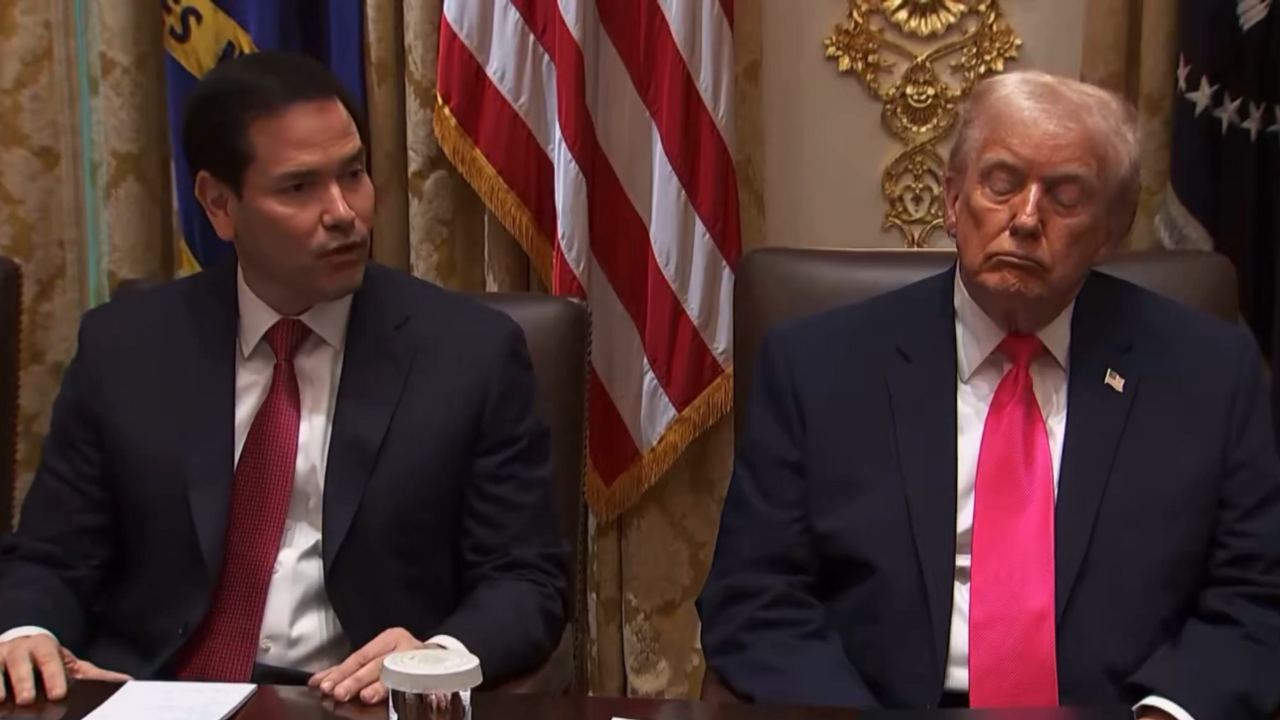
Marco Rubio (left), Donald Trump during cabinet meeting
Marco Rubio, by contrast, emerges as a figure Wiles clearly trusts. Her description is spare but telling. She says Rubio is someone who simply “won’t” abandon his principles, adding, “And so he had to get there.” The phrasing suggests persuasion rather than opportunism, patience rather than ambition. Rubio’s value lies in fluency. He understands Washington grammar and can translate Trump’s instincts into language institutions still recognise. In an administration deeply suspicious of process, that ability makes him indispensable.
Stephen Miller: the power of omission
Stephen Miller is named as part of Wiles’ core team and then left unexplained. There is no quote elaborating on his ideology or temperament, and the omission feels deliberate. Miller does not require justification inside Trumpworld. He is assumed, embedded, and permanent. Sometimes silence is itself a form of description.
Pam Bondi and the Epstein failure
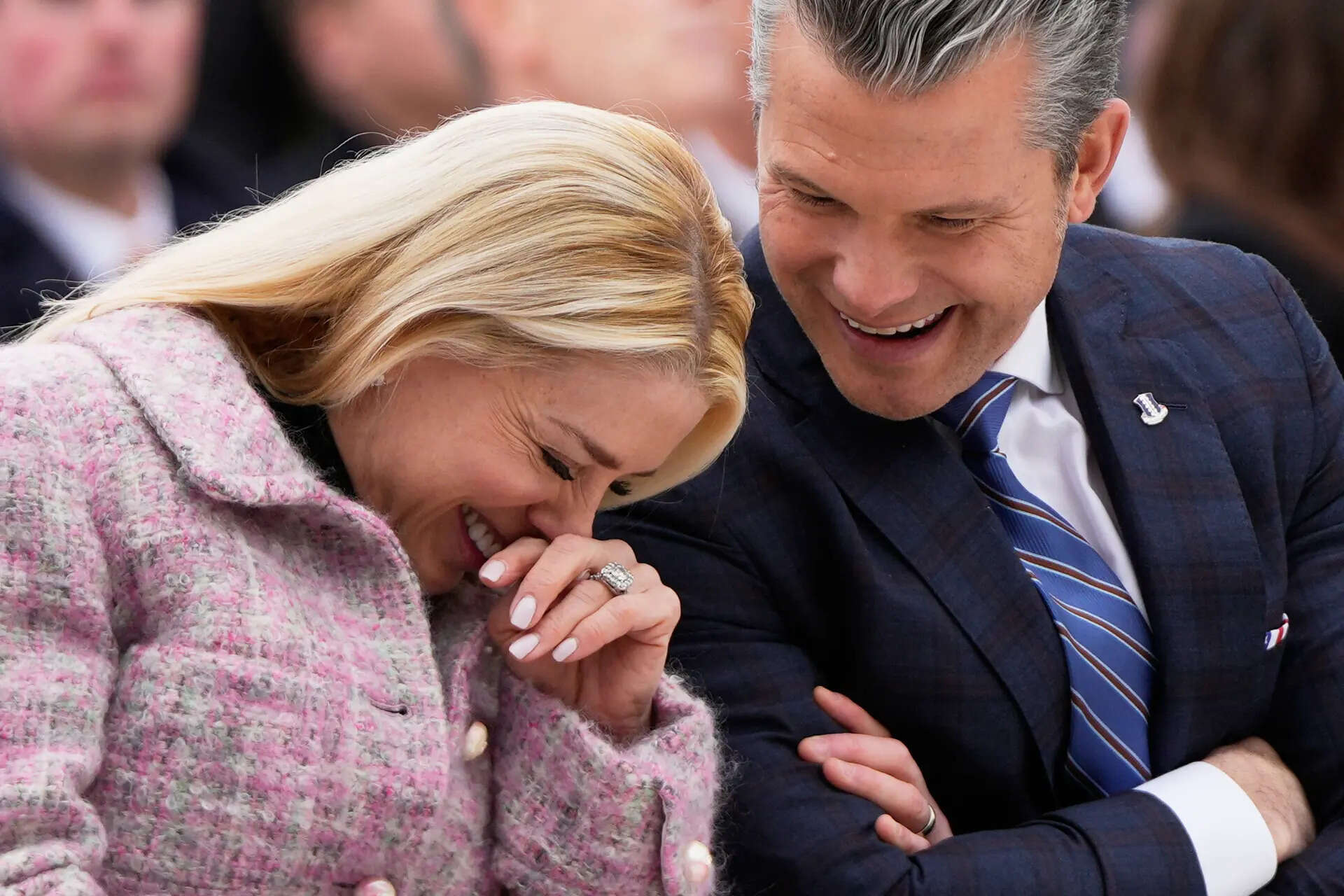
Attorney General Pam Bondi and Secretary of Defense Pete Hegseth speak before President Donald Trump arrives to pardon the national Thanksgiving turkeys Waddle and Gobble, during a pardoning ceremony in the Rose Garden of the White House, Tuesday, Nov. 25, 2025, in Washington. (AP Photo/Julia Demaree Nikhinson)
Wiles’ sharpest criticism is reserved for the handling of the Epstein files, particularly Attorney General Pam Bondi’s role in the rollout. She says Bondi “completely whiffed,” explaining that “first she gave them binders full of nothingness,” before delivering the line that reverberated across conservative media: “There is no client list, and it sure as hell wasn’t on her desk.”In Wiles’ framing, this was not a legal failure but a political one rooted in a misunderstanding of the MAGA base, for whom Epstein represents not just a case but a symbol. Mishandling it was a failure of psychology.
Kash Patel and Dan Bongino: belief versus truth
Kash Patel and Dan Bongino are treated with more nuance. Wiles notes that they “really appreciated what a big deal this is” because they “lived in that world,” acknowledging their instinctive understanding of the issue’s emotional charge. But she also punctures certainty, noting that Patel pushed for disclosures for years based on assumptions that “turn out not to be right.” Conviction, in her telling, does not equal accuracy.
Russell Vought: ideological intensity
Her description of Russell Vought is brutally concise. She calls him “a right-wing absolute zealot,” without hedging or softening. In Trumpworld, ideological extremity is not disqualifying. It is simply a variable to manage.That Vought later praised Wiles publicly only underscored the paradox.
Pete Hegseth: act first, justify later
On defence and the use of force, Wiles offers no hand-wringing. When pressed on legal authority and sequencing, her response is curt: “Don’t need it yet.” Action precedes justification. Clarity matters more than optics.
Elon Musk: weather, not colleague
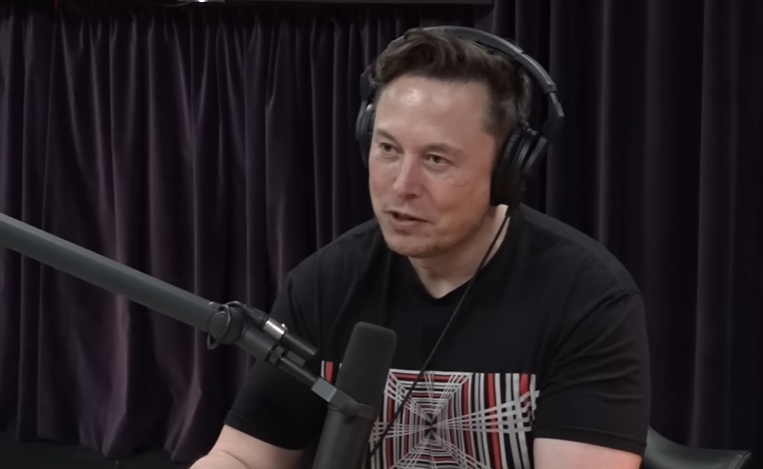
Source: Youtube
Her portrait of Elon Musk is almost anthropological. She calls him “an odd, odd duck,” describes him as “a complete solo actor,” and openly notes that “he’s an avowed ketamine [user].” On Musk’s more extreme online behaviour, she adds dryly, “I think that’s when he’s microdosing,” while acknowledging she lacks firsthand knowledge.In Wiles’ framing, Musk is powerful but ungovernable, less colleague than weather system.
The MAGA backlash: loyalty over facts
The online MAGA reaction followed a familiar pattern. Few challenged the substance of Wiles’ remarks. Instead, they questioned motive. Why speak to Vanity Fair? Why allow this narrative to exist? Why sound insufficiently reverential? Discomfort was processed not by refuting facts, but by interrogating allegiance. What followed was consolidation. Donald Trump Jr. led the counter-offensive with a sweeping testimonial that reframed Wiles not as a commentator, but as the architect of Trump’s post–January 6 political resurrection, praising her loyalty when others fled and her refusal to subvert the America First agenda. Others quickly joined in. Robert F. Kennedy Jr. hailed her as “arguably the most perfect presidential chief of staff in modern American history.” Karoline Leavitt declared Trump had “no greater or more loyal advisor.” Russ Vought called her “an exceptional chief of staff.” JD Vance himself summarised the defence succinctly, saying the team loved her because she was “loyal and good at her job.” It was not rebuttal. It was choreography.
The line she never crossed
Through all of this, one absence remained decisive. Wiles called the article “a disingenuously framed hit piece” and said “significant context was disregarded,” but she never said she was misquoted. There was no denial. No retraction. No walk-back. Which leaves the substance intact.
Why the Ice Maiden leaks matter
Susie Wiles does not present herself as the power behind the throne. She presents herself as something colder and more revealing: the administrator who understands exactly how the machine works and usually prefers never to step into the light while it is running. This time, she did, briefly and precisely, and instead of chaos, she revealed a Trump White House that knows its flaws, accepts its contradictions, and closes ranks when exposed. That is why the Ice Maiden leaks matter, not because they were loud, but because no one dared to deny them. Go to Source