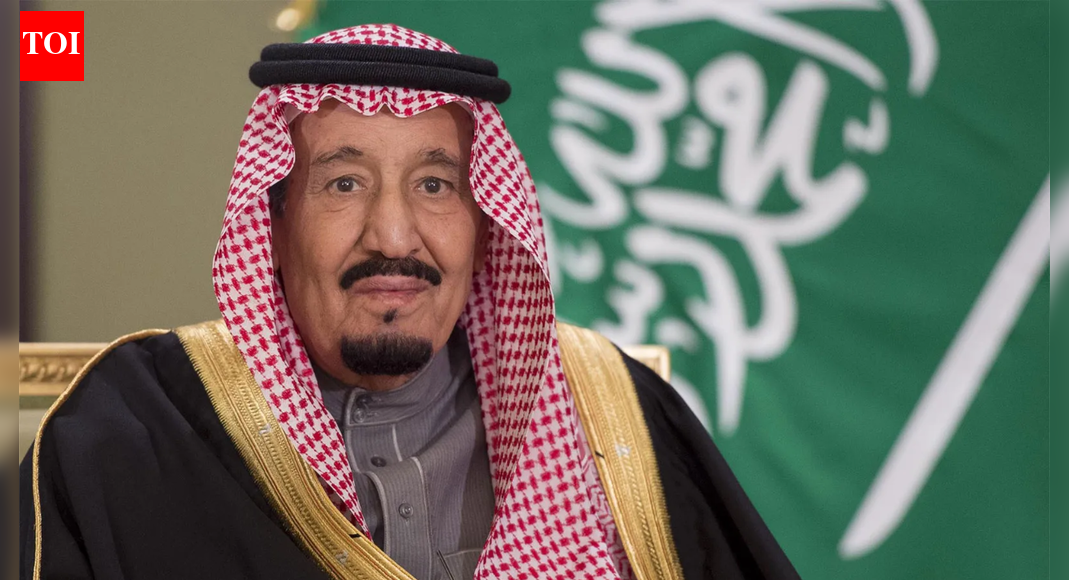


King Salman bin Abdulaziz Al Saud/Image: X
King Salman bin Abdulaziz Al Saud, Custodian of the Two Holy Mosques and King of the Kingdom of Saudi Arabia, stands as one of the most influential leaders in the Middle East. His decades long leadership has reshaped Riyadh into a modern metropolis, driven ambitious reforms under Vision 2030, and maintained Saudi Arabia’s central role on the global stage. Beyond politics, his life reflects a balance of tradition, authority, and the responsibilities of ruling a nation with immense influence. According to Celebrity Net Worth, King Salman’s personal fortune is estimated at $20 billion. His wealth reflects decades of leadership and stewardship over the kingdom’s political, economic, and strategic assets. Much of it comes from inheritance as a senior member of the House of Saud, combined with his long tenure in governance, which included overseeing major investments, infrastructure projects, and national development programs. While his financial influence is substantial, it is his control over the mechanisms of state that underscores his position as one of the world’s most powerful monarchs
Political career
Salman’s political journey began early. At 19, he was appointed deputy governor of Riyadh Province, and a year later became its governor, a position he held for nearly 50 years. During this time, Riyadh transformed from a modest desert town into a modern capital with world class infrastructure, thriving commerce, and cultural institutions, a testament to his administrative skills and vision.In 2011, he was named Minister of Defense and Second Deputy Prime Minister, overseeing the kingdom’s military modernization and strengthening ties with Western allies. After Crown Prince Nayef’s death in 2012, Salman was elevated to Crown Prince and First Deputy Prime Minister, preparing him to assume the throne. He became king in January 2015 following King Abdullah’s death. Early in his reign, he restructured the government bureaucracy, consolidating multiple secretariats into the Council of Political and Security Affairs and the Council for Economic and Development Affairs to streamline decision-making. He also reshuffled the cabinet, placing loyalists in key positions, signaling both continuity and change.
Achievements and reforms
Domestic initiatives:
- In 2017, King Salman established the Ministry of Culture to promote cultural development in line with Vision 2030, a plan to diversify the economy beyond oil.
- He created the Council of Royal Reserves to strengthen environmental protections and implemented adjustments in labor and religious policies to gradually modernize the kingdom while respecting its conservative foundations.
- His leadership style emphasizes stability and cautious reform, ensuring change occurs without destabilizing the kingdom.
Foreign policy and humanitarian work:
- Soon after taking power, he led a military intervention in Yemen against the Iran backed Houthi militia, forming a coalition of ten Sunni majority countries in Operation Decisive Storm.
- To address humanitarian concerns, he launched the King Salman Humanitarian Aid and Relief Center (KSRelief), providing aid such as prosthetics, vocational training, and disaster relief both in Yemen and globally.
Succession and vision 2030:
- In June 2017, King Salman appointed his son Mohammed bin Salman as Crown Prince, positioning him to lead many of the kingdom’s economic, social, and foreign policy initiatives. While King Salman remains the official head of state, Mohammed bin Salman is widely seen as the de facto ruler driving the Vision 2030 agenda.
Early life and education
Born as the 25th son of King Abdulaziz, Salman grew up in Marabba Palace in Riyadh. He was educated at the Princes’ School, where he studied religion, Islamic law, and modern sciences. These formative studies guided his approach to governance, blending traditional values with modern administrative practices.He entered government at 19 as deputy governor of Riyadh and became governor a year later. His five decade long tenure oversaw Riyadh’s transformation into a modern metropolis, establishing him as a respected figure within the royal family and across the Arab world.
Personal life and legacy
King Salman has been married three times and has 13 children:
- Sultana bint Turki Al Sudairi – six children, including sons Fahd and Ahmad, who passed away from heart conditions.
- Sarah bint Faisal Al Subai’ai – one son, Prince Saud.
- Fahda bint Falah Al Hithlain – six sons, including Crown Prince Mohammed bin Salman.
He has faced health challenges over the years, including spinal surgery in 2010, a stroke affecting his left arm, gallbladder surgery in 2020, and reported mild dementia, yet he continues to perform ceremonial duties as king.King Salman’s legacy is defined by modernizing Riyadh, steering the kingdom through complex regional politics, and carefully managing reforms while maintaining stability. He is recognized as a pragmatic leader who balances tradition and progress, preparing the kingdom for the next generation of leadership under his son. Go to Source